

6.6.1 Percec’s Quest for Synthetic Mimicry of Biological Quasiequivalence with [S-1]-Type Amphiphilic Dendrons
As early as 1992, Percec et al. [184] compared the similarity of supramolecular
nanocylinders obtained from his amphiphilic dendrons with the supramolecular
assembly of protein subunits to produce the cylindrical viral capsids that surround
RNA in the tobacco mosaic virus (TMV). More recently, Percec [185] reviewed the
historical inspiration provided by Klug’s seminal Nobel work on the structure of
TMV [186, 187]. Percec was able to show unequivocally that dendrons behave
much like protein subunits to produce a rich variety of cylindrical and spherical
supramolecular dendrimers that exhibit quasi-equivalency, much as noted in many
viral capsids. Based on accelerated design strategies involving synthetic amphiphilic dendrons, Percec et al. [188–191] were able to demonstrate the quasiequivalent mimicry of biological systems by using retrostructural analysis [191]
of their periodic and quasi-periodic supramolecular dendrimer assemblies, as
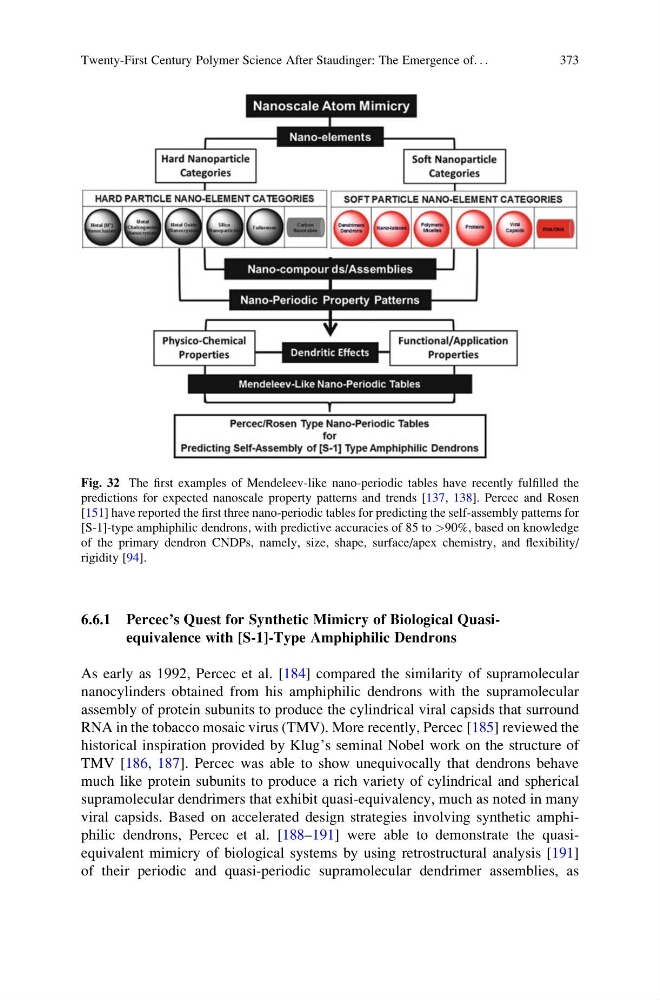
Fig. 32 The first examples of Mendeleev-like nano-periodic tables have recently fulfilled the
predictions for expected nanoscale property patterns and trends [137, 138]. Percec and Rosen
[151] have reported the first three nano-periodic tables for predicting the self-assembly patterns for
[S-1]-type amphiphilic dendrons, with predictive accuracies of 85 to >90%, based on knowledge
of the primary dendron CNDPs, namely, size, shape, surface/apex chemistry, and flexibility/
rigidity [94].
Twenty-First Century Polymer Science After Staudinger: The Emergence of. . .
373
As early as 1992, Percec et al. [184] compared the similarity of supramolecular
nanocylinders obtained from his amphiphilic dendrons with the supramolecular
assembly of protein subunits to produce the cylindrical viral capsids that surround
RNA in the tobacco mosaic virus (TMV). More recently, Percec [185] reviewed the
historical inspiration provided by Klug’s seminal Nobel work on the structure of
TMV [186, 187]. Percec was able to show unequivocally that dendrons behave
much like protein subunits to produce a rich variety of cylindrical and spherical
supramolecular dendrimers that exhibit quasi-equivalency, much as noted in many
viral capsids. Based on accelerated design strategies involving synthetic amphiphilic dendrons, Percec et al. [188–191] were able to demonstrate the quasiequivalent mimicry of biological systems by using retrostructural analysis [191]
of their periodic and quasi-periodic supramolecular dendrimer assemblies, as
Fig. 32 The first examples of Mendeleev-like nano-periodic tables have recently fulfilled the
predictions for expected nanoscale property patterns and trends [137, 138]. Percec and Rosen
[151] have reported the first three nano-periodic tables for predicting the self-assembly patterns for
[S-1]-type amphiphilic dendrons, with predictive accuracies of 85 to >90%, based on knowledge
of the primary dendron CNDPs, namely, size, shape, surface/apex chemistry, and flexibility/
rigidity [94].
Twenty-First Century Polymer Science After Staudinger: The Emergence of. . .
373