

3. Exhibit well-defined stoichiometries (i.e., quantitative constants) and masscombining ratios when reacting or assembling with each other
4. Exhibit discrete, nano-periodic property patterns as a function of one or more of
their CNDPs (i.e., size, shape, surface chemistry, flexibility/rigidity, elemental
composition, or architecture)
From this basic list of 12 nano-element categories, a nano-element road map
leading to three combinatorial libraries of nanocompounds and nano-assemblies
can be envisioned, namely, [hard-hard], [hard-soft], and [soft-soft] types as illustrated in Fig. 18. These nanocompounds and nano-assemblies can be characterized
analytically by the proportion of each of these 12 basic nano-elements they contain,
based on their discrete bonding/assembly capacities, valencies, stoichiometries, and
mass-combining ratios. Many examples of these stoichiometric nanocompounds
and assemblies are already documented in the literature and are described in more
detail elsewhere [137, 138].
As described above, a fourth feature anticipated by this new nano-periodic
system was the expectation that members of these hard and soft nano-elemental
categories, as well as their nanocompounds and assemblies would be expected to
manifest certain well-defined nano-periodic property patterns. These property patterns were expected to be dependent on one or more of their CNDPs. Just as atomic
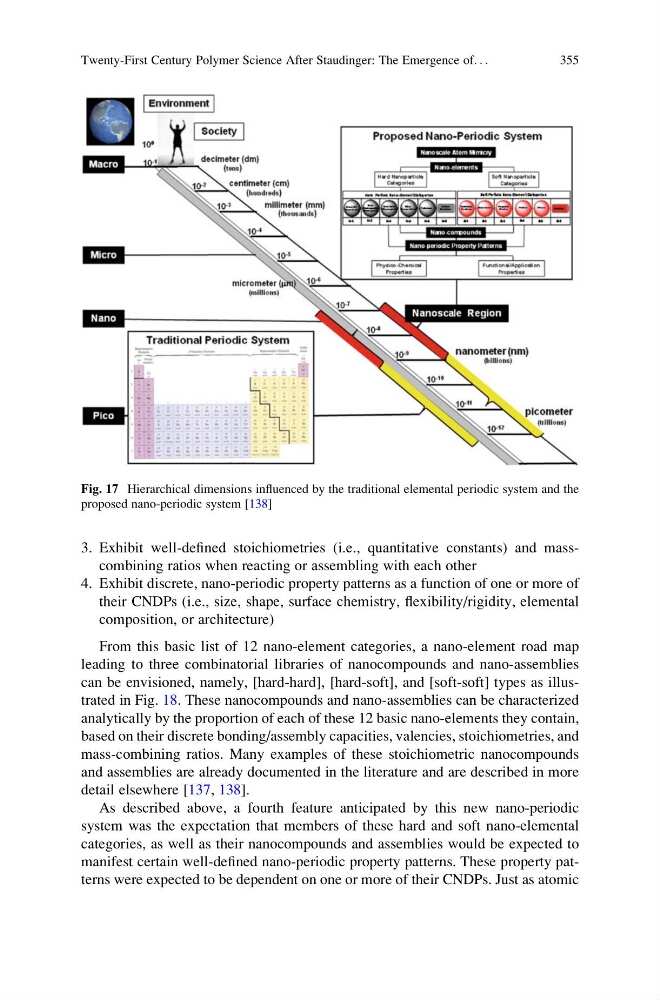
Fig. 17 Hierarchical dimensions influenced by the traditional elemental periodic system and the
proposed nano-periodic system [138]
Twenty-First Century Polymer Science After Staudinger: The Emergence of. . .
355
4. Exhibit discrete, nano-periodic property patterns as a function of one or more of
their CNDPs (i.e., size, shape, surface chemistry, flexibility/rigidity, elemental
composition, or architecture)
From this basic list of 12 nano-element categories, a nano-element road map
leading to three combinatorial libraries of nanocompounds and nano-assemblies
can be envisioned, namely, [hard-hard], [hard-soft], and [soft-soft] types as illustrated in Fig. 18. These nanocompounds and nano-assemblies can be characterized
analytically by the proportion of each of these 12 basic nano-elements they contain,
based on their discrete bonding/assembly capacities, valencies, stoichiometries, and
mass-combining ratios. Many examples of these stoichiometric nanocompounds
and assemblies are already documented in the literature and are described in more
detail elsewhere [137, 138].
As described above, a fourth feature anticipated by this new nano-periodic
system was the expectation that members of these hard and soft nano-elemental
categories, as well as their nanocompounds and assemblies would be expected to
manifest certain well-defined nano-periodic property patterns. These property patterns were expected to be dependent on one or more of their CNDPs. Just as atomic
Fig. 17 Hierarchical dimensions influenced by the traditional elemental periodic system and the
proposed nano-periodic system [138]
Twenty-First Century Polymer Science After Staudinger: The Emergence of. . .
355