

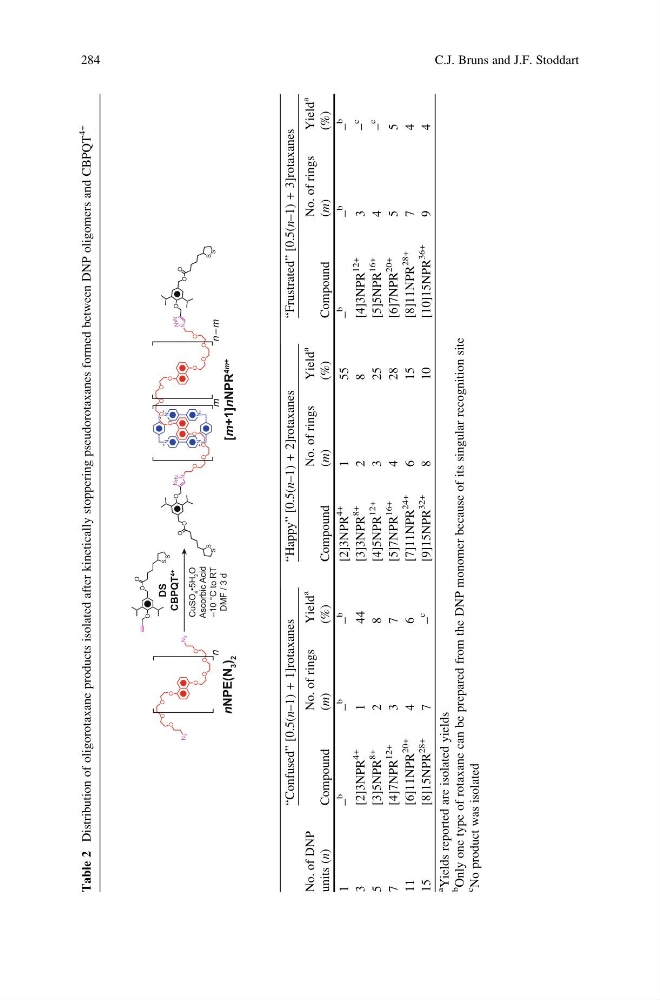
Table 2 Distribution of oligorotaxane products isolated after kinetically stoppering pseudorotaxanes formed between DNP oligomers and CBPQT
4+
No. of DNP
units (n)
“Confused” [0.5(n–1) + 1]rotaxanes
“Happy” [0.5(n–1) + 2]rotaxanes
“Frustrated” [0.5(n–1) + 3]rotaxanes
Compound
No. of rings
(m)
Yield
a
(%)
Compound
No. of rings
(m)
Yield
a
(%)
Compound
No. of rings
(m)
Yield
a
(%)
1
–
b
–
b
–
b
[2]3NPR
4+
1
5 5
–
b
–
b
–
b
3
[2]3NPR
4+
1
44
[3]3NPR
8+
2
8
[4]3NPR
12+
3
–
c
5
[3]5NPR
8+
2
8
[4]5NPR
12+
3
25
[5]5NPR
16+
4
–
c
7
[4]7NPR
12+
3
7
[5]7NPR
16+
4
28
[6]7NPR
20+
5
5
11
[6]11NPR
20+
4
6
[7]11NPR
24+
6
15
[8]11NPR
28+
7
4
15
[8]15NPR
28+
7
–
c
[9]15NPR
32+
8
10
[10]15NPR
36+
9
4
a
Yields reported are isolated yields
b
Only one type of rotaxane can be prepared from the DNP monomer because of its singular recognition site
c
No product was isolated
284
C.J. Bruns and J.F. Stoddart
4+
No. of DNP
units (n)
“Confused” [0.5(n–1) + 1]rotaxanes
“Happy” [0.5(n–1) + 2]rotaxanes
“Frustrated” [0.5(n–1) + 3]rotaxanes
Compound
No. of rings
(m)
Yield
a
(%)
Compound
No. of rings
(m)
Yield
a
(%)
Compound
No. of rings
(m)
Yield
a
(%)
1
–
b
–
b
–
b
[2]3NPR
4+
1
5 5
–
b
–
b
–
b
3
[2]3NPR
4+
1
44
[3]3NPR
8+
2
8
[4]3NPR
12+
3
–
c
5
[3]5NPR
8+
2
8
[4]5NPR
12+
3
25
[5]5NPR
16+
4
–
c
7
[4]7NPR
12+
3
7
[5]7NPR
16+
4
28
[6]7NPR
20+
5
5
11
[6]11NPR
20+
4
6
[7]11NPR
24+
6
15
[8]11NPR
28+
7
4
15
[8]15NPR
28+
7
–
c
[9]15NPR
32+
8
10
[10]15NPR
36+
9
4
a
Yields reported are isolated yields
b
Only one type of rotaxane can be prepared from the DNP monomer because of its singular recognition site
c
No product was isolated
284
C.J. Bruns and J.F. Stoddart