

level of the proteins. Likewise, engineering the blocks of copolymers can facilitate
the development of supramolecular nanoassemblies with increasing structural and
functional complexity.
The first polymeric self-assemblies for biological application were micelles
formed by amphiphilic diblock copolymers through the hydrophobicity of their
core-forming blocks. Accordingly, in the late 1980s, Ringsdorf and coworkers
reported that PEG-b-poly(L-lysine) copolymer associated into micelles after conjugation of the hydrophobic anticancer drug cyclophosphamide with the poly(Llysine) block [26]. Alexander Kabanov’s group prepared polymeric micelles based
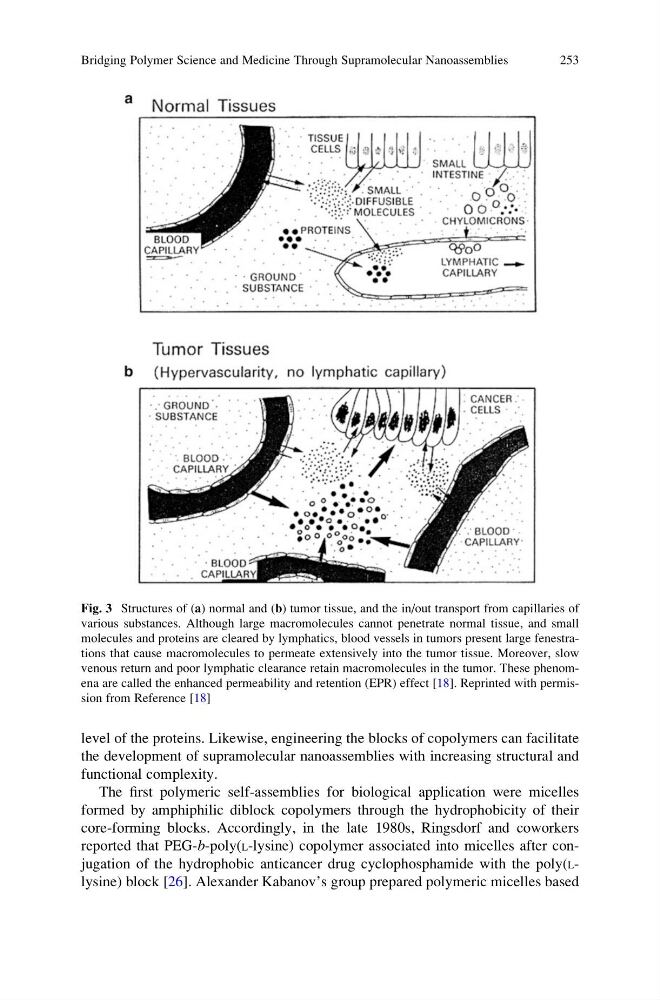
Fig. 3 Structures of (a) normal and (b) tumor tissue, and the in/out transport from capillaries of
various substances. Although large macromolecules cannot penetrate normal tissue, and small
molecules and proteins are cleared by lymphatics, blood vessels in tumors present large fenestrations that cause macromolecules to permeate extensively into the tumor tissue. Moreover, slow
venous return and poor lymphatic clearance retain macromolecules in the tumor. These phenomena are called the enhanced permeability and retention (EPR) effect [18]. Reprinted with permission from Reference [18]
Bridging Polymer Science and Medicine Through Supramolecular Nanoassemblies
253
the development of supramolecular nanoassemblies with increasing structural and
functional complexity.
The first polymeric self-assemblies for biological application were micelles
formed by amphiphilic diblock copolymers through the hydrophobicity of their
core-forming blocks. Accordingly, in the late 1980s, Ringsdorf and coworkers
reported that PEG-b-poly(L-lysine) copolymer associated into micelles after conjugation of the hydrophobic anticancer drug cyclophosphamide with the poly(Llysine) block [26]. Alexander Kabanov’s group prepared polymeric micelles based
Fig. 3 Structures of (a) normal and (b) tumor tissue, and the in/out transport from capillaries of
various substances. Although large macromolecules cannot penetrate normal tissue, and small
molecules and proteins are cleared by lymphatics, blood vessels in tumors present large fenestrations that cause macromolecules to permeate extensively into the tumor tissue. Moreover, slow
venous return and poor lymphatic clearance retain macromolecules in the tumor. These phenomena are called the enhanced permeability and retention (EPR) effect [18]. Reprinted with permission from Reference [18]
Bridging Polymer Science and Medicine Through Supramolecular Nanoassemblies
253