

precursors has also provided evidence for [3+3] triangles, wherein distortions in the
building blocks relax the encoded angularities [31, 34–36]. In some cases, despite
the use of cis-capped square planar metal environments, triangles may still be
obtained provided that the ligand can accommodate the necessary distortions
[37], as when mixing (en)PtCl 2 with 2,2
0 -bipyrazine in the presence of AgNO 3
[38], or by linking the luminescent Pt(thpy)(Hthpy)Cl or [nBu 4 N][Pt(bzqn)Cl 2
precursors with sodium benzimidazolate, thereby cyclizing a 90
acceptor with a
150
donor [39]. Alternatively, the use of “piano-stool” metal centers fused with
3-hydroxy-2-pyridone, which can chelate using its oxygen atoms and complete a
bridge via N-coordination to a second metal node, will also furnish trigonal
SCCs [40].
Given the 120
angularity associated with sp
2 hybridized centers and with meta
substitution of a benzene ring, encoding the necessary directionality for hexagonal
SCCs was easily achieved by using the increasingly established tenets of the
directional bonding approach. As such, the first molecular hexagons came in the
form of [6+6] assemblies of linear ditopic building blocks with 120
tectons,
wherein the angularity of the donor and acceptor could be swapped to delivery
complementary metallacycles [41]. As with the triangular systems discussed above,
wherein distortions permitted formation even when square planar geometries were
present, so too may hexagons from six Pt(II) centers be bridged simply by cyanide
ligands [42]. When a hexagon is deconstructed to a [3+3] assembly, wherein both
donor and acceptor subunits require 120
angularity, deviation from these
directionalities can result in rhomboid/hexagon equilibria [43]. When the angles
of the donors and acceptors are more rigidly enforced, the formation of rhomboids
is obviated and hexagonal SCCs are the sole self-assembly products [44]. The
requisite 120
angularity can also be encoded with less common functionalities
such as thiabicyclo[3.3.1]nonane, which can orient two pendant pyridyl groups to
combine with a linear diplatinum acceptor to furnish a [6+6] hexagon [45].
Fivefold symmetric molecular pentagons are rarer than hexagons, despite an early
example appearing a few years after the growing work on squares. Five tris-bipy
ligands organized five equivalents of FeCl 2 into a pentagonal metallacycle wherein
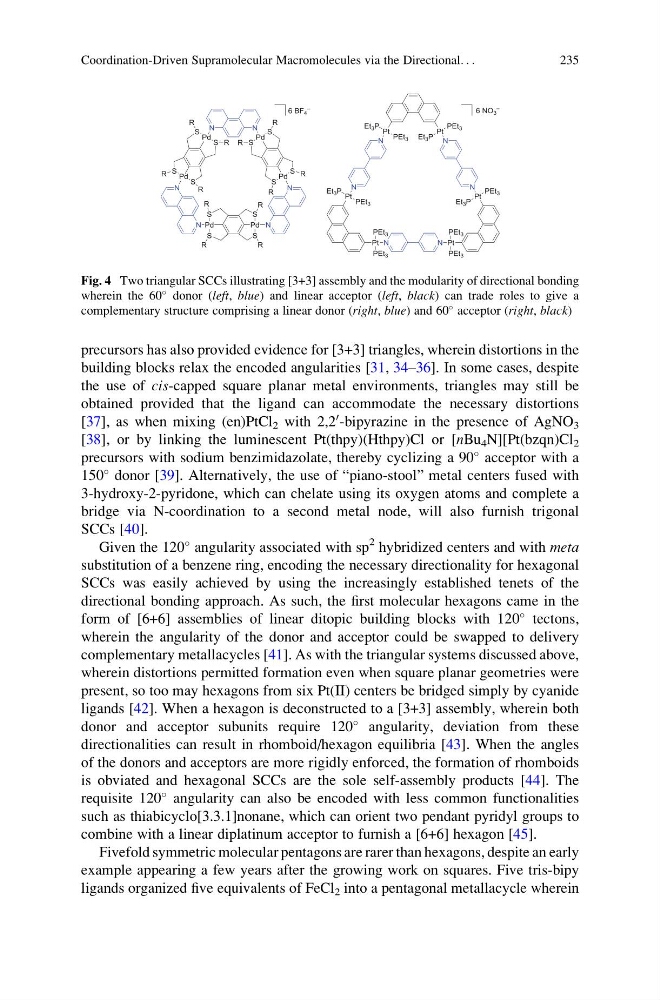
Fig. 4 Two triangular SCCs illustrating [3+3] assembly and the modularity of directional bonding
wherein the 60
donor (left, blue) and linear acceptor (left, black) can trade roles to give a
complementary structure comprising a linear donor (right, blue) and 60
acceptor (right, black)
Coordination-Driven Supramolecular Macromolecules via the Directional. . .
235
building blocks relax the encoded angularities [31, 34–36]. In some cases, despite
the use of cis-capped square planar metal environments, triangles may still be
obtained provided that the ligand can accommodate the necessary distortions
[37], as when mixing (en)PtCl 2 with 2,2
0 -bipyrazine in the presence of AgNO 3
[38], or by linking the luminescent Pt(thpy)(Hthpy)Cl or [nBu 4 N][Pt(bzqn)Cl 2
precursors with sodium benzimidazolate, thereby cyclizing a 90
acceptor with a
150
donor [39]. Alternatively, the use of “piano-stool” metal centers fused with
3-hydroxy-2-pyridone, which can chelate using its oxygen atoms and complete a
bridge via N-coordination to a second metal node, will also furnish trigonal
SCCs [40].
Given the 120
angularity associated with sp
2 hybridized centers and with meta
substitution of a benzene ring, encoding the necessary directionality for hexagonal
SCCs was easily achieved by using the increasingly established tenets of the
directional bonding approach. As such, the first molecular hexagons came in the
form of [6+6] assemblies of linear ditopic building blocks with 120
tectons,
wherein the angularity of the donor and acceptor could be swapped to delivery
complementary metallacycles [41]. As with the triangular systems discussed above,
wherein distortions permitted formation even when square planar geometries were
present, so too may hexagons from six Pt(II) centers be bridged simply by cyanide
ligands [42]. When a hexagon is deconstructed to a [3+3] assembly, wherein both
donor and acceptor subunits require 120
angularity, deviation from these
directionalities can result in rhomboid/hexagon equilibria [43]. When the angles
of the donors and acceptors are more rigidly enforced, the formation of rhomboids
is obviated and hexagonal SCCs are the sole self-assembly products [44]. The
requisite 120
angularity can also be encoded with less common functionalities
such as thiabicyclo[3.3.1]nonane, which can orient two pendant pyridyl groups to
combine with a linear diplatinum acceptor to furnish a [6+6] hexagon [45].
Fivefold symmetric molecular pentagons are rarer than hexagons, despite an early
example appearing a few years after the growing work on squares. Five tris-bipy
ligands organized five equivalents of FeCl 2 into a pentagonal metallacycle wherein
Fig. 4 Two triangular SCCs illustrating [3+3] assembly and the modularity of directional bonding
wherein the 60
donor (left, blue) and linear acceptor (left, black) can trade roles to give a
complementary structure comprising a linear donor (right, blue) and 60
acceptor (right, black)
Coordination-Driven Supramolecular Macromolecules via the Directional. . .
235