

3.1 The BONCAT Method
Our studies of non-canonical amino acids were motivated initially by an interest in
making proteins with novel properties. Our interest broadened when our colleague
Daniela Dieterich suggested that pulsed metabolic labeling of cellular proteins with
non-canonical amino acids might provide a method for time-resolved analysis of
protein synthesis in neurons. With Daniela and Erin Schuman, we developed this
idea into the BONCAT (bio-orthogonal non-canonical amino acid tagging) method
shown in Scheme 2 [33].
In the BONCAT method, the cellular system of interest (cultured cells, tissue
slices, or live animals) is pulse-labeled with a non-canonical amino acid that carries
a reactive side chain. In our initial experiments, we used azidohomoalanine (Aha)
as the label because Aha-labeled proteins can be selectively tagged with dyes or
affinity reagents through copper-catalyzed or strain-promoted azide-alkyne cycloaddition reactions [34–36]. Tagged proteins can then be separated from other
Scheme 2 The BONCAT method. The structure at lower left is a typical affinity tag for use with
the non-canonical amino acid azidohomoalanine (Aha)
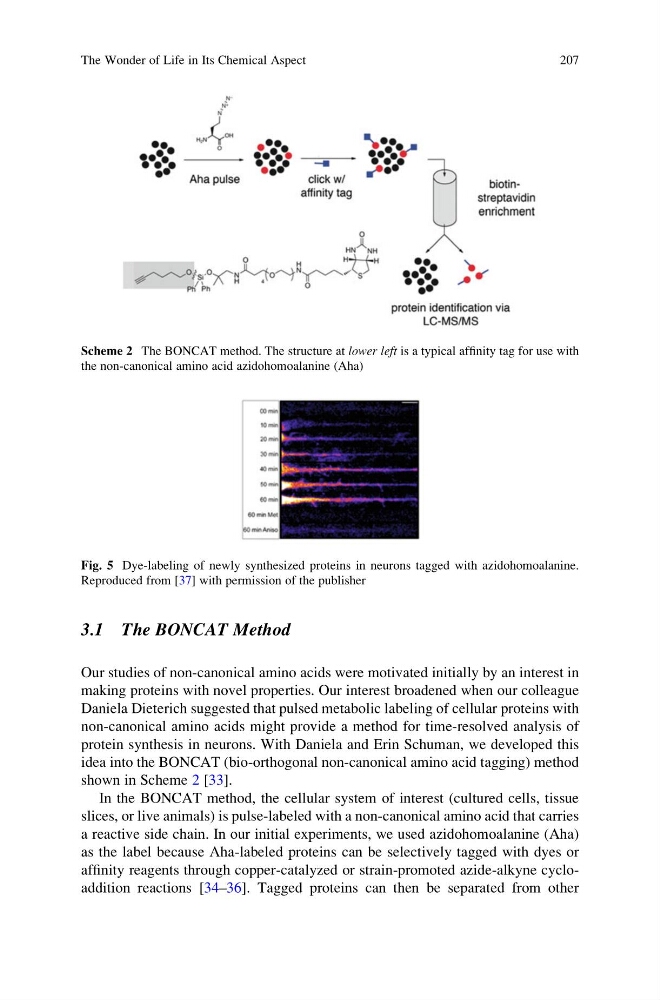
Fig. 5 Dye-labeling of newly synthesized proteins in neurons tagged with azidohomoalanine.
Reproduced from [37] with permission of the publisher
The Wonder of Life in Its Chemical Aspect
207
Our studies of non-canonical amino acids were motivated initially by an interest in
making proteins with novel properties. Our interest broadened when our colleague
Daniela Dieterich suggested that pulsed metabolic labeling of cellular proteins with
non-canonical amino acids might provide a method for time-resolved analysis of
protein synthesis in neurons. With Daniela and Erin Schuman, we developed this
idea into the BONCAT (bio-orthogonal non-canonical amino acid tagging) method
shown in Scheme 2 [33].
In the BONCAT method, the cellular system of interest (cultured cells, tissue
slices, or live animals) is pulse-labeled with a non-canonical amino acid that carries
a reactive side chain. In our initial experiments, we used azidohomoalanine (Aha)
as the label because Aha-labeled proteins can be selectively tagged with dyes or
affinity reagents through copper-catalyzed or strain-promoted azide-alkyne cycloaddition reactions [34–36]. Tagged proteins can then be separated from other
Scheme 2 The BONCAT method. The structure at lower left is a typical affinity tag for use with
the non-canonical amino acid azidohomoalanine (Aha)
Fig. 5 Dye-labeling of newly synthesized proteins in neurons tagged with azidohomoalanine.
Reproduced from [37] with permission of the publisher
The Wonder of Life in Its Chemical Aspect
207