

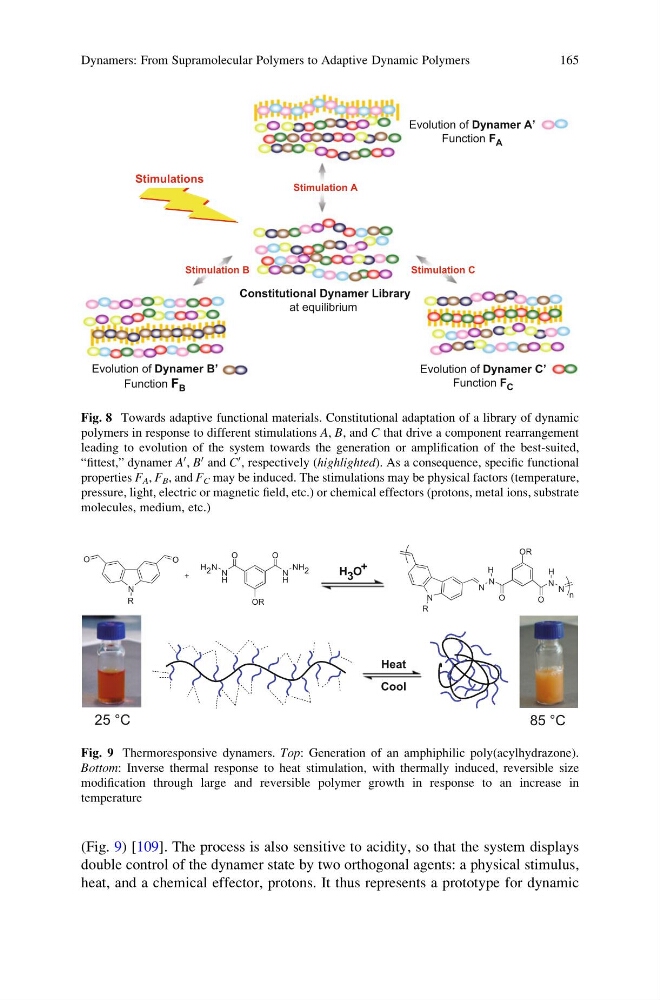
(Fig. 9) [109]. The process is also sensitive to acidity, so that the system displays
double control of the dynamer state by two orthogonal agents: a physical stimulus,
heat, and a chemical effector, protons. It thus represents a prototype for dynamic
25 °C
85 °C
N
O
O
R
O
N
H
NH 2
O
N
H
H 2 N
OR
N
R
OR
O
N
N
H
O
N N
H
n
H 3 O +
+
Cool
Heat
Fig. 9 Thermoresponsive dynamers. Top: Generation of an amphiphilic poly(acylhydrazone).
Bottom: Inverse thermal response to heat stimulation, with thermally induced, reversible size
modification through large and reversible polymer growth in response to an increase in
temperature
Stimulation A
Stimulation C
Stimulation B
Stimulations
Constitutional Dynamer Library
at equilibrium
Evolution of Dynamer A’
Function F A
Evolution of Dynamer C’
Function F C
Evolution of Dynamer B’
Function F B
Fig. 8 Towards adaptive functional materials. Constitutional adaptation of a library of dynamic
polymers in response to different stimulations A, B, and C that drive a component rearrangement
leading to evolution of the system towards the generation or amplification of the best-suited,
“fittest,” dynamer A
0 , B
0 and C
0 , respectively (highlighted). As a consequence, specific functional
properties F A , F B , and F C may be induced. The stimulations may be physical factors (temperature,
pressure, light, electric or magnetic field, etc.) or chemical effectors (protons, metal ions, substrate
molecules, medium, etc.)
Dynamers: From Supramolecular Polymers to Adaptive Dynamic Polymers
165
double control of the dynamer state by two orthogonal agents: a physical stimulus,
heat, and a chemical effector, protons. It thus represents a prototype for dynamic
25 °C
85 °C
N
O
O
R
O
N
H
NH 2
O
N
H
H 2 N
OR
N
R
OR
O
N
N
H
O
N N
H
n
H 3 O +
+
Cool
Heat
Fig. 9 Thermoresponsive dynamers. Top: Generation of an amphiphilic poly(acylhydrazone).
Bottom: Inverse thermal response to heat stimulation, with thermally induced, reversible size
modification through large and reversible polymer growth in response to an increase in
temperature
Stimulation A
Stimulation C
Stimulation B
Stimulations
Constitutional Dynamer Library
at equilibrium
Evolution of Dynamer A’
Function F A
Evolution of Dynamer C’
Function F C
Evolution of Dynamer B’
Function F B
Fig. 8 Towards adaptive functional materials. Constitutional adaptation of a library of dynamic
polymers in response to different stimulations A, B, and C that drive a component rearrangement
leading to evolution of the system towards the generation or amplification of the best-suited,
“fittest,” dynamer A
0 , B
0 and C
0 , respectively (highlighted). As a consequence, specific functional
properties F A , F B , and F C may be induced. The stimulations may be physical factors (temperature,
pressure, light, electric or magnetic field, etc.) or chemical effectors (protons, metal ions, substrate
molecules, medium, etc.)
Dynamers: From Supramolecular Polymers to Adaptive Dynamic Polymers
165