

revealed tight binding to different sets of DNA fragments as well as plasmid DNA
pUK19 (2,686 bp; 5,372 negative charges). Complex stoichiometries between pUK19
and the polymers were determined by isothermal titration calorimetry and it turned
out that the presence of increasing numbers of amino groups within the polymer shell
resulted in the formation of polyelectrolyte complexes with higher DNA contents.
The average number of dendrimer molecules per pUC19 DNA helix in a complex
decreased from 98 (3a with about 55 amino groups), to 46 (3b with about 116 amino
groups) to 30 (third generation dendrimer with about 197 amino groups) under the
assumption that neutral complexes were formed [23]. In this way, complex
stoichiometries could be controlled by tuning the number of amino groups of the
dendritic polycations under the formation of well-defined nanoscopic architectures.
Additionally to DNA binding, the question of DNA release was also addressed in this
study. A salt concentration-dependent DNA release was achieved with increasing salt
concentrations from 50 mM up to 1 M, with complete DNA release at the highest
concentrations. These polycationic core–shell dendrimers provide many attractive
features such as multiple and adjustable positive charges, allowing high capacity
binding and release of nucleic acids, which makes them an interesting tool for DNA
staining, gene transfection, and DNA purification.
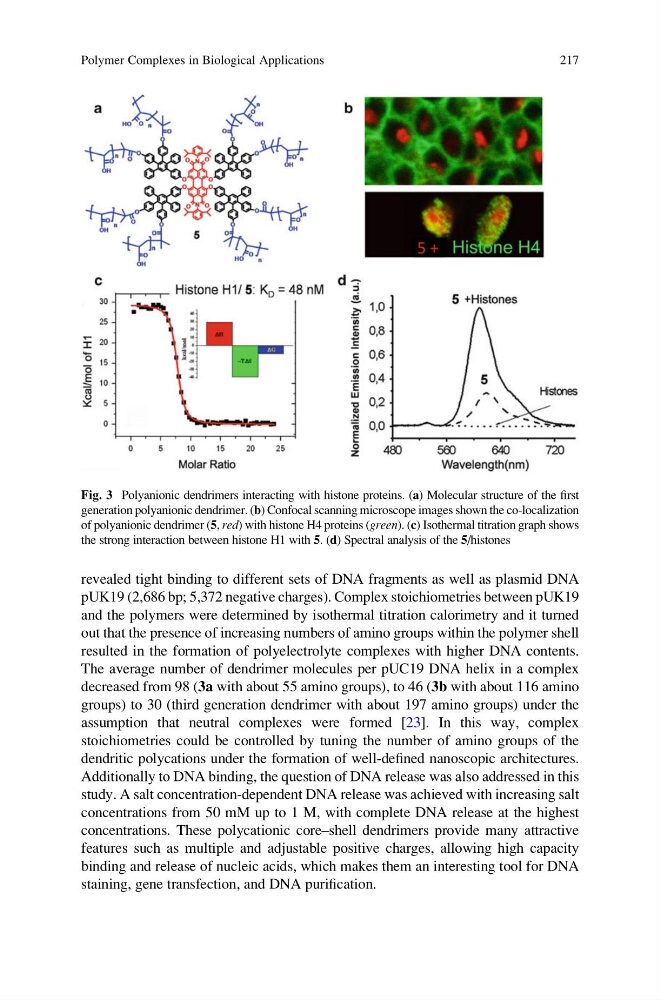
Fig. 3 Polyanionic dendrimers interacting with histone proteins. (a) Molecular structure of the first
generation polyanionic dendrimer. (b) Confocal scanning microscope images shown the co-localization
of polyanionic dendrimer (5, red) with histone H4 proteins (green). (c) Isothermal titration graph shows
the strong interaction between histone H1 with 5. (d) Spectral analysis of the 5/histones
Polymer Complexes in Biological Applications
217
pUK19 (2,686 bp; 5,372 negative charges). Complex stoichiometries between pUK19
and the polymers were determined by isothermal titration calorimetry and it turned
out that the presence of increasing numbers of amino groups within the polymer shell
resulted in the formation of polyelectrolyte complexes with higher DNA contents.
The average number of dendrimer molecules per pUC19 DNA helix in a complex
decreased from 98 (3a with about 55 amino groups), to 46 (3b with about 116 amino
groups) to 30 (third generation dendrimer with about 197 amino groups) under the
assumption that neutral complexes were formed [23]. In this way, complex
stoichiometries could be controlled by tuning the number of amino groups of the
dendritic polycations under the formation of well-defined nanoscopic architectures.
Additionally to DNA binding, the question of DNA release was also addressed in this
study. A salt concentration-dependent DNA release was achieved with increasing salt
concentrations from 50 mM up to 1 M, with complete DNA release at the highest
concentrations. These polycationic core–shell dendrimers provide many attractive
features such as multiple and adjustable positive charges, allowing high capacity
binding and release of nucleic acids, which makes them an interesting tool for DNA
staining, gene transfection, and DNA purification.
Fig. 3 Polyanionic dendrimers interacting with histone proteins. (a) Molecular structure of the first
generation polyanionic dendrimer. (b) Confocal scanning microscope images shown the co-localization
of polyanionic dendrimer (5, red) with histone H4 proteins (green). (c) Isothermal titration graph shows
the strong interaction between histone H1 with 5. (d) Spectral analysis of the 5/histones
Polymer Complexes in Biological Applications
217