

2.5 PPDs as Hosts and Drug Carriers
Another example of designing the interior for suitable guest-uptake is the use of the
dendrimers as receptors for analyzing vapors and for sensing of guest molecules
[40–42]. Thus, hazardous explosives [43] such as triacetonetriperoxide, which has
been used in terroristic attacks, can be trapped with high sensitivity and selectivity
and can be detected by an ultra-microbalance that carries the dendrimer on its tip.
Indeed, the limit of detection has now reached the picogram range. A challenging task
is to understand the steric (size and nature of the voids) and electronic (incorporation
of pyridine and imidazole units for activating charge-transfer interactions or hydrogen bonding with the guest) conditions and use this as a guideline for improved
receptor design. There are many other useful applications of the PPDs as host or
encapsulating species [44, 45] whose detailed description is beyond the scope of this
text. One example is the growth of metal nanoparticles inside the rigid dendrimer by
reduction of metal salts, thus preventing the particles from undesirable aggregation.
The PPDs thus create a perfect nanoenvironment with increasingly complex
function. Admittedly, they define enormous tasks for precision polymer synthesis,
but if really sophisticated function is targeted it is worthwhile to take on this
challenge in view of the wealth of otherwise inaccessible chemical, physical, and
biological properties [10, 46]. Further, there is much to learn when comparing
multifunctional dendrimers based upon covalent build-up, with assemblies
depending upon weak intermolecular forces. This is indeed another benefit of the
structural perfection of the PPDs, that they also allow the fabrication of increasingly
complex supramolecular structures.
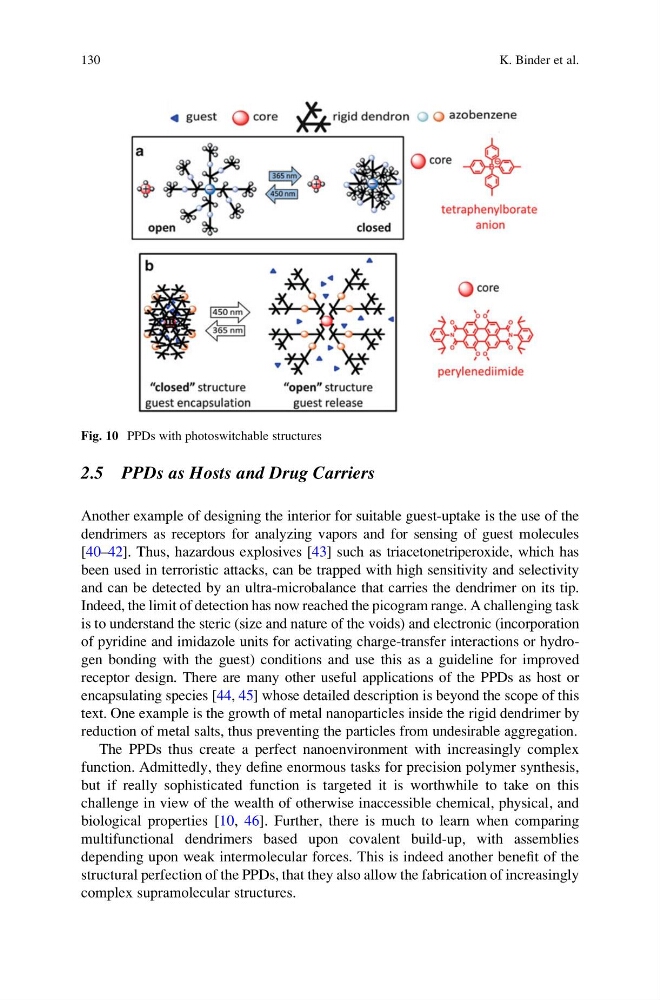
Fig. 10 PPDs with photoswitchable structures
130
K. Binder et al.
Another example of designing the interior for suitable guest-uptake is the use of the
dendrimers as receptors for analyzing vapors and for sensing of guest molecules
[40–42]. Thus, hazardous explosives [43] such as triacetonetriperoxide, which has
been used in terroristic attacks, can be trapped with high sensitivity and selectivity
and can be detected by an ultra-microbalance that carries the dendrimer on its tip.
Indeed, the limit of detection has now reached the picogram range. A challenging task
is to understand the steric (size and nature of the voids) and electronic (incorporation
of pyridine and imidazole units for activating charge-transfer interactions or hydrogen bonding with the guest) conditions and use this as a guideline for improved
receptor design. There are many other useful applications of the PPDs as host or
encapsulating species [44, 45] whose detailed description is beyond the scope of this
text. One example is the growth of metal nanoparticles inside the rigid dendrimer by
reduction of metal salts, thus preventing the particles from undesirable aggregation.
The PPDs thus create a perfect nanoenvironment with increasingly complex
function. Admittedly, they define enormous tasks for precision polymer synthesis,
but if really sophisticated function is targeted it is worthwhile to take on this
challenge in view of the wealth of otherwise inaccessible chemical, physical, and
biological properties [10, 46]. Further, there is much to learn when comparing
multifunctional dendrimers based upon covalent build-up, with assemblies
depending upon weak intermolecular forces. This is indeed another benefit of the
structural perfection of the PPDs, that they also allow the fabrication of increasingly
complex supramolecular structures.
Fig. 10 PPDs with photoswitchable structures
130
K. Binder et al.