

Nowadays, IPECs are typically considered to be self-organizing and ordered
macromolecular co-assemblies. This concept is based not only on semi-intuitive
understanding of such systems as products of the cooperative interpolyelectrolyte
interaction but also on some supporting experimental findings.
Self-adjustment phenomena in IPECs manifest themselves on different scales:
both within single particles in aqueous solutions of nonstoichiometric IPECs and
in bulk insoluble stoichiometric IPECs. A transfer of GPE chains from some
HPE chains to other identical chains has been considered above. It has been
assumed that this transfer is possible because a GPE chain permanently changes
its location in a HPE coil due to Brownian motion. In a united {HPE 1 -GPE-HPE 2 }
coil, it can “choose” another host within the lifetime of the coil and, therefore,
migrate from the original HPE 1 to the added HPE 2 . Besides, one assumes that all
locations of the GPE chain in the HPE coil are equal because there is no available
information about their preferable locations. At the same time, when the GPE chain
is rather short it remains relatively strained on the oppositely charged longer HPE
chain. This implies a certain order in mutual locations of the polymeric components
in an IPEC particle. Such a consideration follows from numerous results on the
conformational behavior of particles of water-soluble nonstoichiometric IPECs.
Thus, the migration of GPE chains resembles a “worm”-like motion along a
stretched thread, this motion being permanent and chaotic in nature.
The Brownian motion of GPE-quenchers becomes vectorized even if a minor
amount of pyrenyl labels is attached to HPE chains; as little as about one label per 350
monomer units of HPE* is sufficient. This manifests itself in the fact that GPEquenchers, as described above, predominantly occupy HPE* chains bearing the
fluorescent labels. Considering a single particle of a water-soluble nonstoichiometric
IPEC*, this also means that a random walk of a GPE chain in a HPE* coil is directed,
with the GPE chain spending more time on sites of HPE*, which contain the
anchoring label.
In the context of self-organization of IPECs, the so-called interpolyelectrolyte
substitution reactions are of particular interest. In these reactions, HPE 1 chains
coupled to GPE (i.e., forming IPEC 1 ) are substituted by HPE 2 chains, which are
different in nature, thereby generating IPEC 2 as shown in (9)
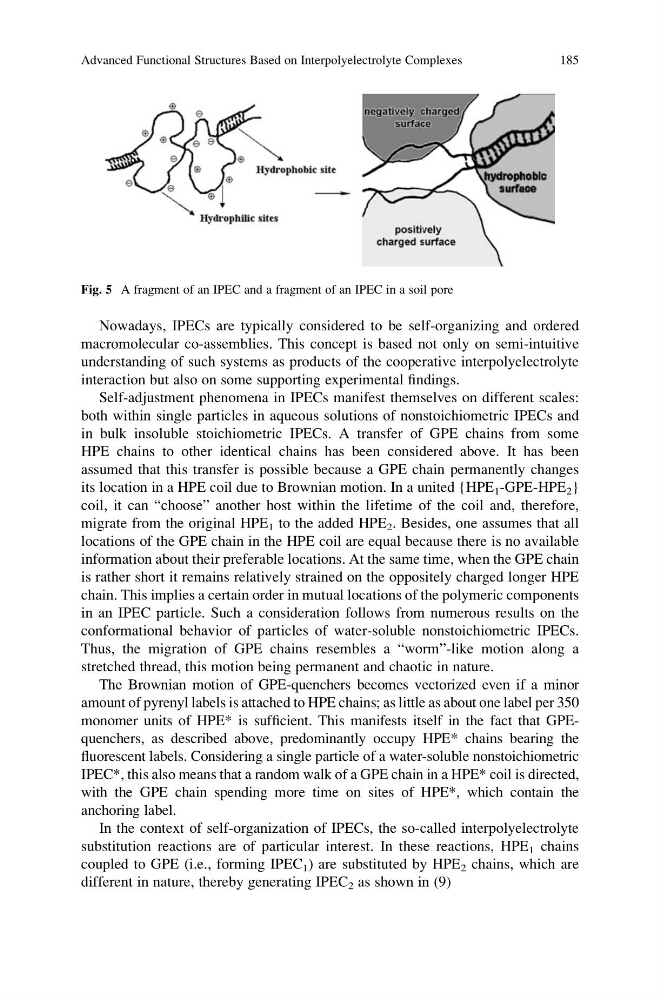
Fig. 5 A fragment of an IPEC and a fragment of an IPEC in a soil pore
Advanced Functional Structures Based on Interpolyelectrolyte Complexes
185
macromolecular co-assemblies. This concept is based not only on semi-intuitive
understanding of such systems as products of the cooperative interpolyelectrolyte
interaction but also on some supporting experimental findings.
Self-adjustment phenomena in IPECs manifest themselves on different scales:
both within single particles in aqueous solutions of nonstoichiometric IPECs and
in bulk insoluble stoichiometric IPECs. A transfer of GPE chains from some
HPE chains to other identical chains has been considered above. It has been
assumed that this transfer is possible because a GPE chain permanently changes
its location in a HPE coil due to Brownian motion. In a united {HPE 1 -GPE-HPE 2 }
coil, it can “choose” another host within the lifetime of the coil and, therefore,
migrate from the original HPE 1 to the added HPE 2 . Besides, one assumes that all
locations of the GPE chain in the HPE coil are equal because there is no available
information about their preferable locations. At the same time, when the GPE chain
is rather short it remains relatively strained on the oppositely charged longer HPE
chain. This implies a certain order in mutual locations of the polymeric components
in an IPEC particle. Such a consideration follows from numerous results on the
conformational behavior of particles of water-soluble nonstoichiometric IPECs.
Thus, the migration of GPE chains resembles a “worm”-like motion along a
stretched thread, this motion being permanent and chaotic in nature.
The Brownian motion of GPE-quenchers becomes vectorized even if a minor
amount of pyrenyl labels is attached to HPE chains; as little as about one label per 350
monomer units of HPE* is sufficient. This manifests itself in the fact that GPEquenchers, as described above, predominantly occupy HPE* chains bearing the
fluorescent labels. Considering a single particle of a water-soluble nonstoichiometric
IPEC*, this also means that a random walk of a GPE chain in a HPE* coil is directed,
with the GPE chain spending more time on sites of HPE*, which contain the
anchoring label.
In the context of self-organization of IPECs, the so-called interpolyelectrolyte
substitution reactions are of particular interest. In these reactions, HPE 1 chains
coupled to GPE (i.e., forming IPEC 1 ) are substituted by HPE 2 chains, which are
different in nature, thereby generating IPEC 2 as shown in (9)
Fig. 5 A fragment of an IPEC and a fragment of an IPEC in a soil pore
Advanced Functional Structures Based on Interpolyelectrolyte Complexes
185