

version of the MIGRATION concept [42, 61] and by Dieterich et al. within their
dipolar version of the counterion model [55] that such processes lead to the wellknown “nearly constant loss (NCL) behavior”. The NCL behavior implies that the
imaginary part of the permittivity becomes almost independent of frequency, which
corresponds to a σ
0
NCL ðωÞ / ω dependence in the real part of the conductivity.
Conductivity spectra obtained on the basis of the two models given above indeed
show the proportionality of σ
0
/ ν over wide ranges in frequency. At very low
frequencies, the model spectra bend over into a ω
2 dependence, and at high
frequencies into a high-frequency plateau. As shown earlier [58], power laws
with q > 1 imply that the corresponding mean square displacement of the mobile
ions will always merge into a plateau regime at sufficiently long times, indicating
that the motion under consideration is strictly localized. In contrast to a pure Debyetype process, however, the environment of the considered ion is not completely
frozen. If an ion performs a jump within its double minimum potential, neighboring
ions will react to this hop and move very slightly, inducing a time dependence of the
potential energy. So, there is some interaction between the ion hopping locally and
its environment, but the interaction is not as pronounced as in the dipolar model of
Dieterich [62, 63] or in the extended version of the MIGRATION model of Funke
[42, 61]. The presence of a contribution as described by Eq. (3) in the investigated
PEC materials implies that localized motions of ions in not completely rigid
environments should also be considered in PEC materials.
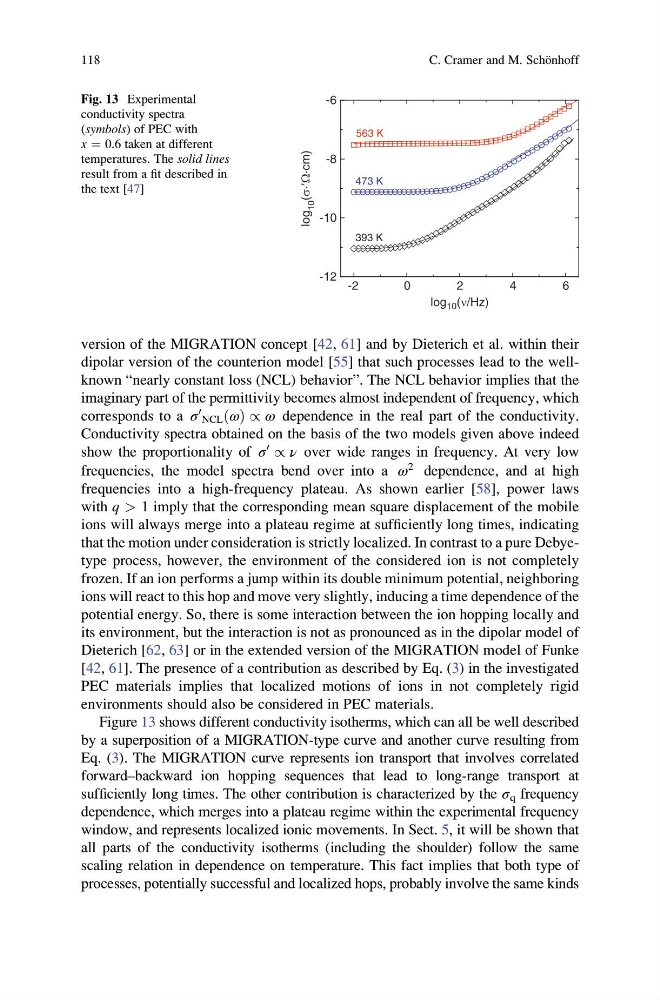
Figure 13 shows different conductivity isotherms, which can all be well described
by a superposition of a MIGRATION-type curve and another curve resulting from
Eq. (3). The MIGRATION curve represents ion transport that involves correlated
forward–backward ion hopping sequences that lead to long-range transport at
sufficiently long times. The other contribution is characterized by the σ q frequency
dependence, which merges into a plateau regime within the experimental frequency
window, and represents localized ionic movements. In Sect. 5, it will be shown that
all parts of the conductivity isotherms (including the shoulder) follow the same
scaling relation in dependence on temperature. This fact implies that both type of
processes, potentially successful and localized hops, probably involve the same kinds
-2
0
2
4
6
-12
-10
-8
-6
473 K
563 K
log 10 (ν/Hz)
393 K
log
10
(s·′W·cm)
Fig. 13 Experimental
conductivity spectra
(symbols) of PEC with
x ¼ 0.6 taken at different
temperatures. The solid lines
result from a fit described in
the text [47]
118
C. Cramer and M. Scho ¨nhoff
dipolar version of the counterion model [55] that such processes lead to the wellknown “nearly constant loss (NCL) behavior”. The NCL behavior implies that the
imaginary part of the permittivity becomes almost independent of frequency, which
corresponds to a σ
0
NCL ðωÞ / ω dependence in the real part of the conductivity.
Conductivity spectra obtained on the basis of the two models given above indeed
show the proportionality of σ
0
/ ν over wide ranges in frequency. At very low
frequencies, the model spectra bend over into a ω
2 dependence, and at high
frequencies into a high-frequency plateau. As shown earlier [58], power laws
with q > 1 imply that the corresponding mean square displacement of the mobile
ions will always merge into a plateau regime at sufficiently long times, indicating
that the motion under consideration is strictly localized. In contrast to a pure Debyetype process, however, the environment of the considered ion is not completely
frozen. If an ion performs a jump within its double minimum potential, neighboring
ions will react to this hop and move very slightly, inducing a time dependence of the
potential energy. So, there is some interaction between the ion hopping locally and
its environment, but the interaction is not as pronounced as in the dipolar model of
Dieterich [62, 63] or in the extended version of the MIGRATION model of Funke
[42, 61]. The presence of a contribution as described by Eq. (3) in the investigated
PEC materials implies that localized motions of ions in not completely rigid
environments should also be considered in PEC materials.
Figure 13 shows different conductivity isotherms, which can all be well described
by a superposition of a MIGRATION-type curve and another curve resulting from
Eq. (3). The MIGRATION curve represents ion transport that involves correlated
forward–backward ion hopping sequences that lead to long-range transport at
sufficiently long times. The other contribution is characterized by the σ q frequency
dependence, which merges into a plateau regime within the experimental frequency
window, and represents localized ionic movements. In Sect. 5, it will be shown that
all parts of the conductivity isotherms (including the shoulder) follow the same
scaling relation in dependence on temperature. This fact implies that both type of
processes, potentially successful and localized hops, probably involve the same kinds
-2
0
2
4
6
-12
-10
-8
-6
473 K
563 K
log 10 (ν/Hz)
393 K
log
10
(s·′W·cm)
Fig. 13 Experimental
conductivity spectra
(symbols) of PEC with
x ¼ 0.6 taken at different
temperatures. The solid lines
result from a fit described in
the text [47]
118
C. Cramer and M. Scho ¨nhoff