

In the analysis of loss modulus (G
00 ) versus strain, all PP/TiO 2 nanocomposites
show a well defined maximum in G
00 ; also, the amplitudes of the loss modulus
maxima increase with increasing in situ generated TiO 2 and are related to the
energy dissipation produced by the breakdown of filler aggregates. Moreover, the
observed second plateau modulus at low frequency is correlated to the formation of
an aggregate-particle network. The study of the nonlinear viscoelastic behavior (the
Payne affect) agrees with this reinforcement mechanism [59].
3.4 Other 3D Nanofillers in Rubber Nanocomposites
There are many commonly used nanoparticles classified as iso-dimensional
nanofillers. Most studies have been focused on organic polymers and inorganic
nanoparticles, having dimensions smaller than 50 nm. The most popular
nanoparticles possess many features, but also some limitations that cause their
limited use. Searching for a rubber matrix is still a major challenge. The ideal
nanofiller should possess features such as: nanoscale size, spherical shape, good
dispersion in the rubber matrix, possible chemical activity on the surface, lower
density, and of course lower price [60]. An attempt to find such a nanofiller has been
described by Lu et al. [60]. The authors synthesized latex-formed core-shell
nanoparticles from cross-linked polystyrene (core) and polyisoprene (shell) and
filled the SBR matrix using these core-shell particles. The PS hard core gave
stiffness, while the PI shell was designed for setting up filler-matrix interactions.
TEM analysis shows a 50–70 nm size for the spherically shaped nanoparticles. In
the PS-PI nanoparticle-filled SBR composites, the authors studied the strain dependence of the shear storage modulus to describe the nonlinear viscoelastic behavior
in PS-PI/SBR composites. They proved that the Payne effect was weakened as the
PI (shell) thickness increased; therefore the PI shell domain plays a very important
role in the filler-rubber interactions [60].
The differences between the MgO particle size and their influence on butadiene
rubber (BR) nanocomposites have been reported by Naixiu et al. The authors
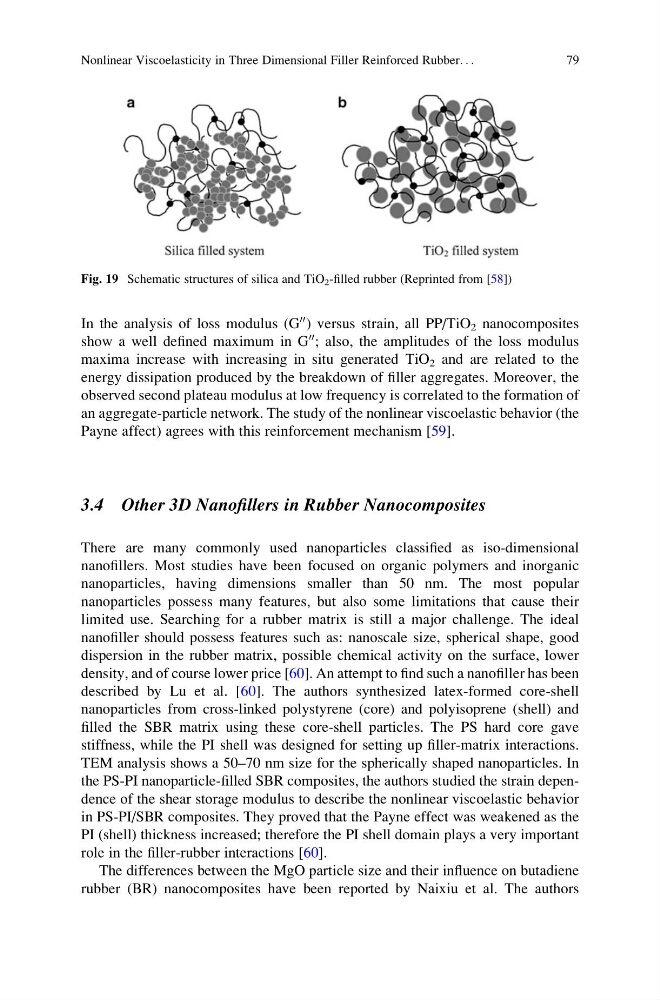
Fig. 19 Schematic structures of silica and TiO 2 -filled rubber (Reprinted from [58])
Nonlinear Viscoelasticity in Three Dimensional Filler Reinforced Rubber. . .
79
00 ) versus strain, all PP/TiO 2 nanocomposites
show a well defined maximum in G
00 ; also, the amplitudes of the loss modulus
maxima increase with increasing in situ generated TiO 2 and are related to the
energy dissipation produced by the breakdown of filler aggregates. Moreover, the
observed second plateau modulus at low frequency is correlated to the formation of
an aggregate-particle network. The study of the nonlinear viscoelastic behavior (the
Payne affect) agrees with this reinforcement mechanism [59].
3.4 Other 3D Nanofillers in Rubber Nanocomposites
There are many commonly used nanoparticles classified as iso-dimensional
nanofillers. Most studies have been focused on organic polymers and inorganic
nanoparticles, having dimensions smaller than 50 nm. The most popular
nanoparticles possess many features, but also some limitations that cause their
limited use. Searching for a rubber matrix is still a major challenge. The ideal
nanofiller should possess features such as: nanoscale size, spherical shape, good
dispersion in the rubber matrix, possible chemical activity on the surface, lower
density, and of course lower price [60]. An attempt to find such a nanofiller has been
described by Lu et al. [60]. The authors synthesized latex-formed core-shell
nanoparticles from cross-linked polystyrene (core) and polyisoprene (shell) and
filled the SBR matrix using these core-shell particles. The PS hard core gave
stiffness, while the PI shell was designed for setting up filler-matrix interactions.
TEM analysis shows a 50–70 nm size for the spherically shaped nanoparticles. In
the PS-PI nanoparticle-filled SBR composites, the authors studied the strain dependence of the shear storage modulus to describe the nonlinear viscoelastic behavior
in PS-PI/SBR composites. They proved that the Payne effect was weakened as the
PI (shell) thickness increased; therefore the PI shell domain plays a very important
role in the filler-rubber interactions [60].
The differences between the MgO particle size and their influence on butadiene
rubber (BR) nanocomposites have been reported by Naixiu et al. The authors
Fig. 19 Schematic structures of silica and TiO 2 -filled rubber (Reprinted from [58])
Nonlinear Viscoelasticity in Three Dimensional Filler Reinforced Rubber. . .
79