

schematic comparisons from dynamic strain sweep studies on silica rubber
nanocomposites have been presented by the authors (Fig. 14). The authors reported
that silica agglomerates formed at lower loadings and the number of filler-filler
hydrogen bonding interactions increased significantly with filler loadings. At the
same filler loading there was higher filler-rubber hydrogen bonding interaction in
Si-OH particles filled PB (polybutadiene) than in Si-Ph particles in the same matrix
(Fig. 14). What’s more, the filler-rubber hydrogen bonding interaction was more
sensitive to temperature than the filler-filler HB interaction. Also, Si-Ph
nanoparticles formed more agglomerates than Si-OH fillers.
The degree of polybutadiene (PB) modification, the filler loading and silica
surface polarity affect the filler-filler, filler-rubber, and rubber-rubber hydrogen
bonding interactions. These studies prove that filler-filler, filler-rubber and rubberrubber interactions are controlled by the presence of hydrogen bonding. Using this
methodology it is possible to reduce the Payne effect and modify the mechanical
properties of silica nanocomposites.
Very interesting investigations were performed by Bandyopadhyay
et al. [18]. The authors studied the effect of polymer-filler interactions in three
different polymer matrices [acrylic rubber (ACM), epoxidized natural rubber
(ENR) and poly(vinyl alcohol) (PVA)] which were modified using nano-sized silica
(generating by the sol–gel technique), where tetraethoxysilane (TEOS) at different
concentrations was used as the precursor for silica generation. The elastic modulus
of the unfilled rubbers does not change upon increasing strain amplitude. However,
for the nanocomposites it is observed (characteristic behavior) that the elastic
modulus decreases upon increasing the strain amplitude. The interaction of silica
with the matrix and the self-aggregation of the nanoparticles affect the development
of the nanofiller network within the polymer matrix. The authors presented a silicamatrix model (Fig. 15) in which, with the less interactive polymer matrix (ACM)
more polymer chains would remain at the periphery of the small nanofiller aggregates and be easily de-agglomerated from the surface aggregated silica particles
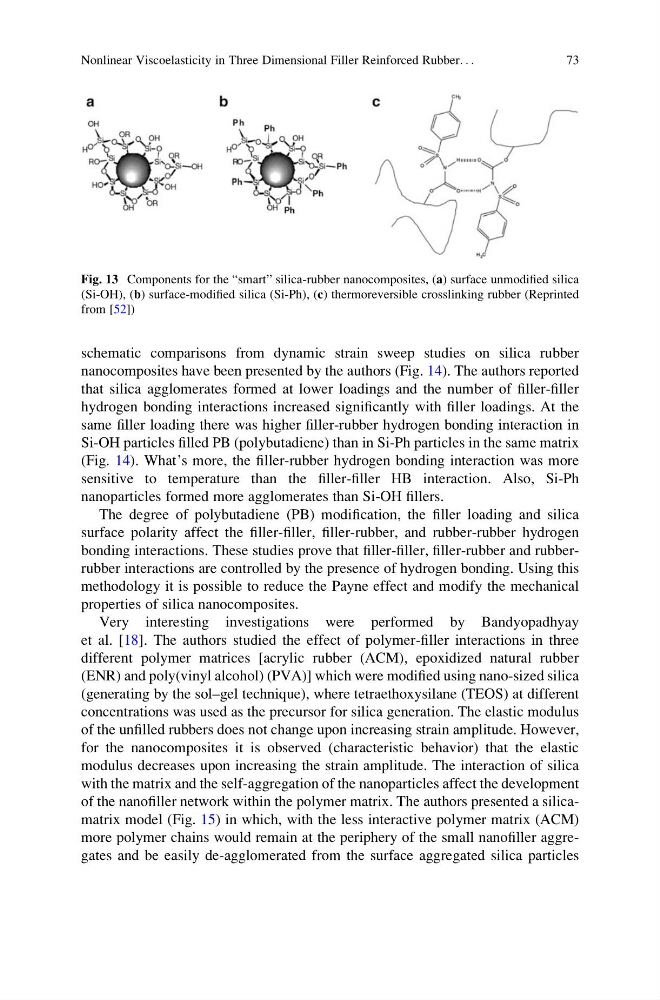
Fig. 13 Components for the “smart” silica-rubber nanocomposites, (a) surface unmodified silica
(Si-OH), (b) surface-modified silica (Si-Ph), (c) thermoreversible crosslinking rubber (Reprinted
from [52])
Nonlinear Viscoelasticity in Three Dimensional Filler Reinforced Rubber. . .
73
nanocomposites have been presented by the authors (Fig. 14). The authors reported
that silica agglomerates formed at lower loadings and the number of filler-filler
hydrogen bonding interactions increased significantly with filler loadings. At the
same filler loading there was higher filler-rubber hydrogen bonding interaction in
Si-OH particles filled PB (polybutadiene) than in Si-Ph particles in the same matrix
(Fig. 14). What’s more, the filler-rubber hydrogen bonding interaction was more
sensitive to temperature than the filler-filler HB interaction. Also, Si-Ph
nanoparticles formed more agglomerates than Si-OH fillers.
The degree of polybutadiene (PB) modification, the filler loading and silica
surface polarity affect the filler-filler, filler-rubber, and rubber-rubber hydrogen
bonding interactions. These studies prove that filler-filler, filler-rubber and rubberrubber interactions are controlled by the presence of hydrogen bonding. Using this
methodology it is possible to reduce the Payne effect and modify the mechanical
properties of silica nanocomposites.
Very interesting investigations were performed by Bandyopadhyay
et al. [18]. The authors studied the effect of polymer-filler interactions in three
different polymer matrices [acrylic rubber (ACM), epoxidized natural rubber
(ENR) and poly(vinyl alcohol) (PVA)] which were modified using nano-sized silica
(generating by the sol–gel technique), where tetraethoxysilane (TEOS) at different
concentrations was used as the precursor for silica generation. The elastic modulus
of the unfilled rubbers does not change upon increasing strain amplitude. However,
for the nanocomposites it is observed (characteristic behavior) that the elastic
modulus decreases upon increasing the strain amplitude. The interaction of silica
with the matrix and the self-aggregation of the nanoparticles affect the development
of the nanofiller network within the polymer matrix. The authors presented a silicamatrix model (Fig. 15) in which, with the less interactive polymer matrix (ACM)
more polymer chains would remain at the periphery of the small nanofiller aggregates and be easily de-agglomerated from the surface aggregated silica particles
Fig. 13 Components for the “smart” silica-rubber nanocomposites, (a) surface unmodified silica
(Si-OH), (b) surface-modified silica (Si-Ph), (c) thermoreversible crosslinking rubber (Reprinted
from [52])
Nonlinear Viscoelasticity in Three Dimensional Filler Reinforced Rubber. . .
73