

the deagglomeration and the network breakdown of fillers. Understanding and
control of the issues related to the Payne effect, especially during the preparation
of new polymeric nanocomposites based on nanofillers is very important for
materials application. A major role in determining nanofiller effects on nonlinear
behavior of nanocomposites is played by the dispersion of the nanofillers in the
rubber matrix and the interaction between these components.
The focus of this chapter is to present three-dimensional nanofillers and the
influence of these kinds of nanoparticles on the nonlinear viscoelastic behavior of
rubber nanocomposite systems.
2 Three Dimensional Fillers: Synthesis, Morphology
and Characterization
2.1 Introduction to Three-Dimensional Nanoparticles
There are several methods of classification of polymeric nanocomposites. One of
these classifications is based on the dimensionality of the nanoparticles that are
dispersed into the polymer matrix.
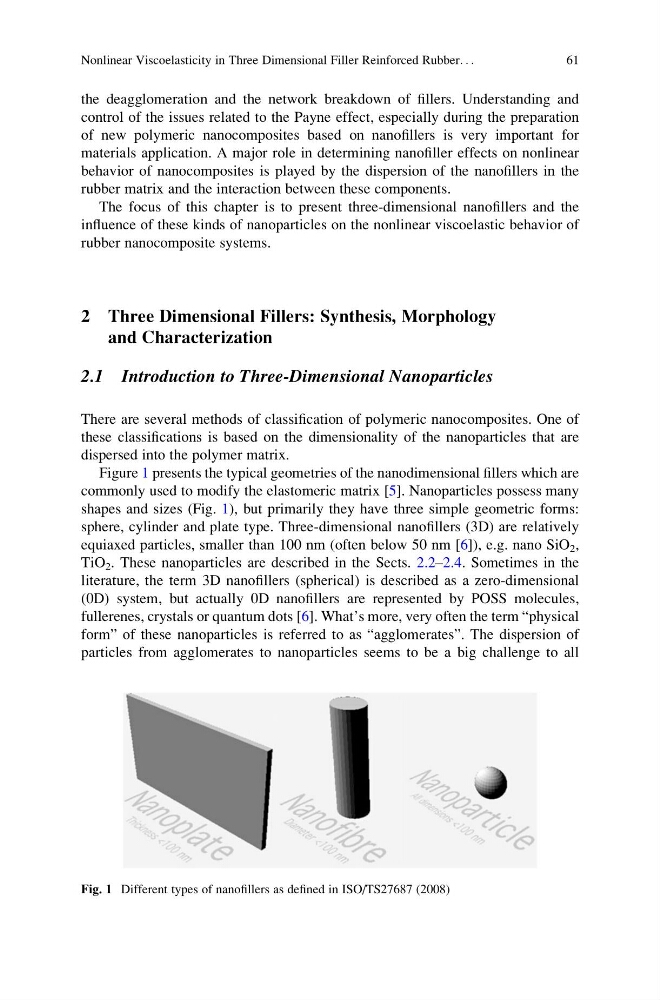
Figure 1 presents the typical geometries of the nanodimensional fillers which are
commonly used to modify the elastomeric matrix [5]. Nanoparticles possess many
shapes and sizes (Fig. 1), but primarily they have three simple geometric forms:
sphere, cylinder and plate type. Three-dimensional nanofillers (3D) are relatively
equiaxed particles, smaller than 100 nm (often below 50 nm [6]), e.g. nano SiO 2 ,
TiO 2 . These nanoparticles are described in the Sects. 2.2–2.4. Sometimes in the
literature, the term 3D nanofillers (spherical) is described as a zero-dimensional
(0D) system, but actually 0D nanofillers are represented by POSS molecules,
fullerenes, crystals or quantum dots [6]. What’s more, very often the term “physical
form” of these nanoparticles is referred to as “agglomerates”. The dispersion of
particles from agglomerates to nanoparticles seems to be a big challenge to all
Fig. 1 Different types of nanofillers as defined in ISO/TS27687 (2008)
Nonlinear Viscoelasticity in Three Dimensional Filler Reinforced Rubber. . .
61
control of the issues related to the Payne effect, especially during the preparation
of new polymeric nanocomposites based on nanofillers is very important for
materials application. A major role in determining nanofiller effects on nonlinear
behavior of nanocomposites is played by the dispersion of the nanofillers in the
rubber matrix and the interaction between these components.
The focus of this chapter is to present three-dimensional nanofillers and the
influence of these kinds of nanoparticles on the nonlinear viscoelastic behavior of
rubber nanocomposite systems.
2 Three Dimensional Fillers: Synthesis, Morphology
and Characterization
2.1 Introduction to Three-Dimensional Nanoparticles
There are several methods of classification of polymeric nanocomposites. One of
these classifications is based on the dimensionality of the nanoparticles that are
dispersed into the polymer matrix.
Figure 1 presents the typical geometries of the nanodimensional fillers which are
commonly used to modify the elastomeric matrix [5]. Nanoparticles possess many
shapes and sizes (Fig. 1), but primarily they have three simple geometric forms:
sphere, cylinder and plate type. Three-dimensional nanofillers (3D) are relatively
equiaxed particles, smaller than 100 nm (often below 50 nm [6]), e.g. nano SiO 2 ,
TiO 2 . These nanoparticles are described in the Sects. 2.2–2.4. Sometimes in the
literature, the term 3D nanofillers (spherical) is described as a zero-dimensional
(0D) system, but actually 0D nanofillers are represented by POSS molecules,
fullerenes, crystals or quantum dots [6]. What’s more, very often the term “physical
form” of these nanoparticles is referred to as “agglomerates”. The dispersion of
particles from agglomerates to nanoparticles seems to be a big challenge to all
Fig. 1 Different types of nanofillers as defined in ISO/TS27687 (2008)
Nonlinear Viscoelasticity in Three Dimensional Filler Reinforced Rubber. . .
61