

preferentially towards the XSBR phase than NR due to the polarity of XSBR
latex [107].
Das et al., used QUAT compound (di-steryldimethyl ammonium) to modify the
clay. It is also interesting to look into the chemical interactions of organoclay
(QUATmodified MMT) with functionally polar rubbers like XNBR, CR, and
their mutual blend. The role of layered silicate on the curing process of CR/XNBR
blends was investigated through the study of curing kinetics, mechanical properties,
WAXS, and DMA [108].
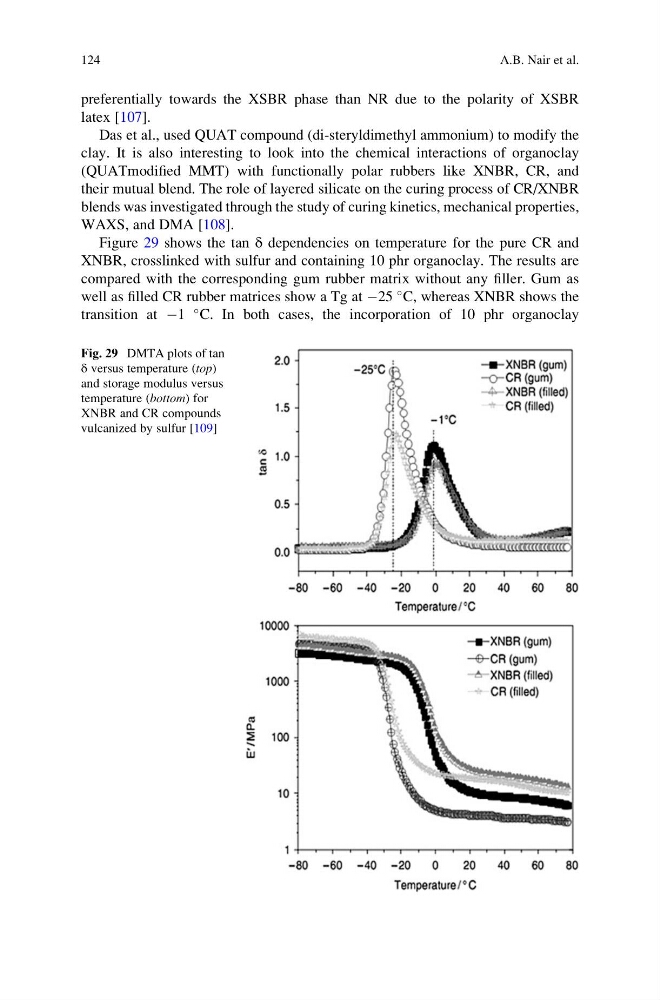
Figure 29 shows the tan δ dependencies on temperature for the pure CR and
XNBR, crosslinked with sulfur and containing 10 phr organoclay. The results are
compared with the corresponding gum rubber matrix without any filler. Gum as
well as filled CR rubber matrices show a Tg at À25
C, whereas XNBR shows the
transition at À1
C. In both cases, the incorporation of 10 phr organoclay
Fig. 29 DMTA plots of tan
δ versus temperature (top)
and storage modulus versus
temperature (bottom) for
XNBR and CR compounds
vulcanized by sulfur [109]
124
A.B. Nair et al.
latex [107].
Das et al., used QUAT compound (di-steryldimethyl ammonium) to modify the
clay. It is also interesting to look into the chemical interactions of organoclay
(QUATmodified MMT) with functionally polar rubbers like XNBR, CR, and
their mutual blend. The role of layered silicate on the curing process of CR/XNBR
blends was investigated through the study of curing kinetics, mechanical properties,
WAXS, and DMA [108].
Figure 29 shows the tan δ dependencies on temperature for the pure CR and
XNBR, crosslinked with sulfur and containing 10 phr organoclay. The results are
compared with the corresponding gum rubber matrix without any filler. Gum as
well as filled CR rubber matrices show a Tg at À25
C, whereas XNBR shows the
transition at À1
C. In both cases, the incorporation of 10 phr organoclay
Fig. 29 DMTA plots of tan
δ versus temperature (top)
and storage modulus versus
temperature (bottom) for
XNBR and CR compounds
vulcanized by sulfur [109]
124
A.B. Nair et al.