

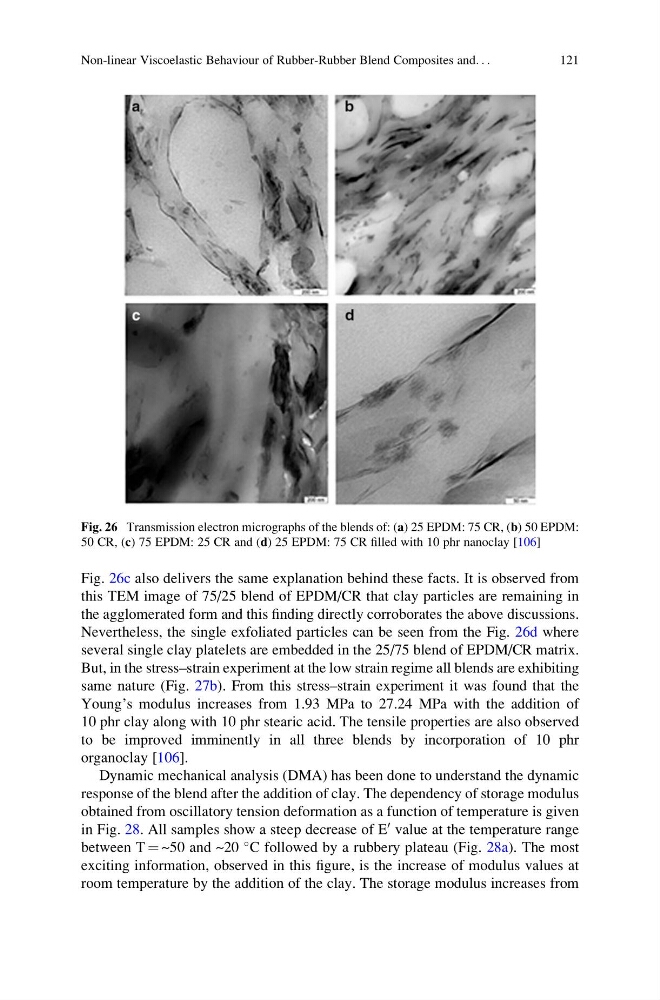
Fig. 26c also delivers the same explanation behind these facts. It is observed from
this TEM image of 75/25 blend of EPDM/CR that clay particles are remaining in
the agglomerated form and this finding directly corroborates the above discussions.
Nevertheless, the single exfoliated particles can be seen from the Fig. 26d where
several single clay platelets are embedded in the 25/75 blend of EPDM/CR matrix.
But, in the stress–strain experiment at the low strain regime all blends are exhibiting
same nature (Fig. 27b). From this stress–strain experiment it was found that the
Young’s modulus increases from 1.93 MPa to 27.24 MPa with the addition of
10 phr clay along with 10 phr stearic acid. The tensile properties are also observed
to be improved imminently in all three blends by incorporation of 10 phr
organoclay [106].
Dynamic mechanical analysis (DMA) has been done to understand the dynamic
response of the blend after the addition of clay. The dependency of storage modulus
obtained from oscillatory tension deformation as a function of temperature is given
in Fig. 28. All samples show a steep decrease of E
0 value at the temperature range
between T ¼ ~50 and ~20
C followed by a rubbery plateau (Fig. 28a). The most
exciting information, observed in this figure, is the increase of modulus values at
room temperature by the addition of the clay. The storage modulus increases from
Fig. 26 Transmission electron micrographs of the blends of: (a) 25 EPDM: 75 CR, (b) 50 EPDM:
50 CR, (c) 75 EPDM: 25 CR and (d) 25 EPDM: 75 CR filled with 10 phr nanoclay [106]
Non-linear Viscoelastic Behaviour of Rubber-Rubber Blend Composites and. . .
121
this TEM image of 75/25 blend of EPDM/CR that clay particles are remaining in
the agglomerated form and this finding directly corroborates the above discussions.
Nevertheless, the single exfoliated particles can be seen from the Fig. 26d where
several single clay platelets are embedded in the 25/75 blend of EPDM/CR matrix.
But, in the stress–strain experiment at the low strain regime all blends are exhibiting
same nature (Fig. 27b). From this stress–strain experiment it was found that the
Young’s modulus increases from 1.93 MPa to 27.24 MPa with the addition of
10 phr clay along with 10 phr stearic acid. The tensile properties are also observed
to be improved imminently in all three blends by incorporation of 10 phr
organoclay [106].
Dynamic mechanical analysis (DMA) has been done to understand the dynamic
response of the blend after the addition of clay. The dependency of storage modulus
obtained from oscillatory tension deformation as a function of temperature is given
in Fig. 28. All samples show a steep decrease of E
0 value at the temperature range
between T ¼ ~50 and ~20
C followed by a rubbery plateau (Fig. 28a). The most
exciting information, observed in this figure, is the increase of modulus values at
room temperature by the addition of the clay. The storage modulus increases from
Fig. 26 Transmission electron micrographs of the blends of: (a) 25 EPDM: 75 CR, (b) 50 EPDM:
50 CR, (c) 75 EPDM: 25 CR and (d) 25 EPDM: 75 CR filled with 10 phr nanoclay [106]
Non-linear Viscoelastic Behaviour of Rubber-Rubber Blend Composites and. . .
121