

68
V. Shree et al.
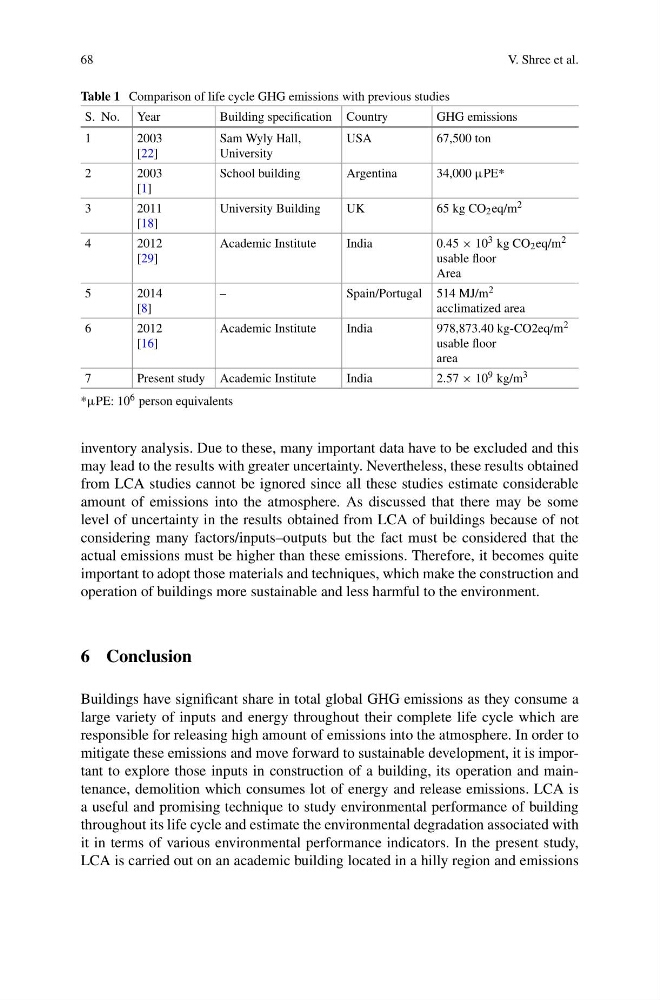
Table 1 Comparison of life cycle GHG emissions with previous studies
S. No. Year
Building specification Country
GHG emissions
1
2003
[22]
Sam Wyly Hall,
University
USA
67,500 ton
2
2003
[1]
School building
Argentina
34,000 µPE*
3
2011
[18]
University Building
UK
65 kg CO 2 eq/m 2
4
2012
[29]
Academic Institute
India
0.45 × 10 3 kg CO 2 eq/m 2
usable floor
Area
5
2014
[8]
–
Spain/Portugal 514 MJ/m 2
acclimatized area
6
2012
[16]
Academic Institute
India
978,873.40 kg-CO2eq/m 2
usable floor
area
7
Present study Academic Institute
India
2.57 × 10 9 kg/m 3
*µPE: 10 6 person equivalents
inventory analysis. Due to these, many important data have to be excluded and this
may lead to the results with greater uncertainty. Nevertheless, these results obtained
from LCA studies cannot be ignored since all these studies estimate considerable
amount of emissions into the atmosphere. As discussed that there may be some
level of uncertainty in the results obtained from LCA of buildings because of not
considering many factors/inputs–outputs but the fact must be considered that the
actual emissions must be higher than these emissions. Therefore, it becomes quite
important to adopt those materials and techniques, which make the construction and
operation of buildings more sustainable and less harmful to the environment.
6 Conclusion
Buildings have significant share in total global GHG emissions as they consume a
large variety of inputs and energy throughout their complete life cycle which are
responsible for releasing high amount of emissions into the atmosphere. In order to
mitigate these emissions and move forward to sustainable development, it is important to explore those inputs in construction of a building, its operation and maintenance, demolition which consumes lot of energy and release emissions. LCA is
a useful and promising technique to study environmental performance of building
throughout its life cycle and estimate the environmental degradation associated with
it in terms of various environmental performance indicators. In the present study,
LCA is carried out on an academic building located in a hilly region and emissions
V. Shree et al.
Table 1 Comparison of life cycle GHG emissions with previous studies
S. No. Year
Building specification Country
GHG emissions
1
2003
[22]
Sam Wyly Hall,
University
USA
67,500 ton
2
2003
[1]
School building
Argentina
34,000 µPE*
3
2011
[18]
University Building
UK
65 kg CO 2 eq/m 2
4
2012
[29]
Academic Institute
India
0.45 × 10 3 kg CO 2 eq/m 2
usable floor
Area
5
2014
[8]
–
Spain/Portugal 514 MJ/m 2
acclimatized area
6
2012
[16]
Academic Institute
India
978,873.40 kg-CO2eq/m 2
usable floor
area
7
Present study Academic Institute
India
2.57 × 10 9 kg/m 3
*µPE: 10 6 person equivalents
inventory analysis. Due to these, many important data have to be excluded and this
may lead to the results with greater uncertainty. Nevertheless, these results obtained
from LCA studies cannot be ignored since all these studies estimate considerable
amount of emissions into the atmosphere. As discussed that there may be some
level of uncertainty in the results obtained from LCA of buildings because of not
considering many factors/inputs–outputs but the fact must be considered that the
actual emissions must be higher than these emissions. Therefore, it becomes quite
important to adopt those materials and techniques, which make the construction and
operation of buildings more sustainable and less harmful to the environment.
6 Conclusion
Buildings have significant share in total global GHG emissions as they consume a
large variety of inputs and energy throughout their complete life cycle which are
responsible for releasing high amount of emissions into the atmosphere. In order to
mitigate these emissions and move forward to sustainable development, it is important to explore those inputs in construction of a building, its operation and maintenance, demolition which consumes lot of energy and release emissions. LCA is
a useful and promising technique to study environmental performance of building
throughout its life cycle and estimate the environmental degradation associated with
it in terms of various environmental performance indicators. In the present study,
LCA is carried out on an academic building located in a hilly region and emissions