

Carbon Footprint Assessment with LCA Methodology
27
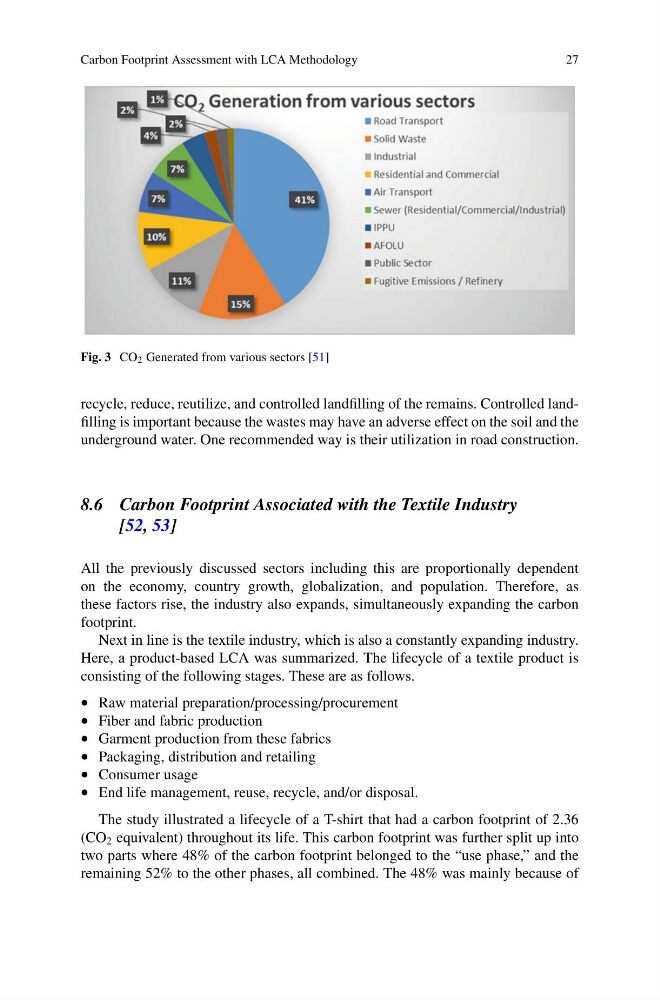
Fig. 3 CO 2 Generated from various sectors [51]
recycle, reduce, reutilize, and controlled landfilling of the remains. Controlled landfilling is important because the wastes may have an adverse effect on the soil and the
underground water. One recommended way is their utilization in road construction.
8.6 Carbon Footprint Associated with the Textile Industry
[52, 53]
All the previously discussed sectors including this are proportionally dependent
on the economy, country growth, globalization, and population. Therefore, as
these factors rise, the industry also expands, simultaneously expanding the carbon
footprint.
Next in line is the textile industry, which is also a constantly expanding industry.
Here, a product-based LCA was summarized. The lifecycle of a textile product is
consisting of the following stages. These are as follows.
• Raw material preparation/processing/procurement
• Fiber and fabric production
• Garment production from these fabrics
• Packaging, distribution and retailing
• Consumer usage
• End life management, reuse, recycle, and/or disposal.
The study illustrated a lifecycle of a T-shirt that had a carbon footprint of 2.36
(CO 2 equivalent) throughout its life. This carbon footprint was further split up into
two parts where 48% of the carbon footprint belonged to the “use phase,” and the
remaining 52% to the other phases, all combined. The 48% was mainly because of
27
Fig. 3 CO 2 Generated from various sectors [51]
recycle, reduce, reutilize, and controlled landfilling of the remains. Controlled landfilling is important because the wastes may have an adverse effect on the soil and the
underground water. One recommended way is their utilization in road construction.
8.6 Carbon Footprint Associated with the Textile Industry
[52, 53]
All the previously discussed sectors including this are proportionally dependent
on the economy, country growth, globalization, and population. Therefore, as
these factors rise, the industry also expands, simultaneously expanding the carbon
footprint.
Next in line is the textile industry, which is also a constantly expanding industry.
Here, a product-based LCA was summarized. The lifecycle of a textile product is
consisting of the following stages. These are as follows.
• Raw material preparation/processing/procurement
• Fiber and fabric production
• Garment production from these fabrics
• Packaging, distribution and retailing
• Consumer usage
• End life management, reuse, recycle, and/or disposal.
The study illustrated a lifecycle of a T-shirt that had a carbon footprint of 2.36
(CO 2 equivalent) throughout its life. This carbon footprint was further split up into
two parts where 48% of the carbon footprint belonged to the “use phase,” and the
remaining 52% to the other phases, all combined. The 48% was mainly because of