

polymer and polyplex and the transfection efficiency of the polyplex at relevant
concentrations and times of exposure. Almost as important is the comparison with
a relevant standard such as PEI, because usually more than one parameter is varied
(cell line, concentration, etc.) from one study to another and therefore the results
are difficult to compare. In toxicity tests, the half maximal inhibitory concentration
or IC 50 is the quantitative measure used (in some of the publications IC 50 also
means the charge ratio causing 50% reduction of EtBr fluorescence). The cell
lines most commonly used are: COS cell lines (CV-1, simian in origin, and carrying
the SV40 genetic material), which resemble human fibroblast cells; human embryonic kidney 293 cell line (HEK 293), which is originally derived from human
embryonic kidney cells grown in tissue culture; and HepG2 cell line that is a human
liver hepatocellular carcinoma cell line.
It is to be mentioned that, as a general rule, strong polycations are highly toxic
[121]. It is nevertheless possible to limit immediate toxicity by “masking” the
non-biocompatible part to its environment via the introduction of hydrophilic
biocompatible segments (such as PEG) into the construct. Biocompatibility is the
ability of a polymer or material to perform with an appropriate host response (local
and systemic) in a specific application and by not producing a toxic, injurious, or
immunological response in living tissue. This is strongly determined by the primary
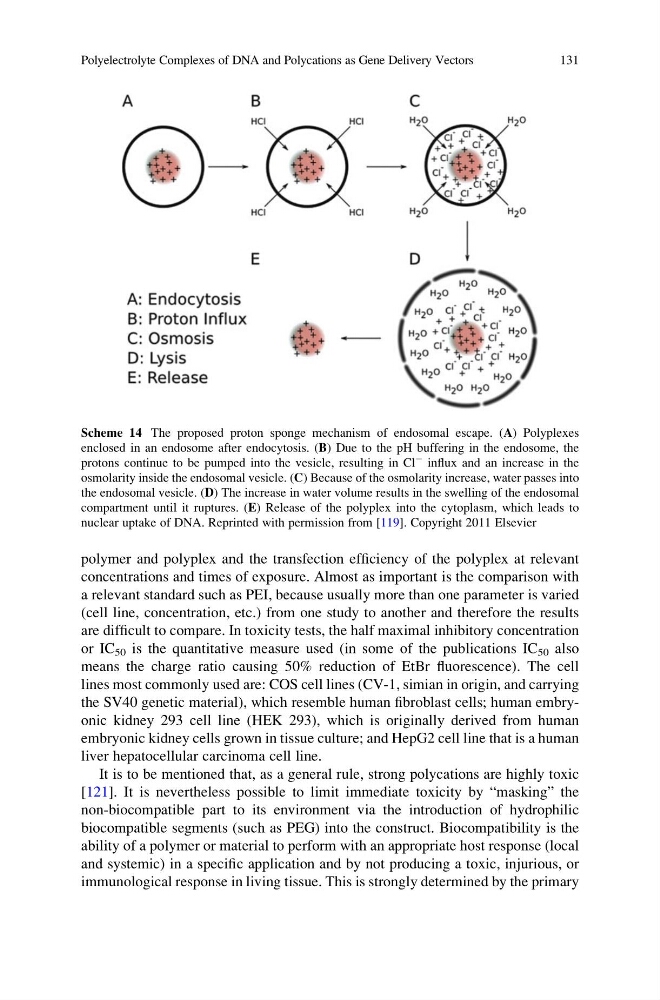
Scheme 14 The proposed proton sponge mechanism of endosomal escape. (A) Polyplexes
enclosed in an endosome after endocytosis. (B) Due to the pH buffering in the endosome, the
protons continue to be pumped into the vesicle, resulting in Cl
À influx and an increase in the
osmolarity inside the endosomal vesicle. (C) Because of the osmolarity increase, water passes into
the endosomal vesicle. (D) The increase in water volume results in the swelling of the endosomal
compartment until it ruptures. (E) Release of the polyplex into the cytoplasm, which leads to
nuclear uptake of DNA. Reprinted with permission from [119]. Copyright 2011 Elsevier
Polyelectrolyte Complexes of DNA and Polycations as Gene Delivery Vectors
131
concentrations and times of exposure. Almost as important is the comparison with
a relevant standard such as PEI, because usually more than one parameter is varied
(cell line, concentration, etc.) from one study to another and therefore the results
are difficult to compare. In toxicity tests, the half maximal inhibitory concentration
or IC 50 is the quantitative measure used (in some of the publications IC 50 also
means the charge ratio causing 50% reduction of EtBr fluorescence). The cell
lines most commonly used are: COS cell lines (CV-1, simian in origin, and carrying
the SV40 genetic material), which resemble human fibroblast cells; human embryonic kidney 293 cell line (HEK 293), which is originally derived from human
embryonic kidney cells grown in tissue culture; and HepG2 cell line that is a human
liver hepatocellular carcinoma cell line.
It is to be mentioned that, as a general rule, strong polycations are highly toxic
[121]. It is nevertheless possible to limit immediate toxicity by “masking” the
non-biocompatible part to its environment via the introduction of hydrophilic
biocompatible segments (such as PEG) into the construct. Biocompatibility is the
ability of a polymer or material to perform with an appropriate host response (local
and systemic) in a specific application and by not producing a toxic, injurious, or
immunological response in living tissue. This is strongly determined by the primary
Scheme 14 The proposed proton sponge mechanism of endosomal escape. (A) Polyplexes
enclosed in an endosome after endocytosis. (B) Due to the pH buffering in the endosome, the
protons continue to be pumped into the vesicle, resulting in Cl
À influx and an increase in the
osmolarity inside the endosomal vesicle. (C) Because of the osmolarity increase, water passes into
the endosomal vesicle. (D) The increase in water volume results in the swelling of the endosomal
compartment until it ruptures. (E) Release of the polyplex into the cytoplasm, which leads to
nuclear uptake of DNA. Reprinted with permission from [119]. Copyright 2011 Elsevier
Polyelectrolyte Complexes of DNA and Polycations as Gene Delivery Vectors
131