

constituting the polymer) in an aqueous environment and have sizes ranging from
10 to 100 nm [75]. Micelles can form only above a given concentration, which is
known as the critical micelle concentration (CMC) [76]. If the concentration of
amphiphilic polymer in the sample is under its CMC, the observed behavior is
roughly that presented in previous cases, except that, due to the amphiphilic nature
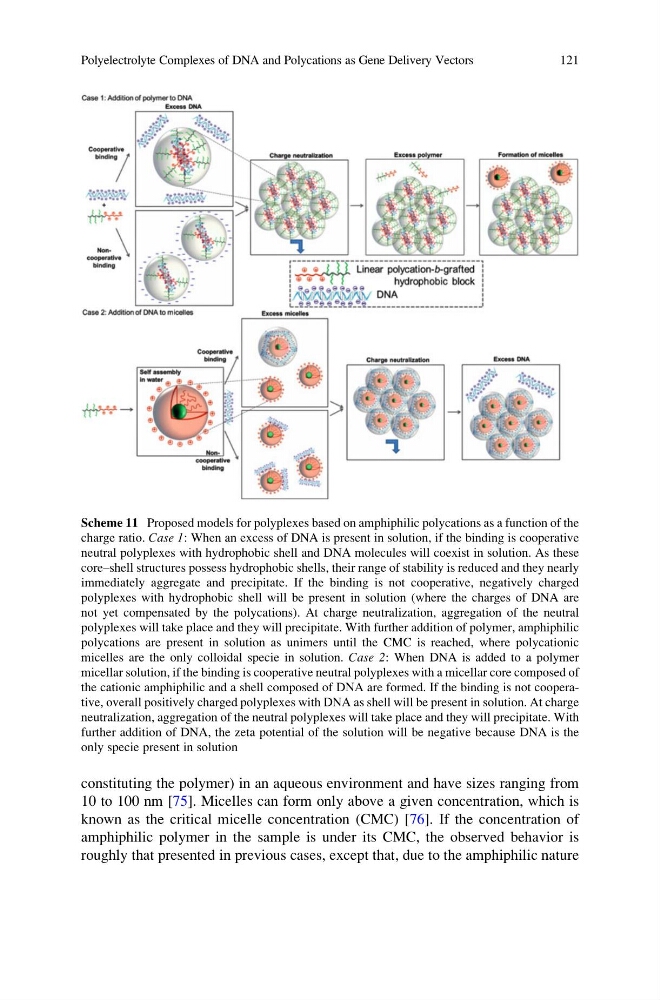
Scheme 11 Proposed models for polyplexes based on amphiphilic polycations as a function of the
charge ratio. Case 1: When an excess of DNA is present in solution, if the binding is cooperative
neutral polyplexes with hydrophobic shell and DNA molecules will coexist in solution. As these
core–shell structures possess hydrophobic shells, their range of stability is reduced and they nearly
immediately aggregate and precipitate. If the binding is not cooperative, negatively charged
polyplexes with hydrophobic shell will be present in solution (where the charges of DNA are
not yet compensated by the polycations). At charge neutralization, aggregation of the neutral
polyplexes will take place and they will precipitate. With further addition of polymer, amphiphilic
polycations are present in solution as unimers until the CMC is reached, where polycationic
micelles are the only colloidal specie in solution. Case 2: When DNA is added to a polymer
micellar solution, if the binding is cooperative neutral polyplexes with a micellar core composed of
the cationic amphiphilic and a shell composed of DNA are formed. If the binding is not cooperative, overall positively charged polyplexes with DNA as shell will be present in solution. At charge
neutralization, aggregation of the neutral polyplexes will take place and they will precipitate. With
further addition of DNA, the zeta potential of the solution will be negative because DNA is the
only specie present in solution
Polyelectrolyte Complexes of DNA and Polycations as Gene Delivery Vectors
121
10 to 100 nm [75]. Micelles can form only above a given concentration, which is
known as the critical micelle concentration (CMC) [76]. If the concentration of
amphiphilic polymer in the sample is under its CMC, the observed behavior is
roughly that presented in previous cases, except that, due to the amphiphilic nature
Scheme 11 Proposed models for polyplexes based on amphiphilic polycations as a function of the
charge ratio. Case 1: When an excess of DNA is present in solution, if the binding is cooperative
neutral polyplexes with hydrophobic shell and DNA molecules will coexist in solution. As these
core–shell structures possess hydrophobic shells, their range of stability is reduced and they nearly
immediately aggregate and precipitate. If the binding is not cooperative, negatively charged
polyplexes with hydrophobic shell will be present in solution (where the charges of DNA are
not yet compensated by the polycations). At charge neutralization, aggregation of the neutral
polyplexes will take place and they will precipitate. With further addition of polymer, amphiphilic
polycations are present in solution as unimers until the CMC is reached, where polycationic
micelles are the only colloidal specie in solution. Case 2: When DNA is added to a polymer
micellar solution, if the binding is cooperative neutral polyplexes with a micellar core composed of
the cationic amphiphilic and a shell composed of DNA are formed. If the binding is not cooperative, overall positively charged polyplexes with DNA as shell will be present in solution. At charge
neutralization, aggregation of the neutral polyplexes will take place and they will precipitate. With
further addition of DNA, the zeta potential of the solution will be negative because DNA is the
only specie present in solution
Polyelectrolyte Complexes of DNA and Polycations as Gene Delivery Vectors
121