

radical scavengers in radical-type reactions. Sometimes, a short-term microwave
exposure can be used for fast defrosting [10, 65], or rapid heating of the frozen
system with a programmed rate.
Similarly to the non-equivalence of the chilling and freezing rates of the initial
feed, the rates of heating and defrosting (i.e., melting of the solvent crystals) should
also be distinguished. Whereas the heating rate is easy to govern using programmable cryostats, the defrosting rate corresponding to the melting of solvent crystals
is subject to multiple factors and is difficult to control.
The conditions of the thawing stage are often much more important in the
preparation of physical cryogels than for covalent gels. If the physical cryogels
are formed rapidly upon freezing of the feed containing certain precursors such as
starch polysaccharides [14, 15, 98, 108, 109] or agarose [33, 34], the contribution of
the thawing conditions to the final result is not very substantial. However, for slow
gelation systems like the solutions of PVA [7, 8, 44, 48, 93–95, 97, 99, 110–114] or
locust bean gum [100, 102, 115], the thawing conditions become significant. The
plots in Fig. 4 illustrate the influence of the thawing rate on the shear modulus and
the fusion temperature of physical PVA cryogels [44]. The cryogels were prepared
by freezing of PVA solutions at À20
C for 18 h followed by thawing at different
rates. The different curves in Fig. 4 correspond to initial PVA concentrations of
120, 100, and 80 g/L. Both the shear modulus and the fusion temperature of the
cryogels gradually increase as the thawing rate is decreased. For instance, at a PVA
concentration of 80 g/L (curve 3), decreasing the thawing rate from 0.3 to 0.003
C/
min increases the modulus, i.e., the rigidity of the cryogels from 2 to 13 kPa. This
effect is even more pronounced in more concentrated samples. Thus, for the system
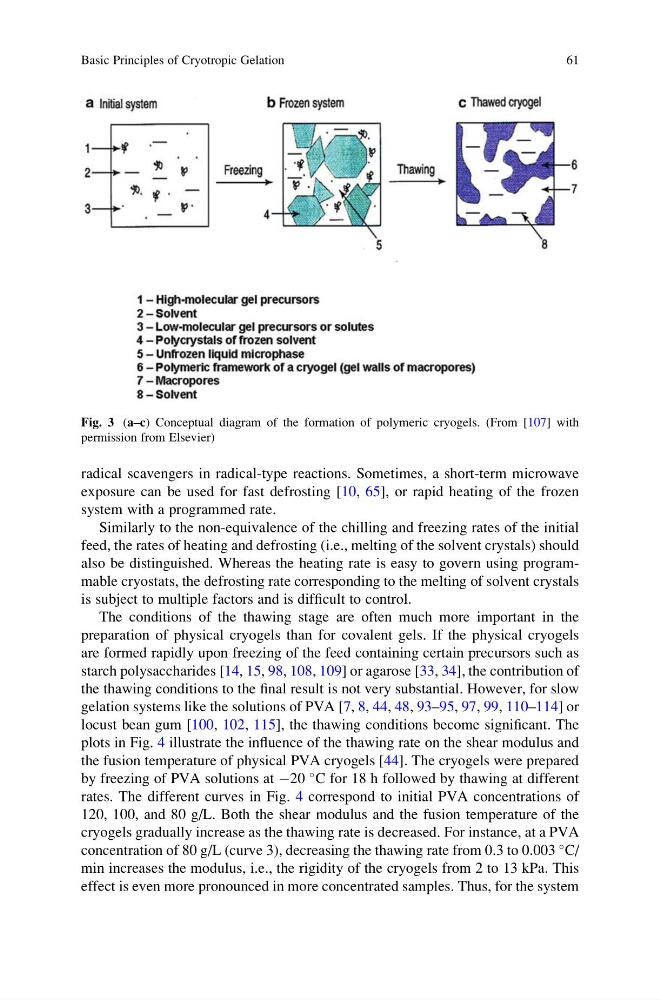
Fig. 3 (a–c) Conceptual diagram of the formation of polymeric cryogels. (From [107] with
permission from Elsevier)
Basic Principles of Cryotropic Gelation
61
exposure can be used for fast defrosting [10, 65], or rapid heating of the frozen
system with a programmed rate.
Similarly to the non-equivalence of the chilling and freezing rates of the initial
feed, the rates of heating and defrosting (i.e., melting of the solvent crystals) should
also be distinguished. Whereas the heating rate is easy to govern using programmable cryostats, the defrosting rate corresponding to the melting of solvent crystals
is subject to multiple factors and is difficult to control.
The conditions of the thawing stage are often much more important in the
preparation of physical cryogels than for covalent gels. If the physical cryogels
are formed rapidly upon freezing of the feed containing certain precursors such as
starch polysaccharides [14, 15, 98, 108, 109] or agarose [33, 34], the contribution of
the thawing conditions to the final result is not very substantial. However, for slow
gelation systems like the solutions of PVA [7, 8, 44, 48, 93–95, 97, 99, 110–114] or
locust bean gum [100, 102, 115], the thawing conditions become significant. The
plots in Fig. 4 illustrate the influence of the thawing rate on the shear modulus and
the fusion temperature of physical PVA cryogels [44]. The cryogels were prepared
by freezing of PVA solutions at À20
C for 18 h followed by thawing at different
rates. The different curves in Fig. 4 correspond to initial PVA concentrations of
120, 100, and 80 g/L. Both the shear modulus and the fusion temperature of the
cryogels gradually increase as the thawing rate is decreased. For instance, at a PVA
concentration of 80 g/L (curve 3), decreasing the thawing rate from 0.3 to 0.003
C/
min increases the modulus, i.e., the rigidity of the cryogels from 2 to 13 kPa. This
effect is even more pronounced in more concentrated samples. Thus, for the system
Fig. 3 (a–c) Conceptual diagram of the formation of polymeric cryogels. (From [107] with
permission from Elsevier)
Basic Principles of Cryotropic Gelation
61