

was clearly shown that the entrapped preparation was more stable and produced
acid proteinase during more cycles as compared to free cells. Furthermore, the
presence of PEG increases both the productivity and stability of the process [10].
Microbial cells that are entrapped can be more stable to drying and storage. In a
study using double polymer networks (see Sect. 8.3 for details on the technique), it
was possible to retain a high percentage of activity, even for up to 7 months of
storage at 22
C (Fig. 1) [41].
Besides entrapment, cells may also be adsorbed or grow in an adhesive mode
[31, 44]. This latter situation might be advantageous from the mass transfer point of
view, but there is larger risk of leakage of cells from the preparation. The same rules
are valid for immobilizing cells in cryogels as for situations when other matrices are
used. The only feature that differs is that cryogels have very large pores and will
thus allow loading of cells after the gel is formed. Table 1 lists some of the
processes studied with cells immobilized in cryogels.
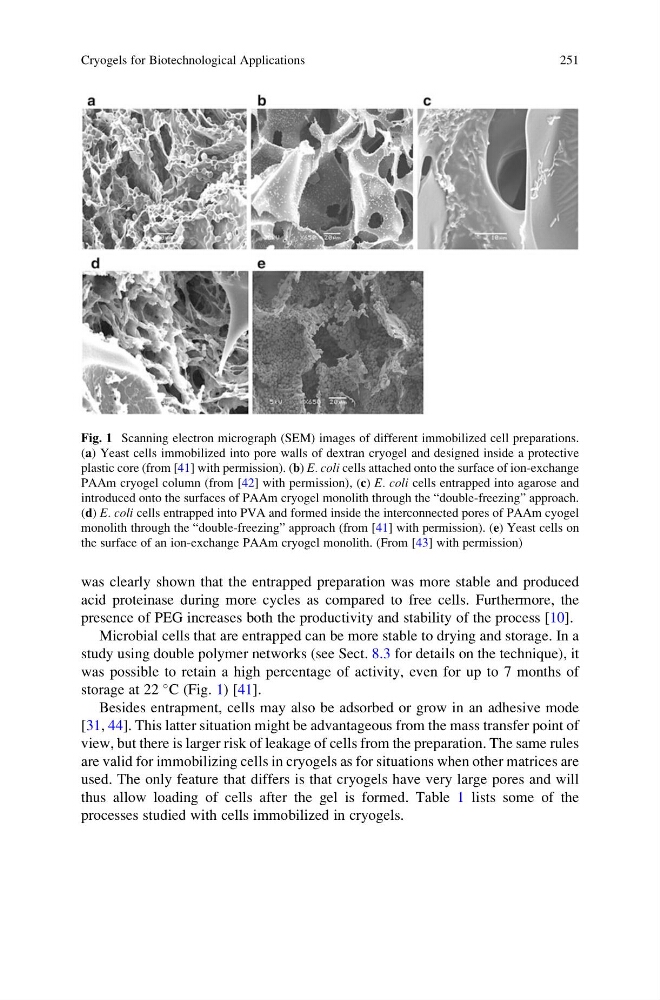
Fig. 1 Scanning electron micrograph (SEM) images of different immobilized cell preparations.
(a) Yeast cells immobilized into pore walls of dextran cryogel and designed inside a protective
plastic core (from [41] with permission). (b) E. coli cells attached onto the surface of ion-exchange
PAAm cryogel column (from [42] with permission), (c) E. coli cells entrapped into agarose and
introduced onto the surfaces of PAAm cryogel monolith through the “double-freezing” approach.
(d) E. coli cells entrapped into PVA and formed inside the interconnected pores of PAAm cyogel
monolith through the “double-freezing” approach (from [41] with permission). (e) Yeast cells on
the surface of an ion-exchange PAAm cryogel monolith. (From [43] with permission)
Cryogels for Biotechnological Applications
251
acid proteinase during more cycles as compared to free cells. Furthermore, the
presence of PEG increases both the productivity and stability of the process [10].
Microbial cells that are entrapped can be more stable to drying and storage. In a
study using double polymer networks (see Sect. 8.3 for details on the technique), it
was possible to retain a high percentage of activity, even for up to 7 months of
storage at 22
C (Fig. 1) [41].
Besides entrapment, cells may also be adsorbed or grow in an adhesive mode
[31, 44]. This latter situation might be advantageous from the mass transfer point of
view, but there is larger risk of leakage of cells from the preparation. The same rules
are valid for immobilizing cells in cryogels as for situations when other matrices are
used. The only feature that differs is that cryogels have very large pores and will
thus allow loading of cells after the gel is formed. Table 1 lists some of the
processes studied with cells immobilized in cryogels.
Fig. 1 Scanning electron micrograph (SEM) images of different immobilized cell preparations.
(a) Yeast cells immobilized into pore walls of dextran cryogel and designed inside a protective
plastic core (from [41] with permission). (b) E. coli cells attached onto the surface of ion-exchange
PAAm cryogel column (from [42] with permission), (c) E. coli cells entrapped into agarose and
introduced onto the surfaces of PAAm cryogel monolith through the “double-freezing” approach.
(d) E. coli cells entrapped into PVA and formed inside the interconnected pores of PAAm cyogel
monolith through the “double-freezing” approach (from [41] with permission). (e) Yeast cells on
the surface of an ion-exchange PAAm cryogel monolith. (From [43] with permission)
Cryogels for Biotechnological Applications
251