

irradiated simultaneously. Therefore, the UV irradiation technique is useful for
preparation of flat (up to 10 mm), disk-shaped [10–12, 16, 18, 19, 21, 22], and
cylindrical cryogels with diameters up to 32 mm [23].
Polymer cryogels obtained by photocrosslinking of frozen systems possess
randomly distributed pores [24]. The diffusion of liquids in such cryogels is
relatively isotropic (Fig. 13a). In the case of directionally frozen systems, the
structure obtained is aligned and the diffusion of liquids through the cryogel follows
a one-dimentional pathway, diffusing faster parallel to the direction of freezing
(Fig. 13b).
Compression tests performed to determine the aligned cryogel strength revealed
that the sample crushed parallel to the freezing direction has a Young’s modulus of
10 kPa and the sample crushed in the perpendicular direction has a Young’s
modulus of 0.9 kPa.
4 Temperature-Responsive Polymer Cryogels
Temperature-responsive polymer cryogels are among the most intriguing representatives of the so-called “inteligent” hydrogels due to their numerous advantages.
The hydration/dehydration behavior of cryogels is much more rapid compared to
conventional hydrogels obtained from the same polymer [25]. This behavior has
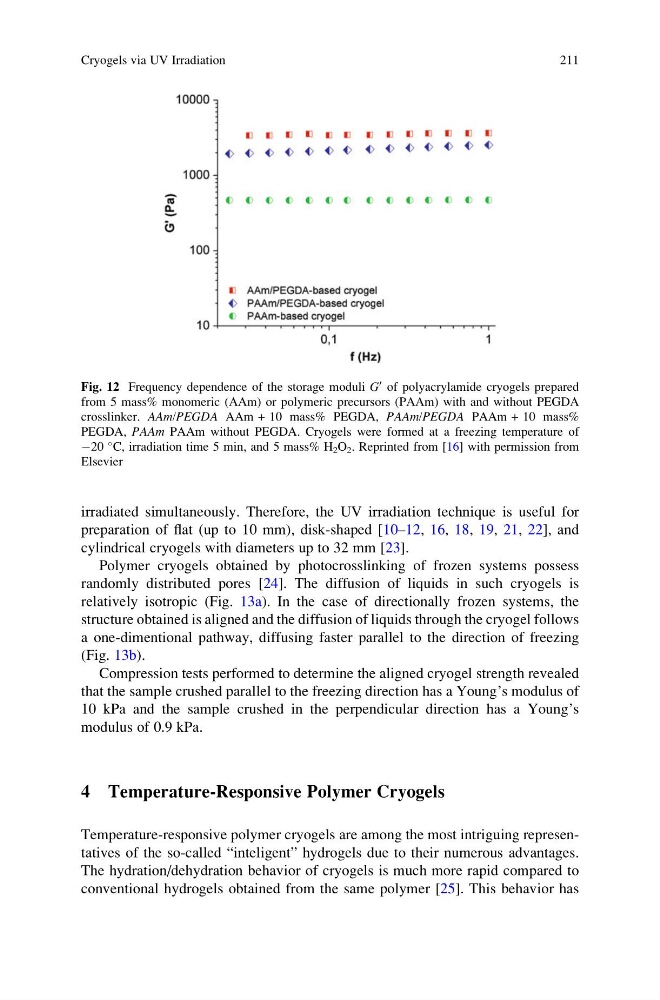
Fig. 12 Frequency dependence of the storage moduli G
0 of polyacrylamide cryogels prepared
from 5 mass% monomeric (AAm) or polymeric precursors (PAAm) with and without PEGDA
crosslinker. AAm/PEGDA AAm + 10 mass% PEGDA, PAAm/PEGDA PAAm + 10 mass%
PEGDA, PAAm PAAm without PEGDA. Cryogels were formed at a freezing temperature of
À20
C, irradiation time 5 min, and 5 mass% H 2 O 2 . Reprinted from [16] with permission from
Elsevier
Cryogels via UV Irradiation
211
preparation of flat (up to 10 mm), disk-shaped [10–12, 16, 18, 19, 21, 22], and
cylindrical cryogels with diameters up to 32 mm [23].
Polymer cryogels obtained by photocrosslinking of frozen systems possess
randomly distributed pores [24]. The diffusion of liquids in such cryogels is
relatively isotropic (Fig. 13a). In the case of directionally frozen systems, the
structure obtained is aligned and the diffusion of liquids through the cryogel follows
a one-dimentional pathway, diffusing faster parallel to the direction of freezing
(Fig. 13b).
Compression tests performed to determine the aligned cryogel strength revealed
that the sample crushed parallel to the freezing direction has a Young’s modulus of
10 kPa and the sample crushed in the perpendicular direction has a Young’s
modulus of 0.9 kPa.
4 Temperature-Responsive Polymer Cryogels
Temperature-responsive polymer cryogels are among the most intriguing representatives of the so-called “inteligent” hydrogels due to their numerous advantages.
The hydration/dehydration behavior of cryogels is much more rapid compared to
conventional hydrogels obtained from the same polymer [25]. This behavior has
Fig. 12 Frequency dependence of the storage moduli G
0 of polyacrylamide cryogels prepared
from 5 mass% monomeric (AAm) or polymeric precursors (PAAm) with and without PEGDA
crosslinker. AAm/PEGDA AAm + 10 mass% PEGDA, PAAm/PEGDA PAAm + 10 mass%
PEGDA, PAAm PAAm without PEGDA. Cryogels were formed at a freezing temperature of
À20
C, irradiation time 5 min, and 5 mass% H 2 O 2 . Reprinted from [16] with permission from
Elsevier
Cryogels via UV Irradiation
211