

2.2 Solvents and the Cryogelation Temperature
Water is cheap and benign to biological systems and, therefore, it is the most
commonly used solvent in cryogelation reactions. Organic solvents such as
dimethyl sulfoxide (DMSO) [32, 59], dioxane [24, 33, 40], formamide [24],
nitrobenzene [60], benzene [52], and cyclohexane [53] with relatively high freezing
points can also be used for the preparation of hydrophobic cryogels. Since the cryoconcentration of the reaction constituents in the unfrozen domains is a requirement
for the formation of cryogels, the gelation temperature T prep is the most important
experimental parameter [61]. A so-called moderate temperature is commonly used
for cryogelation reactions [62], which means a sufficiently low temperature, e.g.,
several degrees lower than the freezing point of the system. T prep is usually set to 2–
20
C below the bulk freezing temperature of the solvent. In addition, the type of
cooling of the reaction solution to T prep also affects the cryogel properties. For
example, liquid cooling provides much faster freezing of the reaction solution than
air cooling, leading to the generation of smaller pores [52].
2.3 Monomer or Polymer Concentration
The initial concentration C o of the monomeric or the polymeric precursors is
another important parameter in cryogel preparation. Due to the effect of cryoconcentration, cryogels can be prepared at much lower concentrations compared
SCl 2
CH 2
C CH
CH 3
CH 2
CH 2
CH 3
C CH
Cl SCl
CH 2
CH 2
C CH
Cl SCl
CH 3
CH 2
CH 2
CH 3
C CH
CH 2
SCl 2
S 2 Cl 2
S
+
+
+
S
CH 2
C CH
Cl
CH 3
CH 2
(S)
CH 2
CH 3
C CH
Cl
CH 2
x
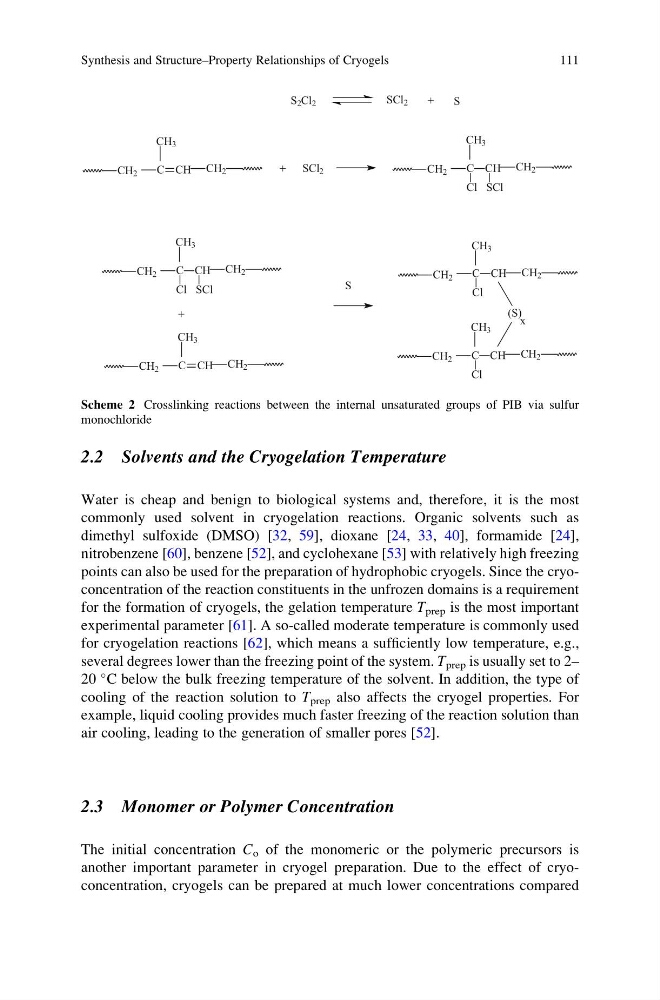
Scheme 2 Crosslinking reactions between the internal unsaturated groups of PIB via sulfur
monochloride
Synthesis and Structure–Property Relationships of Cryogels
111
Water is cheap and benign to biological systems and, therefore, it is the most
commonly used solvent in cryogelation reactions. Organic solvents such as
dimethyl sulfoxide (DMSO) [32, 59], dioxane [24, 33, 40], formamide [24],
nitrobenzene [60], benzene [52], and cyclohexane [53] with relatively high freezing
points can also be used for the preparation of hydrophobic cryogels. Since the cryoconcentration of the reaction constituents in the unfrozen domains is a requirement
for the formation of cryogels, the gelation temperature T prep is the most important
experimental parameter [61]. A so-called moderate temperature is commonly used
for cryogelation reactions [62], which means a sufficiently low temperature, e.g.,
several degrees lower than the freezing point of the system. T prep is usually set to 2–
20
C below the bulk freezing temperature of the solvent. In addition, the type of
cooling of the reaction solution to T prep also affects the cryogel properties. For
example, liquid cooling provides much faster freezing of the reaction solution than
air cooling, leading to the generation of smaller pores [52].
2.3 Monomer or Polymer Concentration
The initial concentration C o of the monomeric or the polymeric precursors is
another important parameter in cryogel preparation. Due to the effect of cryoconcentration, cryogels can be prepared at much lower concentrations compared
SCl 2
CH 2
C CH
CH 3
CH 2
CH 2
CH 3
C CH
Cl SCl
CH 2
CH 2
C CH
Cl SCl
CH 3
CH 2
CH 2
CH 3
C CH
CH 2
SCl 2
S 2 Cl 2
S
+
+
+
S
CH 2
C CH
Cl
CH 3
CH 2
(S)
CH 2
CH 3
C CH
Cl
CH 2
x
Scheme 2 Crosslinking reactions between the internal unsaturated groups of PIB via sulfur
monochloride
Synthesis and Structure–Property Relationships of Cryogels
111