

Protein-polymeric membrane in a microchannel is prepared by using a concentric
laminar flow (Fig. 43) [267]. Crosslinking condensation of a crosslinked enzyme
aggregate (CLEA) [268] with aldehyde groups, which react with amino groups of
the enzyme, in a concentric laminar flow results in the formation of a cylindrical
enzyme-polymerized membrane on the inner wall of the microtube. The use of this
technology for membrane formation in a microchannel can be extended to a broad
range of functional proteins.
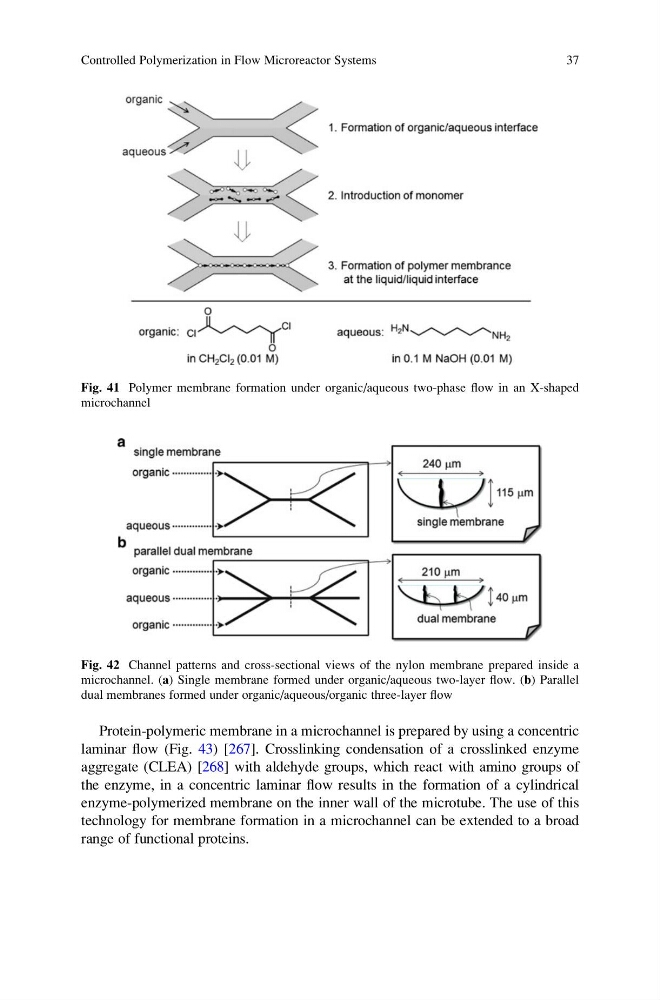
Fig. 42 Channel patterns and cross-sectional views of the nylon membrane prepared inside a
microchannel. (a) Single membrane formed under organic/aqueous two-layer flow. (b) Parallel
dual membranes formed under organic/aqueous/organic three-layer flow
Fig. 41 Polymer membrane formation under organic/aqueous two-phase flow in an X-shaped
microchannel
Controlled Polymerization in Flow Microreactor Systems
37
laminar flow (Fig. 43) [267]. Crosslinking condensation of a crosslinked enzyme
aggregate (CLEA) [268] with aldehyde groups, which react with amino groups of
the enzyme, in a concentric laminar flow results in the formation of a cylindrical
enzyme-polymerized membrane on the inner wall of the microtube. The use of this
technology for membrane formation in a microchannel can be extended to a broad
range of functional proteins.
Fig. 42 Channel patterns and cross-sectional views of the nylon membrane prepared inside a
microchannel. (a) Single membrane formed under organic/aqueous two-layer flow. (b) Parallel
dual membranes formed under organic/aqueous/organic three-layer flow
Fig. 41 Polymer membrane formation under organic/aqueous two-phase flow in an X-shaped
microchannel
Controlled Polymerization in Flow Microreactor Systems
37