

Serra and coworkers studied the outstanding effect of mixing on conversion,
molecular weight and polydispersity in free-radical polymerizations of styrene by a
numerical simulation using different micromixer geometries [170, 171].
Latex production by miniemulsion polymerizations [172–174] in continuous
tubular reactors has also been reported by McKenna and coworkers [175].
1.4.2 Living Radical Polymerization Using Flow Microreactor Systems
The major drawbacks of free-radical polymerization are the low controllability of
macromolecular structures and the broad molecular weight distribution of the
resulting polymers. Living radical polymerization [176–180] has been developed to
overcome the problem. Because more than 50% of polymers are produced via
free-radical processes in industry, living radical polymerization offers a possible
way to synthesize polymers of narrow molecular weight distribution [181]. Various
methods including atom transfer radical polymerization (ATRP) [182–187],
reversible addition–fragmentation chain transfer radical polymerization (RAFT)
[188–190], nitroxide-mediated radical polymerization (NMP) [191–193],
organoiodine-mediated radical polymerization (IRP) [194], cobalt-mediated polymerization [195] and organotellurium-, antimony-, or bismuth-mediated living radical
polymerization (TERP) [196–201] have been developed for conducting living radical
polymerization.
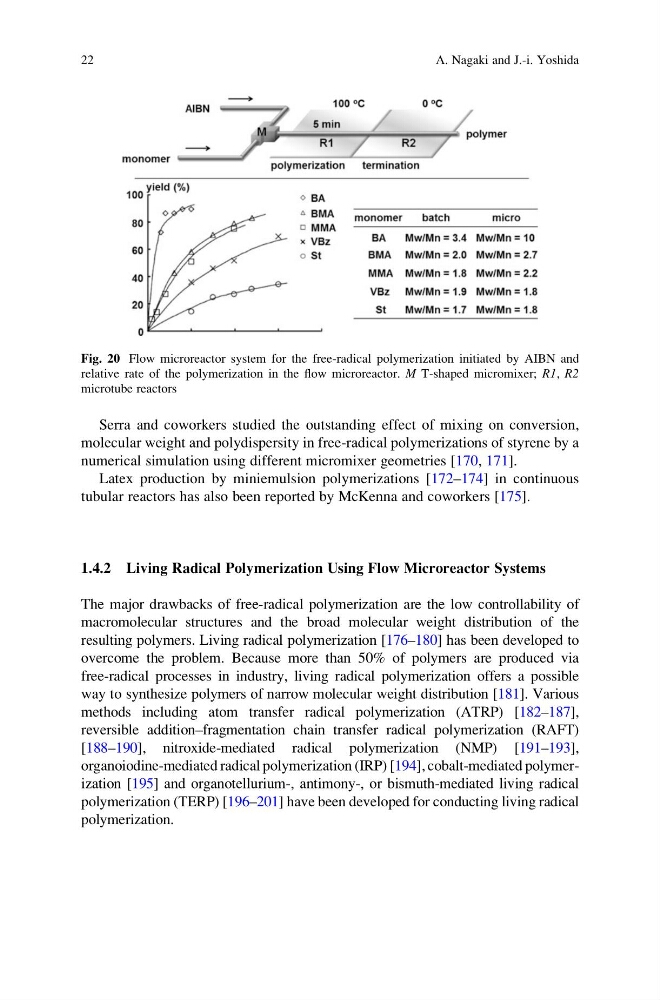
Fig. 20 Flow microreactor system for the free-radical polymerization initiated by AIBN and
relative rate of the polymerization in the flow microreactor. M T-shaped micromixer; R1, R2
microtube reactors
22
A. Nagaki and J.-i. Yoshida
molecular weight and polydispersity in free-radical polymerizations of styrene by a
numerical simulation using different micromixer geometries [170, 171].
Latex production by miniemulsion polymerizations [172–174] in continuous
tubular reactors has also been reported by McKenna and coworkers [175].
1.4.2 Living Radical Polymerization Using Flow Microreactor Systems
The major drawbacks of free-radical polymerization are the low controllability of
macromolecular structures and the broad molecular weight distribution of the
resulting polymers. Living radical polymerization [176–180] has been developed to
overcome the problem. Because more than 50% of polymers are produced via
free-radical processes in industry, living radical polymerization offers a possible
way to synthesize polymers of narrow molecular weight distribution [181]. Various
methods including atom transfer radical polymerization (ATRP) [182–187],
reversible addition–fragmentation chain transfer radical polymerization (RAFT)
[188–190], nitroxide-mediated radical polymerization (NMP) [191–193],
organoiodine-mediated radical polymerization (IRP) [194], cobalt-mediated polymerization [195] and organotellurium-, antimony-, or bismuth-mediated living radical
polymerization (TERP) [196–201] have been developed for conducting living radical
polymerization.
Fig. 20 Flow microreactor system for the free-radical polymerization initiated by AIBN and
relative rate of the polymerization in the flow microreactor. M T-shaped micromixer; R1, R2
microtube reactors
22
A. Nagaki and J.-i. Yoshida