

size of the nanoporous template used. Of the template-free methods, this section
presents the reprecipitation method for the synthesis of NPs and the electrospinning
method for NWs.
2.1 Electrochemical Polymerization
In this section, we focus on the synthesis of light-emitting polymer NTs and NWs
through electrochemical polymerization using nanoporous Al 2 O 3 templates. For
electrochemical synthesis of the polymer NTs and NWs, the electrolyte consists of
a solution of monomers and dopants in appropriate solvents such as deionized water,
N-methyl-2-pyrrolidinone (NMP), and acetonitrile (CH 3 CN). Aniline, pyrrole, and
thiophene and its derivatives such as 3-methylthiophene (3-MT), 3-butylthiophene
(3-BT), 3-hexylthiophene (3-HT), and ethylenedioxythiophene (EDOT) are typical
monomers. Dopants can include anionic salts such as BF 4
À , PF 6
À , and ClO 4
À as well
as camphorsulfonic acid (CAS) and dodecylbenzenesulfonic acid (DBSA), which
also act as surfactants that promote homogeneous dispersion of the hydrophobic
monomers in deionized water. Thin metal layers, for example, gold (Au), platinum
(Pt), and aluminum (Al), are thermally evaporated on one side of the nanoporous
Al 2 O 3 template and attached to the metal working electrode.
When a current or voltage is applied to the electrodes, the monomers are oxidized
at the surface of the electrode. As a result of the initial oxidation, the monomers form
radical cations that react with other monomers in the electrolyte to form oligomeric
products, as shown in Fig. 2. The extended π-conjugation in the polymeric chain (i.e.,
polymerization) is assisted by dopant anions, and the synthesis and doping of the
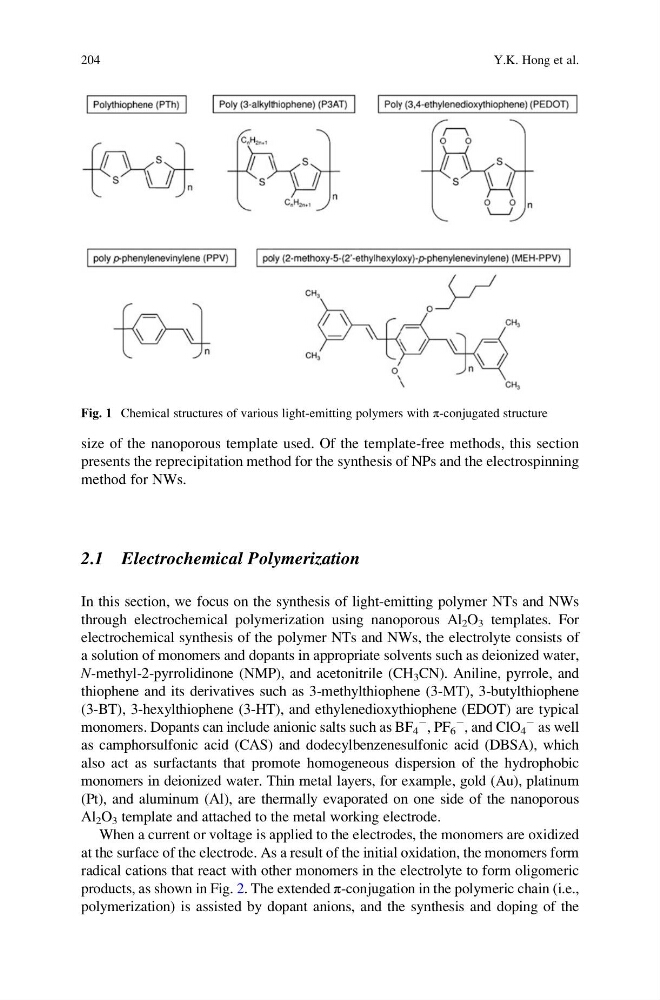
Fig. 1 Chemical structures of various light-emitting polymers with π-conjugated structure
204
Y.K. Hong et al.
presents the reprecipitation method for the synthesis of NPs and the electrospinning
method for NWs.
2.1 Electrochemical Polymerization
In this section, we focus on the synthesis of light-emitting polymer NTs and NWs
through electrochemical polymerization using nanoporous Al 2 O 3 templates. For
electrochemical synthesis of the polymer NTs and NWs, the electrolyte consists of
a solution of monomers and dopants in appropriate solvents such as deionized water,
N-methyl-2-pyrrolidinone (NMP), and acetonitrile (CH 3 CN). Aniline, pyrrole, and
thiophene and its derivatives such as 3-methylthiophene (3-MT), 3-butylthiophene
(3-BT), 3-hexylthiophene (3-HT), and ethylenedioxythiophene (EDOT) are typical
monomers. Dopants can include anionic salts such as BF 4
À , PF 6
À , and ClO 4
À as well
as camphorsulfonic acid (CAS) and dodecylbenzenesulfonic acid (DBSA), which
also act as surfactants that promote homogeneous dispersion of the hydrophobic
monomers in deionized water. Thin metal layers, for example, gold (Au), platinum
(Pt), and aluminum (Al), are thermally evaporated on one side of the nanoporous
Al 2 O 3 template and attached to the metal working electrode.
When a current or voltage is applied to the electrodes, the monomers are oxidized
at the surface of the electrode. As a result of the initial oxidation, the monomers form
radical cations that react with other monomers in the electrolyte to form oligomeric
products, as shown in Fig. 2. The extended π-conjugation in the polymeric chain (i.e.,
polymerization) is assisted by dopant anions, and the synthesis and doping of the
Fig. 1 Chemical structures of various light-emitting polymers with π-conjugated structure
204
Y.K. Hong et al.