

6.2 Lactone Reduction and Reductive Acetylation
Both Paterson et al. and Keck and Lundquist have used the α-methoxy ether 273
derived from ozonolysis of the requisite 5-alken-1-ol to functionalize the B ring of the
swinholide family of natural products (Scheme 72) [20, 130]. Initial attempts by
Paterson et al. to introduce a complex side chain using siloxydiene 274 were
plagued by low yields. However, treatment of α-methoxy ether 273 with allyltrimethylsilane in the presence of a catalytic amount of trimethylsilyl triflate (10 mol %)
afforded allyl THP 276 in good yields (96 % and 84 %, respectively) as a single
diastereomer.
Perhaps no other natural product has highlighted the synthetic utility of a
reductive acetylation/alkylation strategy for constructing 2,6-trans THP rings as
O
CO 2 Et
A
TBSO
CO 2 Et
O
BF 3 ·OEt 2 , Et 3 SiH
MeCN, –35 °C
98%
O
OBn
B
TIPSO
O
OBn
BF 3 ·OEt 2 , Et 3 SiH
MeCN, –35 °C
93%
266
267
268
269
(eq 1)
(eq 2)
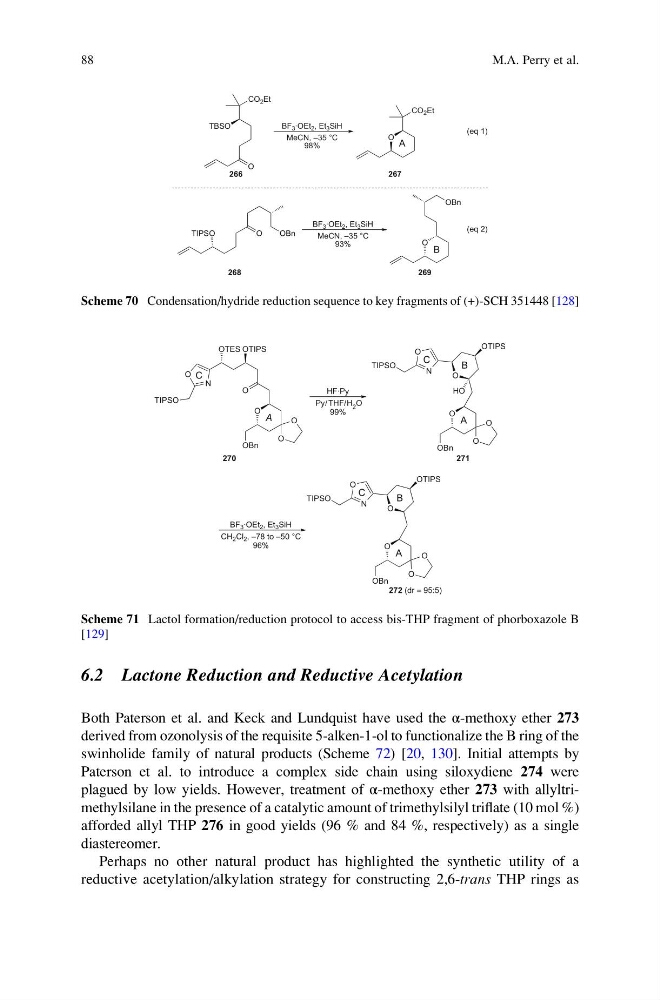
Scheme 70 Condensation/hydride reduction sequence to key fragments of (+)-SCH 351448 [128]
OBn
O
A
O
O
O
O
N
OTIPS
OTES
TIPSO
N
O
O
OBn
O
A
B
C
TIPSO
OTIPS
HO
O
O
N
O
O
OBn
O
A
B
C
TIPSO
OTIPS
O
O
HF·Py
Py / THF / H 2 O
99%
BF 3 ·OEt 2 , Et 3 SiH
CH 2 Cl 2 , –78 to –50 °C
96%
C
270
271
272 (dr = 95:5)
Scheme 71 Lactol formation/reduction protocol to access bis-THP fragment of phorboxazole B
[129]
88
M.A. Perry et al.
Both Paterson et al. and Keck and Lundquist have used the α-methoxy ether 273
derived from ozonolysis of the requisite 5-alken-1-ol to functionalize the B ring of the
swinholide family of natural products (Scheme 72) [20, 130]. Initial attempts by
Paterson et al. to introduce a complex side chain using siloxydiene 274 were
plagued by low yields. However, treatment of α-methoxy ether 273 with allyltrimethylsilane in the presence of a catalytic amount of trimethylsilyl triflate (10 mol %)
afforded allyl THP 276 in good yields (96 % and 84 %, respectively) as a single
diastereomer.
Perhaps no other natural product has highlighted the synthetic utility of a
reductive acetylation/alkylation strategy for constructing 2,6-trans THP rings as
O
CO 2 Et
A
TBSO
CO 2 Et
O
BF 3 ·OEt 2 , Et 3 SiH
MeCN, –35 °C
98%
O
OBn
B
TIPSO
O
OBn
BF 3 ·OEt 2 , Et 3 SiH
MeCN, –35 °C
93%
266
267
268
269
(eq 1)
(eq 2)
Scheme 70 Condensation/hydride reduction sequence to key fragments of (+)-SCH 351448 [128]
OBn
O
A
O
O
O
O
N
OTIPS
OTES
TIPSO
N
O
O
OBn
O
A
B
C
TIPSO
OTIPS
HO
O
O
N
O
O
OBn
O
A
B
C
TIPSO
OTIPS
O
O
HF·Py
Py / THF / H 2 O
99%
BF 3 ·OEt 2 , Et 3 SiH
CH 2 Cl 2 , –78 to –50 °C
96%
C
270
271
272 (dr = 95:5)
Scheme 71 Lactol formation/reduction protocol to access bis-THP fragment of phorboxazole B
[129]
88
M.A. Perry et al.