

The alkene geometry of the homoallylic alcohol dictates the C3 stereochemistry
relative to the nucleophilic trap in Prins cyclizations (Scheme 34) [70]. For example, E-alkene 122 undergoes facile Prins cyclization through a chair-like transition
state where the C3 substituent is in an equatorial position. Subsequent equatorial
nucleophilic attack gives rise to 3,4-trans THP 125. In contrast, Z-alkene 126 can
undergo Prins cyclization leading to 3,4-cis product 129; however, diaxial interactions from the axially disposed substituent often suppress this pathway in favor of
an envelope transition state leading to THF 130 [71].
The reactive nature of carbocationic THP intermediates in Prins cyclizations is
not limited to intermolecular nucleophilic trapping. The cyclic carbocation 133
O
R
R'
R"
O
R
R'
R"
O
R
R'
R"
O
R
R'
Nu
R"
O
R
R'
Nu
R"
O
R'
R
1
2
X
3
R"
[3,3]
equatorial
attack
equatorial
attack
HO
Ar
R
1
2
O
3
O
Ar
R
O
Ar
R
Epimerization of syn crotyl alcohol substrates
Racemization of optically active benzyl alcohol substrates by solvolysis
104
105
106
107
108
(–)-109
110
94
111
[3,3]
Racemization through Oxonia-Cope rearrangement
Ar
112
113
O
R
Ar
Nu
(±)-114
O
Ar
R
HO
R'
R
1
2
O
3
(–)-115
94
O
R'
R
116
[3,3]
O
R'
R
117
OH
R
R'
O
(+)-118
94'
(–)-115
O
R'
R'
120
[3,3]
O
R'
R'
119
OH
R'
(+)-115
R'
O
94'
94
then
[3+3]
O
R
R
121
R
O
94
HO
R
(–)-118
O
R
(eq 1)
(eq 2)
(eq 3)
94
H
H
H
H
H
H
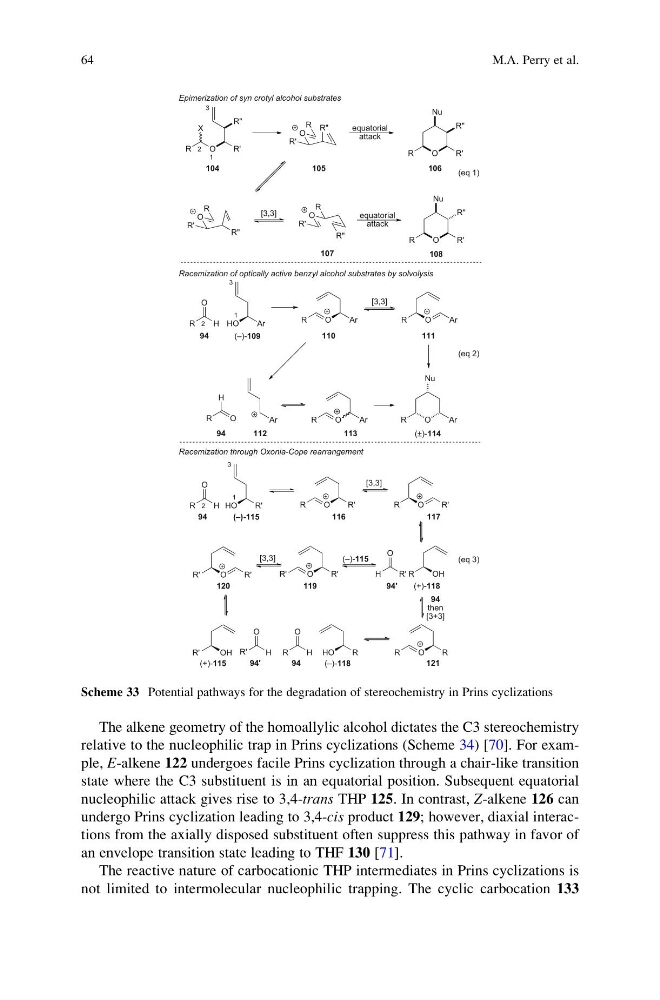
Scheme 33 Potential pathways for the degradation of stereochemistry in Prins cyclizations
64
M.A. Perry et al.
relative to the nucleophilic trap in Prins cyclizations (Scheme 34) [70]. For example, E-alkene 122 undergoes facile Prins cyclization through a chair-like transition
state where the C3 substituent is in an equatorial position. Subsequent equatorial
nucleophilic attack gives rise to 3,4-trans THP 125. In contrast, Z-alkene 126 can
undergo Prins cyclization leading to 3,4-cis product 129; however, diaxial interactions from the axially disposed substituent often suppress this pathway in favor of
an envelope transition state leading to THF 130 [71].
The reactive nature of carbocationic THP intermediates in Prins cyclizations is
not limited to intermolecular nucleophilic trapping. The cyclic carbocation 133
O
R
R'
R"
O
R
R'
R"
O
R
R'
R"
O
R
R'
Nu
R"
O
R
R'
Nu
R"
O
R'
R
1
2
X
3
R"
[3,3]
equatorial
attack
equatorial
attack
HO
Ar
R
1
2
O
3
O
Ar
R
O
Ar
R
Epimerization of syn crotyl alcohol substrates
Racemization of optically active benzyl alcohol substrates by solvolysis
104
105
106
107
108
(–)-109
110
94
111
[3,3]
Racemization through Oxonia-Cope rearrangement
Ar
112
113
O
R
Ar
Nu
(±)-114
O
Ar
R
HO
R'
R
1
2
O
3
(–)-115
94
O
R'
R
116
[3,3]
O
R'
R
117
OH
R
R'
O
(+)-118
94'
(–)-115
O
R'
R'
120
[3,3]
O
R'
R'
119
OH
R'
(+)-115
R'
O
94'
94
then
[3+3]
O
R
R
121
R
O
94
HO
R
(–)-118
O
R
(eq 1)
(eq 2)
(eq 3)
94
H
H
H
H
H
H
Scheme 33 Potential pathways for the degradation of stereochemistry in Prins cyclizations
64
M.A. Perry et al.