

2.5.2 Epoxide Opening with Carbon Nucleophiles
The use of carbon nucleophiles for the generation of medium-ring oxacycles is
relatively rare. Chandrasekhar et al. have used this strategy for the construction of
the nine-membered ring of eleutherobin analogs (Scheme 58) [179], a family of
potent tubulin inhibitor molecules. Anomeric alkylation of protected D-mannose
273 with ortho-bromobenzyl bromide, followed by selective ketal deprotection and
a two-step epoxide installation, afforded 274. Generation of an intermediate aryl
anion through a lithium–halogen exchange of 274 and then treatment with a Lewis
acid afforded the oxocine product 275.
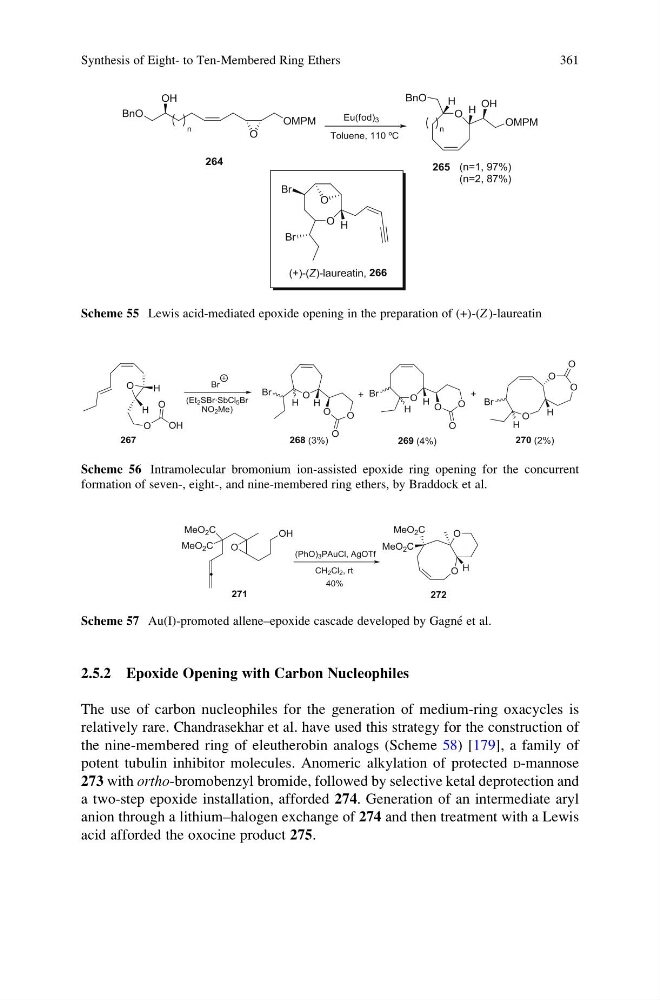
Scheme 55 Lewis acid-mediated epoxide opening in the preparation of (+)-(Z )-laureatin
Scheme 56 Intramolecular bromonium ion-assisted epoxide ring opening for the concurrent
formation of seven-, eight-, and nine-membered ring ethers, by Braddock et al.
Scheme 57 Au(I)-promoted allene–epoxide cascade developed by Gagne ´ et al.
Synthesis of Eight- to Ten-Membered Ring Ethers
361
The use of carbon nucleophiles for the generation of medium-ring oxacycles is
relatively rare. Chandrasekhar et al. have used this strategy for the construction of
the nine-membered ring of eleutherobin analogs (Scheme 58) [179], a family of
potent tubulin inhibitor molecules. Anomeric alkylation of protected D-mannose
273 with ortho-bromobenzyl bromide, followed by selective ketal deprotection and
a two-step epoxide installation, afforded 274. Generation of an intermediate aryl
anion through a lithium–halogen exchange of 274 and then treatment with a Lewis
acid afforded the oxocine product 275.
Scheme 55 Lewis acid-mediated epoxide opening in the preparation of (+)-(Z )-laureatin
Scheme 56 Intramolecular bromonium ion-assisted epoxide ring opening for the concurrent
formation of seven-, eight-, and nine-membered ring ethers, by Braddock et al.
Scheme 57 Au(I)-promoted allene–epoxide cascade developed by Gagne ´ et al.
Synthesis of Eight- to Ten-Membered Ring Ethers
361