

A similar procedure was also carried out for the synthesis of fragment
ABCDEFG of maitotoxin [90].
7 Conclusion
A great variety of methods are nowadays to the disposal of organic chemists for
synthesising oxygenated seven-membered rings. Among them, catalytic processes
(RCM and palladium-catalysed cross-coupling) are the more attractive. There is no
doubt that even more efficient procedures will be discovered in the near future and
applied to the total synthesis of complex natural products.
References
1. Hoberg JO (1998) Tetrahedron 54(42):12631–12670
2. Snyder NL, Haines HM, Peczuh MW (2006) Tetrahedron 62(40):9301–9320
O
O
C 6 H 11
KHMDS
(PhO) 2 P(O)Cl
HMPA/THF
O
O
C 6 H 11
P OPh
OPh
O
O
C 3 H 7
C 6 H 11
O
C 3 H 7
C 6 H 11
n-PrMgBr
CuI, Me 2 S
-30 °C
Et 3 SiH
TMSOTf
CH 2 Cl 2
39
0 °C
197
199
74%
198
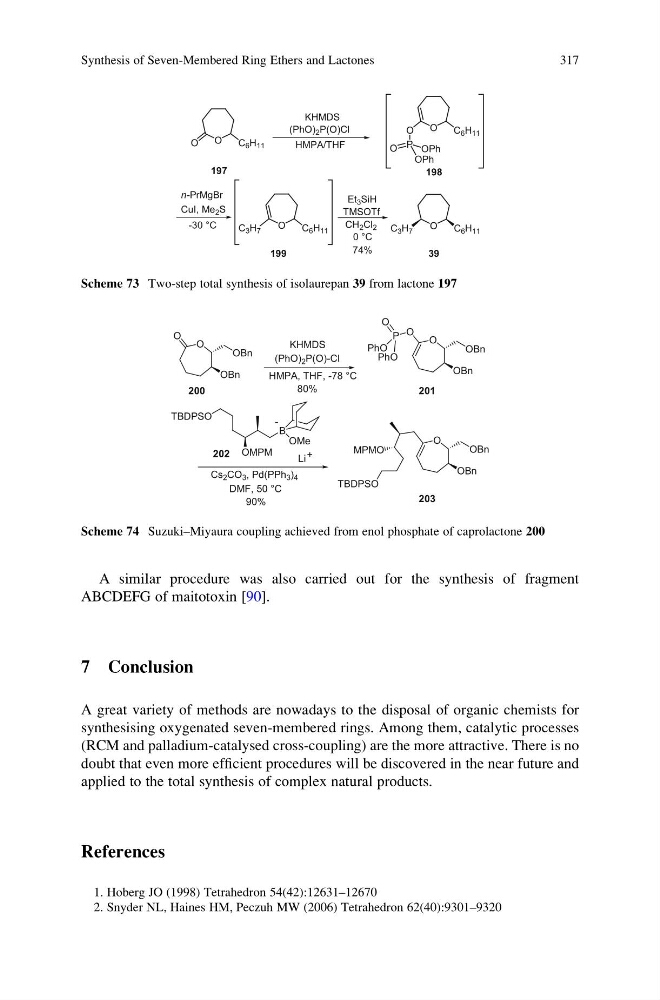
Scheme 73 Two-step total synthesis of isolaurepan 39 from lactone 197
TBDPSO
OMPM
B
OMe
-
Li +
OBn
OBn
O
O
OBn
OBn
O
O
P
PhO
PhO
O
KHMDS
(PhO) 2 P(O)-Cl
HMPA, THF, -78 °C
Cs 2 CO 3 , Pd(PPh 3 ) 4
OBn
OBn
O
MPMO
TBDPSO
DMF, 50 °C
203
201
200
202
80%
90%
Scheme 74 Suzuki–Miyaura coupling achieved from enol phosphate of caprolactone 200
Synthesis of Seven-Membered Ring Ethers and Lactones
317
ABCDEFG of maitotoxin [90].
7 Conclusion
A great variety of methods are nowadays to the disposal of organic chemists for
synthesising oxygenated seven-membered rings. Among them, catalytic processes
(RCM and palladium-catalysed cross-coupling) are the more attractive. There is no
doubt that even more efficient procedures will be discovered in the near future and
applied to the total synthesis of complex natural products.
References
1. Hoberg JO (1998) Tetrahedron 54(42):12631–12670
2. Snyder NL, Haines HM, Peczuh MW (2006) Tetrahedron 62(40):9301–9320
O
O
C 6 H 11
KHMDS
(PhO) 2 P(O)Cl
HMPA/THF
O
O
C 6 H 11
P OPh
OPh
O
O
C 3 H 7
C 6 H 11
O
C 3 H 7
C 6 H 11
n-PrMgBr
CuI, Me 2 S
-30 °C
Et 3 SiH
TMSOTf
CH 2 Cl 2
39
0 °C
197
199
74%
198
Scheme 73 Two-step total synthesis of isolaurepan 39 from lactone 197
TBDPSO
OMPM
B
OMe
-
Li +
OBn
OBn
O
O
OBn
OBn
O
O
P
PhO
PhO
O
KHMDS
(PhO) 2 P(O)-Cl
HMPA, THF, -78 °C
Cs 2 CO 3 , Pd(PPh 3 ) 4
OBn
OBn
O
MPMO
TBDPSO
DMF, 50 °C
203
201
200
202
80%
90%
Scheme 74 Suzuki–Miyaura coupling achieved from enol phosphate of caprolactone 200
Synthesis of Seven-Membered Ring Ethers and Lactones
317