

3.2 Ring Opening of Epoxides and Oxidation of Polyenes
Ring opening of epoxides is a common process to access oxepanes. For example,
Suzuki et al. have shown that the combination of (Bu 3 Sn) 2 O and a Lewis acid
(L.A.) allowed the exclusive formation of the seven-membered ring 39 from
epoxyalcohol 38 (Scheme 15) [26].
As reported previously, the formation of a transient stannyl ether enhanced the
nucleophilicity of the oxygen atom, while the Lewis acid favoured the cleavage of
the strained oxirane subunit. A direct application of this method has been used to
synthesise the marine natural product (+)-rogioloxepane (Scheme 16) [27].
McDonald et al. has devised an alternative method, based on the ring opening of
bis-oxiranes such as 42 through a cascade process to generate an oxepane ring
(Scheme 17). Due to the Lewis acid assistance, the oxepane ring was formed
according to a high regioselective endo-tet pathway [28, 29].
The opening of polyepoxide 44 was also realised to furnish compound 45 with
up to four fused oxepane rings however in a low yield (12 %) (Scheme 18) [30].
Symmetrical disubstituted trans-dihydroxy oxepanes have been obtained from
1,7-dienes by treatment with RuO 4 generated from low-valence ruthenium species
with sodium periodate (Scheme 19). Formation of a ruthenium(VI) diester was
supposed at first, followed by a trans selective [3+2]-cycloaddition [31]. Only a
catalytic amount of ruthenium salts was necessary, as NaIO 4 was able to regenerate
the active RuO 4 species.
N
CO 2 Et
HO Cl
TBSO H
Teoc
N
CO 2 Et
Cl
H
Teoc
O
TBSO
[Rh(cod)Cl] 2 (5 mol %)
(4-FC 6 H 4 ) 3 P
(60 mol %)
DMF, 85 °C
34
N
CO 2 Et
H
Teoc
O
TBSO
35
LiCl, Li 2 CO 3
DMF, 100 °C
33
88%
53%
N
O
AcO
N
O
O
O
OAc
S S
(–)–Acetylaranotin
(Teoc = TMS(CH 2 ) 2 -O-CO)
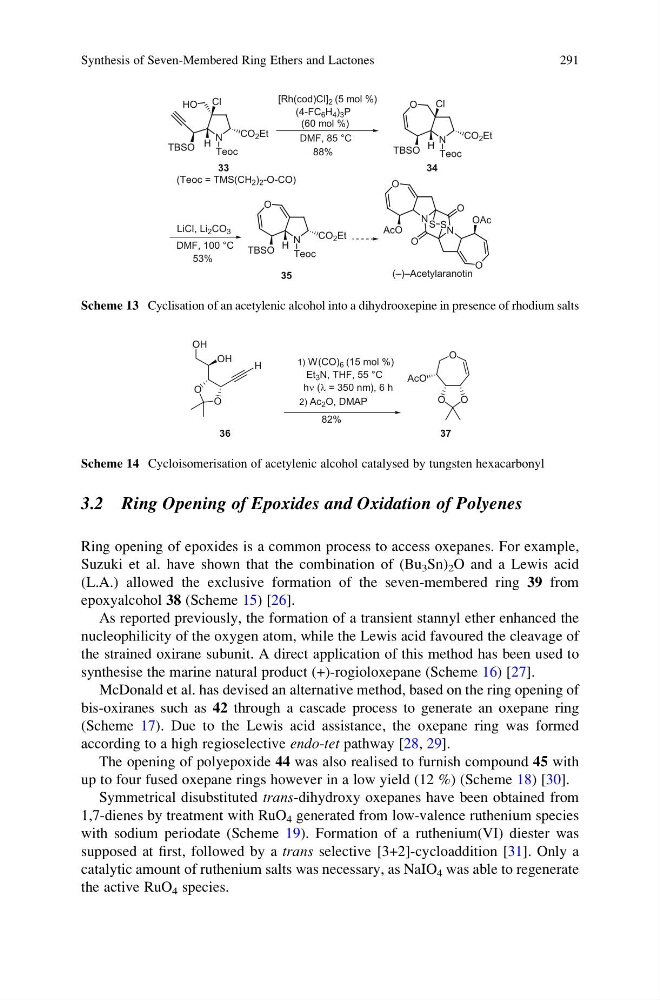
Scheme 13 Cyclisation of an acetylenic alcohol into a dihydrooxepine in presence of rhodium salts
OH
OH
O
O
H
O
O
O
AcO
1) W(CO) 6 (15 mol %)
Et 3 N, THF, 55 °C
hn (l = 350 nm), 6 h
2) Ac 2 O, DMAP
82%
36
37
Scheme 14 Cycloisomerisation of acetylenic alcohol catalysed by tungsten hexacarbonyl
Synthesis of Seven-Membered Ring Ethers and Lactones
291
Ring opening of epoxides is a common process to access oxepanes. For example,
Suzuki et al. have shown that the combination of (Bu 3 Sn) 2 O and a Lewis acid
(L.A.) allowed the exclusive formation of the seven-membered ring 39 from
epoxyalcohol 38 (Scheme 15) [26].
As reported previously, the formation of a transient stannyl ether enhanced the
nucleophilicity of the oxygen atom, while the Lewis acid favoured the cleavage of
the strained oxirane subunit. A direct application of this method has been used to
synthesise the marine natural product (+)-rogioloxepane (Scheme 16) [27].
McDonald et al. has devised an alternative method, based on the ring opening of
bis-oxiranes such as 42 through a cascade process to generate an oxepane ring
(Scheme 17). Due to the Lewis acid assistance, the oxepane ring was formed
according to a high regioselective endo-tet pathway [28, 29].
The opening of polyepoxide 44 was also realised to furnish compound 45 with
up to four fused oxepane rings however in a low yield (12 %) (Scheme 18) [30].
Symmetrical disubstituted trans-dihydroxy oxepanes have been obtained from
1,7-dienes by treatment with RuO 4 generated from low-valence ruthenium species
with sodium periodate (Scheme 19). Formation of a ruthenium(VI) diester was
supposed at first, followed by a trans selective [3+2]-cycloaddition [31]. Only a
catalytic amount of ruthenium salts was necessary, as NaIO 4 was able to regenerate
the active RuO 4 species.
N
CO 2 Et
HO Cl
TBSO H
Teoc
N
CO 2 Et
Cl
H
Teoc
O
TBSO
[Rh(cod)Cl] 2 (5 mol %)
(4-FC 6 H 4 ) 3 P
(60 mol %)
DMF, 85 °C
34
N
CO 2 Et
H
Teoc
O
TBSO
35
LiCl, Li 2 CO 3
DMF, 100 °C
33
88%
53%
N
O
AcO
N
O
O
O
OAc
S S
(–)–Acetylaranotin
(Teoc = TMS(CH 2 ) 2 -O-CO)
Scheme 13 Cyclisation of an acetylenic alcohol into a dihydrooxepine in presence of rhodium salts
OH
OH
O
O
H
O
O
O
AcO
1) W(CO) 6 (15 mol %)
Et 3 N, THF, 55 °C
hn (l = 350 nm), 6 h
2) Ac 2 O, DMAP
82%
36
37
Scheme 14 Cycloisomerisation of acetylenic alcohol catalysed by tungsten hexacarbonyl
Synthesis of Seven-Membered Ring Ethers and Lactones
291