

degree in severity of contamination. Technologies, like
nanofiltration, have been used for decontamination of polluted water (Bora and Dutta 2014; Kumar et al. 2014). NMs,
like CNTs and nano-alumina, have been utilized for
nanofiltration intending to purify irrigation water. Nanofiltration could help in removing solids and harmful microorganisms. Interestingly, solar energy has been incorporated
with nanofiltration technologies for desalination and facilitation of irrigation water. Further, plants grown using
desalinated water, needed less water and agrochemicals
(Kumar et al. 2014; Singh Sekhon 2014). NPs could be
applied to reduce heavy metals, inclusive of uranium and
lead. Fe 3 O 4 NPs possess magnetic properties and have been
reported to interact with arsenic ions. They could be helpful
in the purification of arsenic-rich water (Yavuz et al. 2006).
NMs, like graphene, have been used for removing sodium
chloride from saline water, with efficiency greater than
conventional desalination technologies, like reverse osmosis
(Cohen-Tanugi and Grossman 2012; O’Hern et al. 2015).
7 Soil Conservation and Management
Apart from water, soil is another important prerequisite
essential for growing crops. Soil health has to be immaculate
to support plant growth (Pramanik and Pramanik 2016).
A fertile soil makes nutrients available to crops, provides
environment for soil biota to exist and assists infiltration of
air, water and establishment of roots. Further, the sustenance
of animals and human beings is dependent on consumption
of food crops (Amundson et al. 2015). The animals and
human beings could get exposed to hazardous elements
through these crops. Therefore, it becomes important to
manage and conserve the soil systems (Medina et al. 2015).
As explained in previous sections, NMs and NPs could be
used for improving the soil health by its application in form
of NFs (Dwivedi et al. 2016; Shang et al. 2019), and
removing the pests and weeds from soil systems by applying
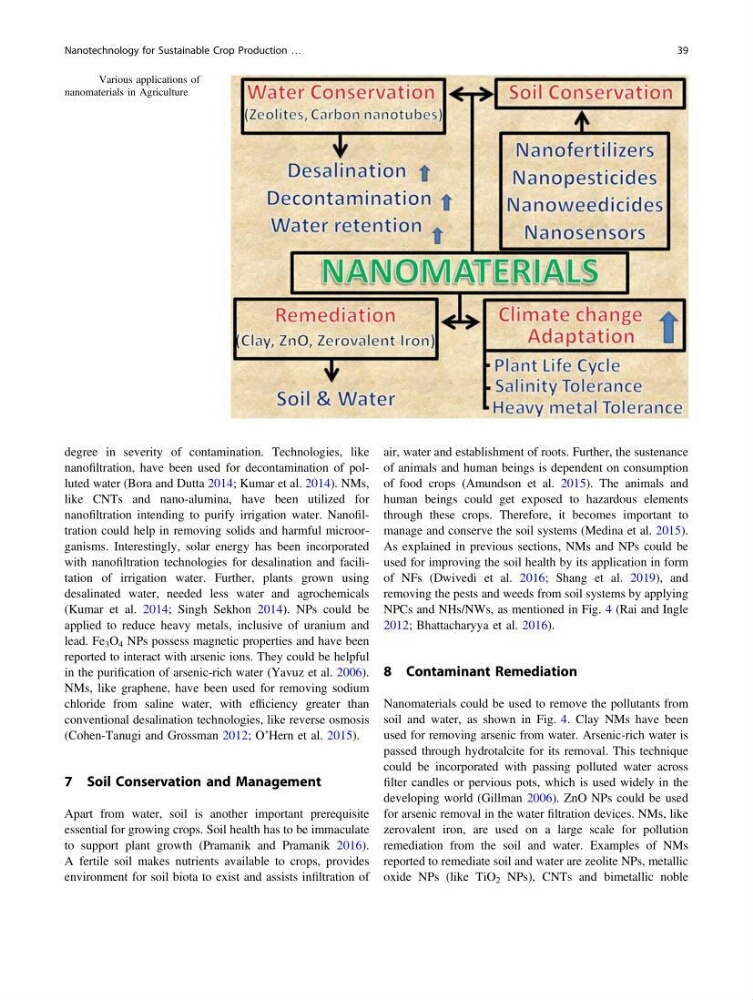
NPCs and NHs/NWs, as mentioned in Fig. 4 (Rai and Ingle
2012; Bhattacharyya et al. 2016).
8 Contaminant Remediation
Nanomaterials could be used to remove the pollutants from
soil and water, as shown in Fig. 4. Clay NMs have been
used for removing arsenic from water. Arsenic-rich water is
passed through hydrotalcite for its removal. This technique
could be incorporated with passing polluted water across
filter candles or pervious pots, which is used widely in the
developing world (Gillman 2006). ZnO NPs could be used
for arsenic removal in the water filtration devices. NMs, like
zerovalent iron, are used on a large scale for pollution
remediation from the soil and water. Examples of NMs
reported to remediate soil and water are zeolite NPs, metallic
oxide NPs (like TiO 2 NPs), CNTs and bimetallic noble
Fig. 4 Various applications of
nanomaterials in Agriculture
Nanotechnology for Sustainable Crop Production …
39
nanofiltration, have been used for decontamination of polluted water (Bora and Dutta 2014; Kumar et al. 2014). NMs,
like CNTs and nano-alumina, have been utilized for
nanofiltration intending to purify irrigation water. Nanofiltration could help in removing solids and harmful microorganisms. Interestingly, solar energy has been incorporated
with nanofiltration technologies for desalination and facilitation of irrigation water. Further, plants grown using
desalinated water, needed less water and agrochemicals
(Kumar et al. 2014; Singh Sekhon 2014). NPs could be
applied to reduce heavy metals, inclusive of uranium and
lead. Fe 3 O 4 NPs possess magnetic properties and have been
reported to interact with arsenic ions. They could be helpful
in the purification of arsenic-rich water (Yavuz et al. 2006).
NMs, like graphene, have been used for removing sodium
chloride from saline water, with efficiency greater than
conventional desalination technologies, like reverse osmosis
(Cohen-Tanugi and Grossman 2012; O’Hern et al. 2015).
7 Soil Conservation and Management
Apart from water, soil is another important prerequisite
essential for growing crops. Soil health has to be immaculate
to support plant growth (Pramanik and Pramanik 2016).
A fertile soil makes nutrients available to crops, provides
environment for soil biota to exist and assists infiltration of
air, water and establishment of roots. Further, the sustenance
of animals and human beings is dependent on consumption
of food crops (Amundson et al. 2015). The animals and
human beings could get exposed to hazardous elements
through these crops. Therefore, it becomes important to
manage and conserve the soil systems (Medina et al. 2015).
As explained in previous sections, NMs and NPs could be
used for improving the soil health by its application in form
of NFs (Dwivedi et al. 2016; Shang et al. 2019), and
removing the pests and weeds from soil systems by applying
NPCs and NHs/NWs, as mentioned in Fig. 4 (Rai and Ingle
2012; Bhattacharyya et al. 2016).
8 Contaminant Remediation
Nanomaterials could be used to remove the pollutants from
soil and water, as shown in Fig. 4. Clay NMs have been
used for removing arsenic from water. Arsenic-rich water is
passed through hydrotalcite for its removal. This technique
could be incorporated with passing polluted water across
filter candles or pervious pots, which is used widely in the
developing world (Gillman 2006). ZnO NPs could be used
for arsenic removal in the water filtration devices. NMs, like
zerovalent iron, are used on a large scale for pollution
remediation from the soil and water. Examples of NMs
reported to remediate soil and water are zeolite NPs, metallic
oxide NPs (like TiO 2 NPs), CNTs and bimetallic noble
Fig. 4 Various applications of
nanomaterials in Agriculture
Nanotechnology for Sustainable Crop Production …
39