

contain lambda-cyhalothrin, that help in pest control (Ram
et al. 2014). Porous hollow silica NPs were used to deliver a
prolonged release of a pesticide called validamycin (Liu
et al. 2006). Oil-in-water emulsions were used as NPCs in a
report (Wang et al. 2007). Various NMs have been used as
NPCs to tackle a number of pests, which have been given in
Table 2. Nano-silica could be used for altering the absorption of cuticular lipids by insects, thereby acting as useful
insecticides (Barik et al. 2008). Modified nanosilica was
utilized against insects damaging the standing crops (Ulrichs
et al. 2006). Polyethylene glycol loaded NPs enriched with
garlic essential oil was used as an insecticide against Tribolium castaneum with 80% efficacy (Yang et al. 2009).
Nano-alumina was used against Sitophilus oryzae and Rhyzopertha dominica insects with results of very high mortality
rate (Stadler et al. 2010). Clay nanotubes like halloysites
have been used as a cost-effective delivery agent of pesticides prolonging their release into the soil (Dwivedi et al.
2016). Similarly, nanofiber formulation of insect pheromone
and pesticides was used to attract and destroy pests like
Grapholita molesta (Czarnobai De Jorge et al. 2017). NPCs
like silica NMs could penetrate the plants and mix with cell
sap to exert systemic effects on insects, and the nanoformulation was resistant to photodegradation as well (Li et al.
2007). Ferbam formulated with gold NPs enhance leaf
penetration capability and changes non-systemic property of
conventional pesticides (Hou et al. 2016). Latex fabricated
gold NPs have been reported to interact with proteins like
trypsin, thereby decreasing their activity in insects, consequently killing them (Patil et al. 2016).
5.5 Nanoherbicides/Nanoweedicides (NHs
or NWs)
Weeds survive and proliferate by their deeply seated roots.
They are deleterious for the crops because of their property
to strongly compete against plants for nourishment, sunlight
and water (Shang et al. 2019). They could be removed by
ploughing, but could create trouble in uninfected areas. An
easy way to remove weeds would be to eliminate their
germination by destruction of their seeds (Ram et al. 2014).
Conventional herbicides destroy the weeds but they are not
helpful in preventing their regrowth because of their inactivity against deeply seated root systems (Shang et al. 2019).
The NHs, being miniscule in size, could blend with the soil
and eliminate spread of conventional herbicide resistant
weeds without causing toxicity or boosting resistance.
Interestingly, NHs are helpful in preventing the regrowth of
weeds and harmful herbs (Dwivedi et al. 2016). Removing
the weeds from the agricultural fields would help in
improving the crop yield and reducing the manual labour
required for weed removal.
The functioning of NHs is similar to NPCs, i.e. by
nanoencapsulation or nanoformulation. Various NMs have
been used as NHs to control and diminish weed growth,
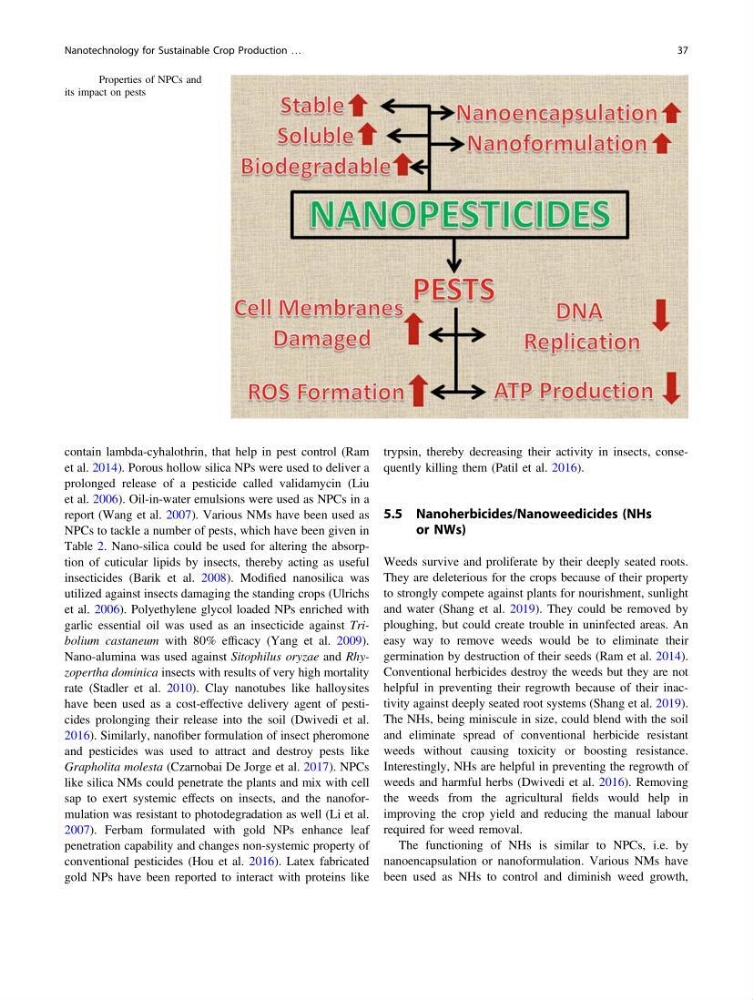
Fig. 3 Properties of NPCs and
its impact on pests
Nanotechnology for Sustainable Crop Production …
37
et al. 2014). Porous hollow silica NPs were used to deliver a
prolonged release of a pesticide called validamycin (Liu
et al. 2006). Oil-in-water emulsions were used as NPCs in a
report (Wang et al. 2007). Various NMs have been used as
NPCs to tackle a number of pests, which have been given in
Table 2. Nano-silica could be used for altering the absorption of cuticular lipids by insects, thereby acting as useful
insecticides (Barik et al. 2008). Modified nanosilica was
utilized against insects damaging the standing crops (Ulrichs
et al. 2006). Polyethylene glycol loaded NPs enriched with
garlic essential oil was used as an insecticide against Tribolium castaneum with 80% efficacy (Yang et al. 2009).
Nano-alumina was used against Sitophilus oryzae and Rhyzopertha dominica insects with results of very high mortality
rate (Stadler et al. 2010). Clay nanotubes like halloysites
have been used as a cost-effective delivery agent of pesticides prolonging their release into the soil (Dwivedi et al.
2016). Similarly, nanofiber formulation of insect pheromone
and pesticides was used to attract and destroy pests like
Grapholita molesta (Czarnobai De Jorge et al. 2017). NPCs
like silica NMs could penetrate the plants and mix with cell
sap to exert systemic effects on insects, and the nanoformulation was resistant to photodegradation as well (Li et al.
2007). Ferbam formulated with gold NPs enhance leaf
penetration capability and changes non-systemic property of
conventional pesticides (Hou et al. 2016). Latex fabricated
gold NPs have been reported to interact with proteins like
trypsin, thereby decreasing their activity in insects, consequently killing them (Patil et al. 2016).
5.5 Nanoherbicides/Nanoweedicides (NHs
or NWs)
Weeds survive and proliferate by their deeply seated roots.
They are deleterious for the crops because of their property
to strongly compete against plants for nourishment, sunlight
and water (Shang et al. 2019). They could be removed by
ploughing, but could create trouble in uninfected areas. An
easy way to remove weeds would be to eliminate their
germination by destruction of their seeds (Ram et al. 2014).
Conventional herbicides destroy the weeds but they are not
helpful in preventing their regrowth because of their inactivity against deeply seated root systems (Shang et al. 2019).
The NHs, being miniscule in size, could blend with the soil
and eliminate spread of conventional herbicide resistant
weeds without causing toxicity or boosting resistance.
Interestingly, NHs are helpful in preventing the regrowth of
weeds and harmful herbs (Dwivedi et al. 2016). Removing
the weeds from the agricultural fields would help in
improving the crop yield and reducing the manual labour
required for weed removal.
The functioning of NHs is similar to NPCs, i.e. by
nanoencapsulation or nanoformulation. Various NMs have
been used as NHs to control and diminish weed growth,
Fig. 3 Properties of NPCs and
its impact on pests
Nanotechnology for Sustainable Crop Production …
37