

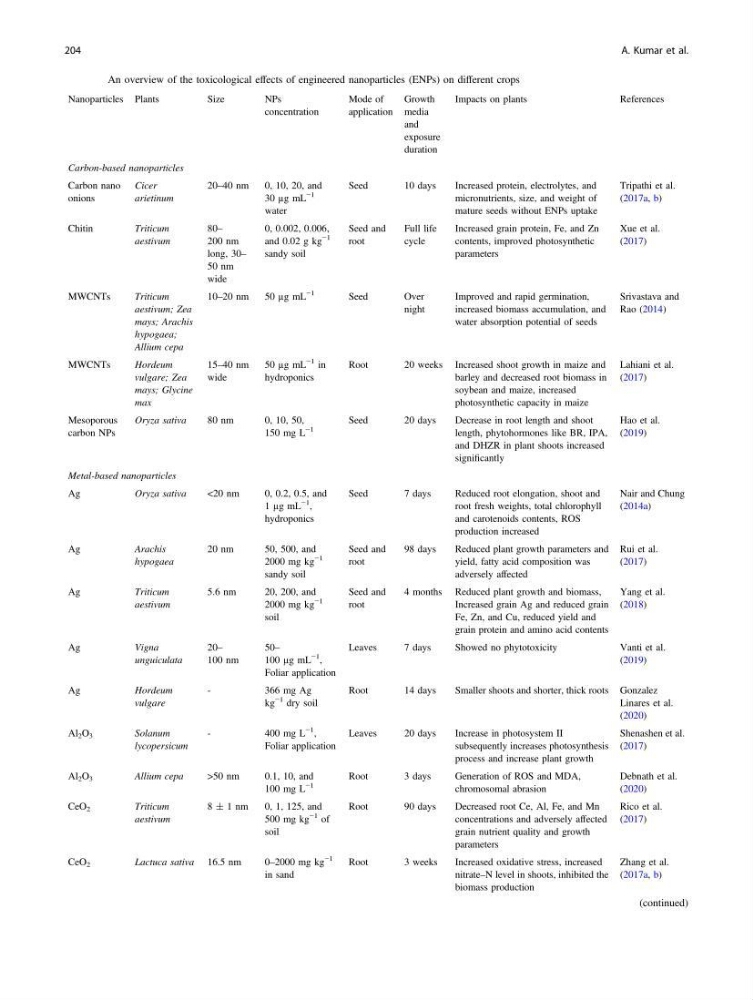
Table 1 An overview of the toxicological effects of engineered nanoparticles (ENPs) on different crops
Nanoparticles Plants
Size
NPs
concentration
Mode of
application
Growth
media
and
exposure
duration
Impacts on plants
References
Carbon-based nanoparticles
Carbon nano
onions
Cicer
arietinum
20–40 nm
0, 10, 20, and
30 µg mL
−1
water
Seed
10 days
Increased protein, electrolytes, and
micronutrients, size, and weight of
mature seeds without ENPs uptake
Tripathi et al.
(2017a, b)
Chitin
Triticum
aestivum
80–
200 nm
long, 30–
50 nm
wide
0, 0.002, 0.006,
and 0.02 g kg
−1
sandy soil
Seed and
root
Full life
cycle
Increased grain protein, Fe, and Zn
contents, improved photosynthetic
parameters
Xue et al.
(2017)
MWCNTs
Triticum
aestivum; Zea
mays; Arachis
hypogaea;
Allium cepa
10–20 nm
50 µg mL
−1
Seed
Over
night
Improved and rapid germination,
increased biomass accumulation, and
water absorption potential of seeds
Srivastava and
Rao (2014)
MWCNTs
Hordeum
vulgare; Zea
mays; Glycine
max
15–40 nm
wide
50 µg mL
−1 in
hydroponics
Root
20 weeks Increased shoot growth in maize and
barley and decreased root biomass in
soybean and maize, increased
photosynthetic capacity in maize
Lahiani et al.
(2017)
Mesoporous
carbon NPs
Oryza sativa
80 nm
0, 10, 50,
150 mg L
−1
Seed
20 days
Decrease in root length and shoot
length, phytohormones like BR, IPA,
and DHZR in plant shoots increased
significantly
Hao et al.
(2019)
Metal-based nanoparticles
Ag
Oryza sativa
<20 nm
0, 0.2, 0.5, and
1 µg mL
−1 ,
hydroponics
Seed
7 days
Reduced root elongation, shoot and
root fresh weights, total chlorophyll
and carotenoids contents, ROS
production increased
Nair and Chung
(2014a)
Ag
Arachis
hypogaea
20 nm
50, 500, and
2000 mg kg
−1
sandy soil
Seed and
root
98 days
Reduced plant growth parameters and
yield, fatty acid composition was
adversely affected
Rui et al.
(2017)
Ag
Triticum
aestivum
5.6 nm
20, 200, and
2000 mg kg
−1
soil
Seed and
root
4 months Reduced plant growth and biomass,
Increased grain Ag and reduced grain
Fe, Zn, and Cu, reduced yield and
grain protein and amino acid contents
Yang et al.
(2018)
Ag
Vigna
unguiculata
20–
100 nm
50–
100 µg mL
−1 ,
Foliar application
Leaves
7 days
Showed no phytotoxicity
Vanti et al.
(2019)
Ag
Hordeum
vulgare
-
366 mg Ag
kg
−1 dry soil
Root
14 days
Smaller shoots and shorter, thick roots Gonzalez
Linares et al.
(2020)
Al 2 O 3
Solanum
lycopersicum
-
400 mg L
−1 ,
Foliar application
Leaves
20 days
Increase in photosystem II
subsequently increases photosynthesis
process and increase plant growth
Shenashen et al.
(2017)
Al 2 O 3
Allium cepa
>50 nm
0.1, 10, and
100 mg L
−1
Root
3 days
Generation of ROS and MDA,
chromosomal abrasion
Debnath et al.
(2020)
CeO 2
Triticum
aestivum
8 ± 1 nm
0, 1, 125, and
500 mg kg
−1 of
soil
Root
90 days
Decreased root Ce, Al, Fe, and Mn
concentrations and adversely affected
grain nutrient quality and growth
parameters
Rico et al.
(2017)
CeO 2
Lactuca sativa 16.5 nm
0–2000 mg kg
−1
in sand
Root
3 weeks
Increased oxidative stress, increased
nitrate–N level in shoots, inhibited the
biomass production
Zhang et al.
(2017a, b)
(continued)
204
A. Kumar et al.
Nanoparticles Plants
Size
NPs
concentration
Mode of
application
Growth
media
and
exposure
duration
Impacts on plants
References
Carbon-based nanoparticles
Carbon nano
onions
Cicer
arietinum
20–40 nm
0, 10, 20, and
30 µg mL
−1
water
Seed
10 days
Increased protein, electrolytes, and
micronutrients, size, and weight of
mature seeds without ENPs uptake
Tripathi et al.
(2017a, b)
Chitin
Triticum
aestivum
80–
200 nm
long, 30–
50 nm
wide
0, 0.002, 0.006,
and 0.02 g kg
−1
sandy soil
Seed and
root
Full life
cycle
Increased grain protein, Fe, and Zn
contents, improved photosynthetic
parameters
Xue et al.
(2017)
MWCNTs
Triticum
aestivum; Zea
mays; Arachis
hypogaea;
Allium cepa
10–20 nm
50 µg mL
−1
Seed
Over
night
Improved and rapid germination,
increased biomass accumulation, and
water absorption potential of seeds
Srivastava and
Rao (2014)
MWCNTs
Hordeum
vulgare; Zea
mays; Glycine
max
15–40 nm
wide
50 µg mL
−1 in
hydroponics
Root
20 weeks Increased shoot growth in maize and
barley and decreased root biomass in
soybean and maize, increased
photosynthetic capacity in maize
Lahiani et al.
(2017)
Mesoporous
carbon NPs
Oryza sativa
80 nm
0, 10, 50,
150 mg L
−1
Seed
20 days
Decrease in root length and shoot
length, phytohormones like BR, IPA,
and DHZR in plant shoots increased
significantly
Hao et al.
(2019)
Metal-based nanoparticles
Ag
Oryza sativa
<20 nm
0, 0.2, 0.5, and
1 µg mL
−1 ,
hydroponics
Seed
7 days
Reduced root elongation, shoot and
root fresh weights, total chlorophyll
and carotenoids contents, ROS
production increased
Nair and Chung
(2014a)
Ag
Arachis
hypogaea
20 nm
50, 500, and
2000 mg kg
−1
sandy soil
Seed and
root
98 days
Reduced plant growth parameters and
yield, fatty acid composition was
adversely affected
Rui et al.
(2017)
Ag
Triticum
aestivum
5.6 nm
20, 200, and
2000 mg kg
−1
soil
Seed and
root
4 months Reduced plant growth and biomass,
Increased grain Ag and reduced grain
Fe, Zn, and Cu, reduced yield and
grain protein and amino acid contents
Yang et al.
(2018)
Ag
Vigna
unguiculata
20–
100 nm
50–
100 µg mL
−1 ,
Foliar application
Leaves
7 days
Showed no phytotoxicity
Vanti et al.
(2019)
Ag
Hordeum
vulgare
-
366 mg Ag
kg
−1 dry soil
Root
14 days
Smaller shoots and shorter, thick roots Gonzalez
Linares et al.
(2020)
Al 2 O 3
Solanum
lycopersicum
-
400 mg L
−1 ,
Foliar application
Leaves
20 days
Increase in photosystem II
subsequently increases photosynthesis
process and increase plant growth
Shenashen et al.
(2017)
Al 2 O 3
Allium cepa
>50 nm
0.1, 10, and
100 mg L
−1
Root
3 days
Generation of ROS and MDA,
chromosomal abrasion
Debnath et al.
(2020)
CeO 2
Triticum
aestivum
8 ± 1 nm
0, 1, 125, and
500 mg kg
−1 of
soil
Root
90 days
Decreased root Ce, Al, Fe, and Mn
concentrations and adversely affected
grain nutrient quality and growth
parameters
Rico et al.
(2017)
CeO 2
Lactuca sativa 16.5 nm
0–2000 mg kg
−1
in sand
Root
3 weeks
Increased oxidative stress, increased
nitrate–N level in shoots, inhibited the
biomass production
Zhang et al.
(2017a, b)
(continued)
204
A. Kumar et al.