

presence of UV light and oxidants, the mitochondria produce
free radicals in large quantity, causing the damage to DNA,
proteins and lipids, which leads to cell death due to reactive
oxygen species (ROS) generation (Ferreita et al. 2013;
Mesa-Arango et al. 2014), a similar mode of action by metal
ions against filamentous fungi is reported by Vincent et al.
(2018). There may be inhibition of heat shock protein 90
(Hsp 90) which has been associated with the fungal
pathogenicity, phase transition, regulation of other heat
shock proteins and antifungal resistance (Jacob et al. 2015;
Scorzoni et al. 2017), due to the leaching of metal ions from
metal NPs. On the other hand, Yang et al. (2011) reviewed
the different action mechanisms of fungicides as well as their
probable impacts on non-target microbes. During their study,
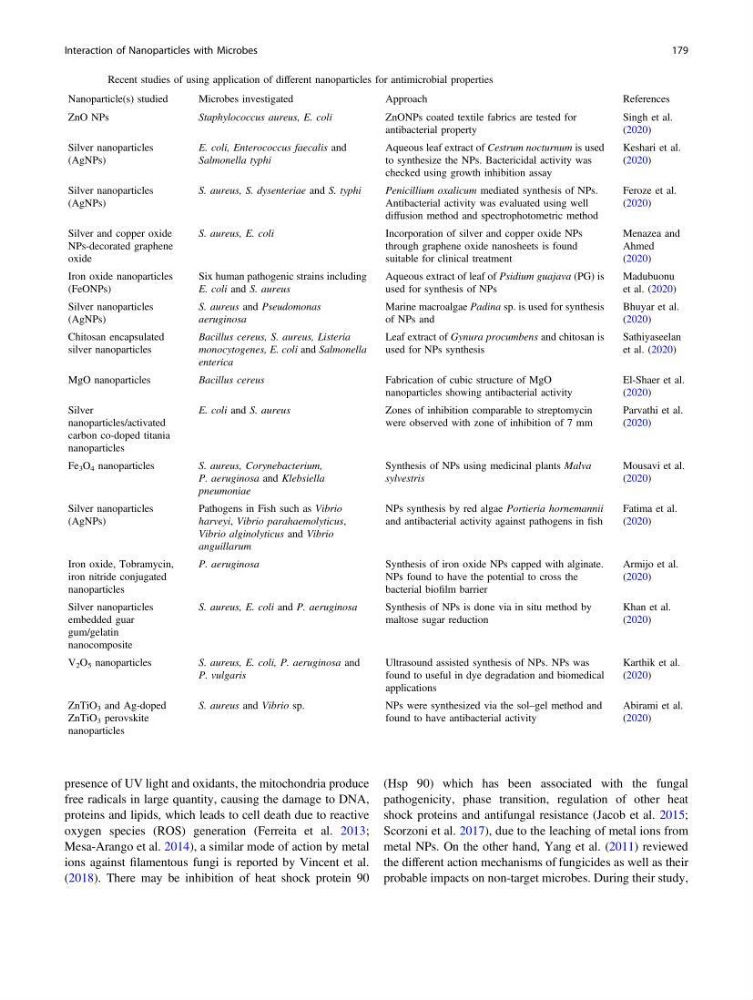
Table 1 Recent studies of using application of different nanoparticles for antimicrobial properties
Nanoparticle(s) studied
Microbes investigated
Approach
References
ZnO NPs
Staphylococcus aureus, E. coli
ZnONPs coated textile fabrics are tested for
antibacterial property
Singh et al.
(2020)
Silver nanoparticles
(AgNPs)
E. coli, Enterococcus faecalis and
Salmonella typhi
Aqueous leaf extract of Cestrum nocturnum is used
to synthesize the NPs. Bactericidal activity was
checked using growth inhibition assay
Keshari et al.
(2020)
Silver nanoparticles
(AgNPs)
S. aureus, S. dysenteriae and S. typhi
Penicillium oxalicum mediated synthesis of NPs.
Antibacterial activity was evaluated using well
diffusion method and spectrophotometric method
Feroze et al.
(2020)
Silver and copper oxide
NPs-decorated graphene
oxide
S. aureus, E. coli
Incorporation of silver and copper oxide NPs
through graphene oxide nanosheets is found
suitable for clinical treatment
Menazea and
Ahmed
(2020)
Iron oxide nanoparticles
(FeONPs)
Six human pathogenic strains including
E. coli and S. aureus
Aqueous extract of leaf of Psidium guajava (PG) is
used for synthesis of NPs
Madubuonu
et al. (2020)
Silver nanoparticles
(AgNPs)
S. aureus and Pseudomonas
aeruginosa
Marine macroalgae Padina sp. is used for synthesis
of NPs and
Bhuyar et al.
(2020)
Chitosan encapsulated
silver nanoparticles
Bacillus cereus, S. aureus, Listeria
monocytogenes, E. coli and Salmonella
enterica
Leaf extract of Gynura procumbens and chitosan is
used for NPs synthesis
Sathiyaseelan
et al. (2020)
MgO nanoparticles
Bacillus cereus
Fabrication of cubic structure of MgO
nanoparticles showing antibacterial activity
El-Shaer et al.
(2020)
Silver
nanoparticles/activated
carbon co-doped titania
nanoparticles
E. coli and S. aureus
Zones of inhibition comparable to streptomycin
were observed with zone of inhibition of 7 mm
Parvathi et al.
(2020)
Fe 3 O 4 nanoparticles
S. aureus, Corynebacterium,
P. aeruginosa and Klebsiella
pneumoniae
Synthesis of NPs using medicinal plants Malva
sylvestris
Mousavi et al.
(2020)
Silver nanoparticles
(AgNPs)
Pathogens in Fish such as Vibrio
harveyi, Vibrio parahaemolyticus,
Vibrio alginolyticus and Vibrio
anguillarum
NPs synthesis by red algae Portieria hornemannii
and antibacterial activity against pathogens in fish
Fatima et al.
(2020)
Iron oxide, Tobramycin,
iron nitride conjugated
nanoparticles
P. aeruginosa
Synthesis of iron oxide NPs capped with alginate.
NPs found to have the potential to cross the
bacterial biofilm barrier
Armijo et al.
(2020)
Silver nanoparticles
embedded guar
gum/gelatin
nanocomposite
S. aureus, E. coli and P. aeruginosa
Synthesis of NPs is done via in situ method by
maltose sugar reduction
Khan et al.
(2020)
V 2 O 5 nanoparticles
S. aureus, E. coli, P. aeruginosa and
P. vulgaris
Ultrasound assisted synthesis of NPs. NPs was
found to useful in dye degradation and biomedical
applications
Karthik et al.
(2020)
ZnTiO 3 and Ag-doped
ZnTiO 3 perovskite
nanoparticles
S. aureus and Vibrio sp.
NPs were synthesized via the sol–gel method and
found to have antibacterial activity
Abirami et al.
(2020)
Interaction of Nanoparticles with Microbes
179
free radicals in large quantity, causing the damage to DNA,
proteins and lipids, which leads to cell death due to reactive
oxygen species (ROS) generation (Ferreita et al. 2013;
Mesa-Arango et al. 2014), a similar mode of action by metal
ions against filamentous fungi is reported by Vincent et al.
(2018). There may be inhibition of heat shock protein 90
(Hsp 90) which has been associated with the fungal
pathogenicity, phase transition, regulation of other heat
shock proteins and antifungal resistance (Jacob et al. 2015;
Scorzoni et al. 2017), due to the leaching of metal ions from
metal NPs. On the other hand, Yang et al. (2011) reviewed
the different action mechanisms of fungicides as well as their
probable impacts on non-target microbes. During their study,
Table 1 Recent studies of using application of different nanoparticles for antimicrobial properties
Nanoparticle(s) studied
Microbes investigated
Approach
References
ZnO NPs
Staphylococcus aureus, E. coli
ZnONPs coated textile fabrics are tested for
antibacterial property
Singh et al.
(2020)
Silver nanoparticles
(AgNPs)
E. coli, Enterococcus faecalis and
Salmonella typhi
Aqueous leaf extract of Cestrum nocturnum is used
to synthesize the NPs. Bactericidal activity was
checked using growth inhibition assay
Keshari et al.
(2020)
Silver nanoparticles
(AgNPs)
S. aureus, S. dysenteriae and S. typhi
Penicillium oxalicum mediated synthesis of NPs.
Antibacterial activity was evaluated using well
diffusion method and spectrophotometric method
Feroze et al.
(2020)
Silver and copper oxide
NPs-decorated graphene
oxide
S. aureus, E. coli
Incorporation of silver and copper oxide NPs
through graphene oxide nanosheets is found
suitable for clinical treatment
Menazea and
Ahmed
(2020)
Iron oxide nanoparticles
(FeONPs)
Six human pathogenic strains including
E. coli and S. aureus
Aqueous extract of leaf of Psidium guajava (PG) is
used for synthesis of NPs
Madubuonu
et al. (2020)
Silver nanoparticles
(AgNPs)
S. aureus and Pseudomonas
aeruginosa
Marine macroalgae Padina sp. is used for synthesis
of NPs and
Bhuyar et al.
(2020)
Chitosan encapsulated
silver nanoparticles
Bacillus cereus, S. aureus, Listeria
monocytogenes, E. coli and Salmonella
enterica
Leaf extract of Gynura procumbens and chitosan is
used for NPs synthesis
Sathiyaseelan
et al. (2020)
MgO nanoparticles
Bacillus cereus
Fabrication of cubic structure of MgO
nanoparticles showing antibacterial activity
El-Shaer et al.
(2020)
Silver
nanoparticles/activated
carbon co-doped titania
nanoparticles
E. coli and S. aureus
Zones of inhibition comparable to streptomycin
were observed with zone of inhibition of 7 mm
Parvathi et al.
(2020)
Fe 3 O 4 nanoparticles
S. aureus, Corynebacterium,
P. aeruginosa and Klebsiella
pneumoniae
Synthesis of NPs using medicinal plants Malva
sylvestris
Mousavi et al.
(2020)
Silver nanoparticles
(AgNPs)
Pathogens in Fish such as Vibrio
harveyi, Vibrio parahaemolyticus,
Vibrio alginolyticus and Vibrio
anguillarum
NPs synthesis by red algae Portieria hornemannii
and antibacterial activity against pathogens in fish
Fatima et al.
(2020)
Iron oxide, Tobramycin,
iron nitride conjugated
nanoparticles
P. aeruginosa
Synthesis of iron oxide NPs capped with alginate.
NPs found to have the potential to cross the
bacterial biofilm barrier
Armijo et al.
(2020)
Silver nanoparticles
embedded guar
gum/gelatin
nanocomposite
S. aureus, E. coli and P. aeruginosa
Synthesis of NPs is done via in situ method by
maltose sugar reduction
Khan et al.
(2020)
V 2 O 5 nanoparticles
S. aureus, E. coli, P. aeruginosa and
P. vulgaris
Ultrasound assisted synthesis of NPs. NPs was
found to useful in dye degradation and biomedical
applications
Karthik et al.
(2020)
ZnTiO 3 and Ag-doped
ZnTiO 3 perovskite
nanoparticles
S. aureus and Vibrio sp.
NPs were synthesized via the sol–gel method and
found to have antibacterial activity
Abirami et al.
(2020)
Interaction of Nanoparticles with Microbes
179