

activity even after the fourth cycle (Table 30, entry 5). The absence of copper in the
filtrate was confirmed by Atomic Absorption Spectroscopy which confirms no
leaching of copper during the reaction and provides evidence for heterogeneity
throughout the reaction.
Our method was successfully amenable to a wide range of arylboronic acids,
allowing preparation of N-arylimidazoles and N-arylbenzimidazoles in high yield
and the results are shown in Table 31. Phenylboronic acids with an electrondonating group afforded better yields (Table 31, entries 2–4) than with electronwithdrawing groups (Table 31, entries 5–7). Similar observation was made when
benzimidazoles were used in place of imidazoles to obtain the corresponding
N-arylbenzimidazoles (Table 31, entries 8–10), but the reactions took longer time
compared to imidazoles.
After achieving excellent results with imidazoles, we further applied this catalytic system for the N-arylation of aromatic amines and aliphatic amines. The
results are shown in Table 32 and Table 33. Table 32 shows the results of
N-arylation of aniline with several arylboronic acids.
It is clear from Table 32 that N-arylation proceeds very effectively and afforded
the corresponding N-arylated products in good to excellent yields under very
mild conditions. No spectacular electronic effects were observed in N-arylation
of aniline; only a slight decrease in the reaction rate was noted with the
3-nitrophenylboronic acid. Next we examined the N-arylation of various primary
amines such as aliphatic, cyclohexyl and heterocyclic amines with phenylboronic
acid using CuFAP catalyst at room temperature, and the results are listed in
Table 33. All the reactions proceeded very efficiently at room temperature and
yielded the corresponding N-arylated products. It was interesting to note that the
formation of the conceivable diarylated product is not observed in our conditions.
We [83] reported the N-arylation of nitrogen heterocycles with a variety of
arylboronic acids to afford the corresponding coupled products in good to excellent
yields without using external ligands or additives as promoters using cellulosesupported Cu(0) catalyst. The catalyst was recovered by simple filtration and reused
for several cycles.
Preliminary experiments are carried out by taking phenylboronic acid as a test
molecule for the N-arylation of imidazole (Scheme 19). In order to determine the
best reaction medium, we tested different solvents and methanol is found to be the
best solvent for the N-arylation of imidazole (98%). The nature of base has a
pronounced effect in these reactions. Reaction of imidazole with phenylboronic
acid in presence of K 2 CO 3 and KO
t
Bu gave no coupled product, while
(HO) 2 B
+
R
Cu-Al Hydrotalcite
MeOH, Reflux, Air
No base or Ligand
NH
O
O
N
O
O
R = H,OCH 3 ,F,Cl,CH 3
R
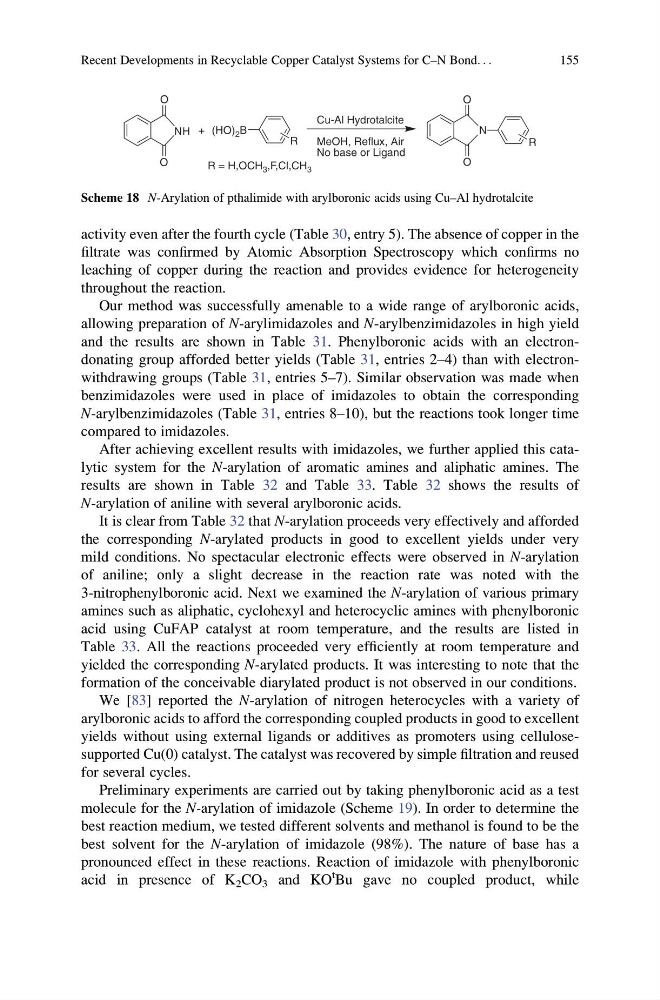
Scheme 18 N-Arylation of pthalimide with arylboronic acids using Cu–Al hydrotalcite
Recent Developments in Recyclable Copper Catalyst Systems for C–N Bond. . .
155
filtrate was confirmed by Atomic Absorption Spectroscopy which confirms no
leaching of copper during the reaction and provides evidence for heterogeneity
throughout the reaction.
Our method was successfully amenable to a wide range of arylboronic acids,
allowing preparation of N-arylimidazoles and N-arylbenzimidazoles in high yield
and the results are shown in Table 31. Phenylboronic acids with an electrondonating group afforded better yields (Table 31, entries 2–4) than with electronwithdrawing groups (Table 31, entries 5–7). Similar observation was made when
benzimidazoles were used in place of imidazoles to obtain the corresponding
N-arylbenzimidazoles (Table 31, entries 8–10), but the reactions took longer time
compared to imidazoles.
After achieving excellent results with imidazoles, we further applied this catalytic system for the N-arylation of aromatic amines and aliphatic amines. The
results are shown in Table 32 and Table 33. Table 32 shows the results of
N-arylation of aniline with several arylboronic acids.
It is clear from Table 32 that N-arylation proceeds very effectively and afforded
the corresponding N-arylated products in good to excellent yields under very
mild conditions. No spectacular electronic effects were observed in N-arylation
of aniline; only a slight decrease in the reaction rate was noted with the
3-nitrophenylboronic acid. Next we examined the N-arylation of various primary
amines such as aliphatic, cyclohexyl and heterocyclic amines with phenylboronic
acid using CuFAP catalyst at room temperature, and the results are listed in
Table 33. All the reactions proceeded very efficiently at room temperature and
yielded the corresponding N-arylated products. It was interesting to note that the
formation of the conceivable diarylated product is not observed in our conditions.
We [83] reported the N-arylation of nitrogen heterocycles with a variety of
arylboronic acids to afford the corresponding coupled products in good to excellent
yields without using external ligands or additives as promoters using cellulosesupported Cu(0) catalyst. The catalyst was recovered by simple filtration and reused
for several cycles.
Preliminary experiments are carried out by taking phenylboronic acid as a test
molecule for the N-arylation of imidazole (Scheme 19). In order to determine the
best reaction medium, we tested different solvents and methanol is found to be the
best solvent for the N-arylation of imidazole (98%). The nature of base has a
pronounced effect in these reactions. Reaction of imidazole with phenylboronic
acid in presence of K 2 CO 3 and KO
t
Bu gave no coupled product, while
(HO) 2 B
+
R
Cu-Al Hydrotalcite
MeOH, Reflux, Air
No base or Ligand
NH
O
O
N
O
O
R = H,OCH 3 ,F,Cl,CH 3
R
Scheme 18 N-Arylation of pthalimide with arylboronic acids using Cu–Al hydrotalcite
Recent Developments in Recyclable Copper Catalyst Systems for C–N Bond. . .
155