

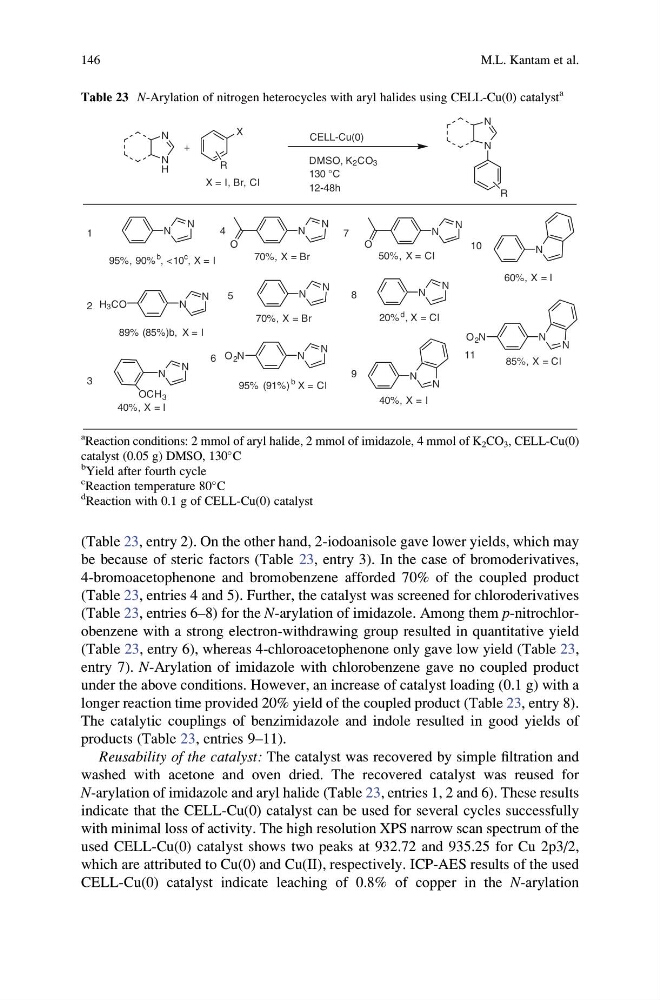
(Table 23, entry 2). On the other hand, 2-iodoanisole gave lower yields, which may
be because of steric factors (Table 23, entry 3). In the case of bromoderivatives,
4-bromoacetophenone and bromobenzene afforded 70% of the coupled product
(Table 23, entries 4 and 5). Further, the catalyst was screened for chloroderivatives
(Table 23, entries 6–8) for the N-arylation of imidazole. Among them p-nitrochlorobenzene with a strong electron-withdrawing group resulted in quantitative yield
(Table 23, entry 6), whereas 4-chloroacetophenone only gave low yield (Table 23,
entry 7). N-Arylation of imidazole with chlorobenzene gave no coupled product
under the above conditions. However, an increase of catalyst loading (0.1 g) with a
longer reaction time provided 20% yield of the coupled product (Table 23, entry 8).
The catalytic couplings of benzimidazole and indole resulted in good yields of
products (Table 23, entries 9–11).
Reusability of the catalyst: The catalyst was recovered by simple filtration and
washed with acetone and oven dried. The recovered catalyst was reused for
N-arylation of imidazole and aryl halide (Table 23, entries 1, 2 and 6). These results
indicate that the CELL-Cu(0) catalyst can be used for several cycles successfully
with minimal loss of activity. The high resolution XPS narrow scan spectrum of the
used CELL-Cu(0) catalyst shows two peaks at 932.72 and 935.25 for Cu 2p3/2,
which are attributed to Cu(0) and Cu(II), respectively. ICP-AES results of the used
CELL-Cu(0) catalyst indicate leaching of 0.8% of copper in the N-arylation
Table 23 N-Arylation of nitrogen heterocycles with aryl halides using CELL-Cu(0) catalyst
a
N
N
N
N
N
N
N
N
O
N
N
O 2 N
N
N
N
N
N
O 2 N
95%, 90%
b
, <10
c
, X = I
70%, X = Br
20%
d , X = Cl
50%, X = Cl
95% (91%)
b X = Cl
40%, X = I
60%, X = I
85%, X = Cl
N
N
O
70%, X = Br
N
N
H 3 CO
N
N
OCH 3
89% (85%)b, X = I
40%, X = I
DMSO, K 2 CO 3
130 °C
12-48h
N
H
N
+
X
N
N
R
R
CELL-Cu(0)
X = I, Br, Cl
1
2
3
4
5
6
7
8
9
10
11
a
Reaction conditions: 2 mmol of aryl halide, 2 mmol of imidazole, 4 mmol of K 2 CO 3 , CELL-Cu(0)
catalyst (0.05 g) DMSO, 130
C
b
Yield after fourth cycle
c
Reaction temperature 80
C
d
Reaction with 0.1 g of CELL-Cu(0) catalyst
146
M.L. Kantam et al.
be because of steric factors (Table 23, entry 3). In the case of bromoderivatives,
4-bromoacetophenone and bromobenzene afforded 70% of the coupled product
(Table 23, entries 4 and 5). Further, the catalyst was screened for chloroderivatives
(Table 23, entries 6–8) for the N-arylation of imidazole. Among them p-nitrochlorobenzene with a strong electron-withdrawing group resulted in quantitative yield
(Table 23, entry 6), whereas 4-chloroacetophenone only gave low yield (Table 23,
entry 7). N-Arylation of imidazole with chlorobenzene gave no coupled product
under the above conditions. However, an increase of catalyst loading (0.1 g) with a
longer reaction time provided 20% yield of the coupled product (Table 23, entry 8).
The catalytic couplings of benzimidazole and indole resulted in good yields of
products (Table 23, entries 9–11).
Reusability of the catalyst: The catalyst was recovered by simple filtration and
washed with acetone and oven dried. The recovered catalyst was reused for
N-arylation of imidazole and aryl halide (Table 23, entries 1, 2 and 6). These results
indicate that the CELL-Cu(0) catalyst can be used for several cycles successfully
with minimal loss of activity. The high resolution XPS narrow scan spectrum of the
used CELL-Cu(0) catalyst shows two peaks at 932.72 and 935.25 for Cu 2p3/2,
which are attributed to Cu(0) and Cu(II), respectively. ICP-AES results of the used
CELL-Cu(0) catalyst indicate leaching of 0.8% of copper in the N-arylation
Table 23 N-Arylation of nitrogen heterocycles with aryl halides using CELL-Cu(0) catalyst
a
N
N
N
N
N
N
N
N
O
N
N
O 2 N
N
N
N
N
N
O 2 N
95%, 90%
b
, <10
c
, X = I
70%, X = Br
20%
d , X = Cl
50%, X = Cl
95% (91%)
b X = Cl
40%, X = I
60%, X = I
85%, X = Cl
N
N
O
70%, X = Br
N
N
H 3 CO
N
N
OCH 3
89% (85%)b, X = I
40%, X = I
DMSO, K 2 CO 3
130 °C
12-48h
N
H
N
+
X
N
N
R
R
CELL-Cu(0)
X = I, Br, Cl
1
2
3
4
5
6
7
8
9
10
11
a
Reaction conditions: 2 mmol of aryl halide, 2 mmol of imidazole, 4 mmol of K 2 CO 3 , CELL-Cu(0)
catalyst (0.05 g) DMSO, 130
C
b
Yield after fourth cycle
c
Reaction temperature 80
C
d
Reaction with 0.1 g of CELL-Cu(0) catalyst
146
M.L. Kantam et al.