

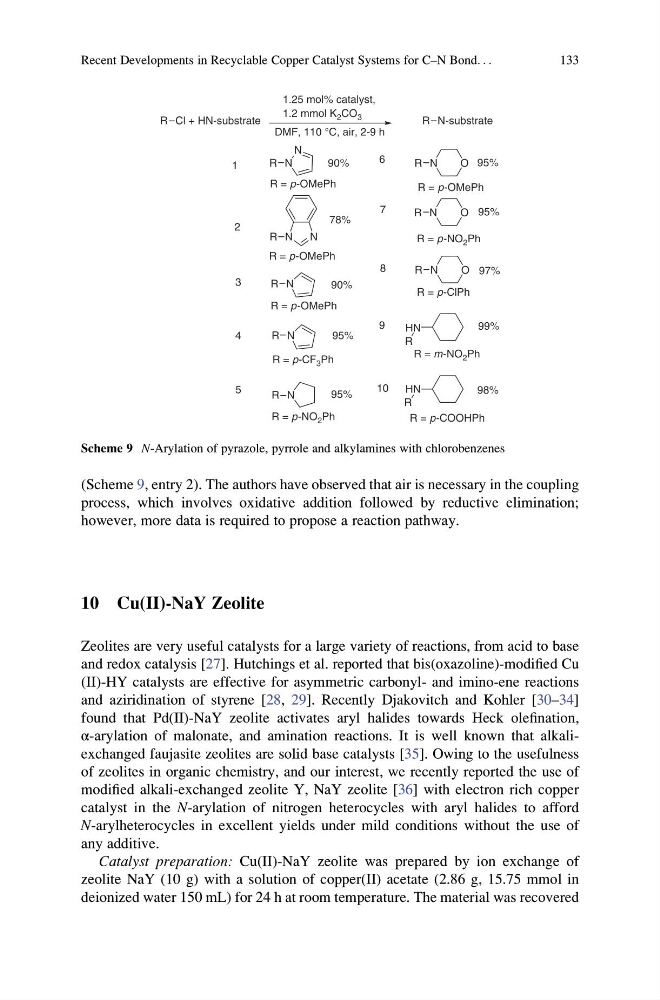
(Scheme 9, entry 2). The authors have observed that air is necessary in the coupling
process, which involves oxidative addition followed by reductive elimination;
however, more data is required to propose a reaction pathway.
10 Cu(II)-NaY Zeolite
Zeolites are very useful catalysts for a large variety of reactions, from acid to base
and redox catalysis [27]. Hutchings et al. reported that bis(oxazoline)-modified Cu
(II)-HY catalysts are effective for asymmetric carbonyl- and imino-ene reactions
and aziridination of styrene [28, 29]. Recently Djakovitch and Kohler [30–34]
found that Pd(II)-NaY zeolite activates aryl halides towards Heck olefination,
α-arylation of malonate, and amination reactions. It is well known that alkaliexchanged faujasite zeolites are solid base catalysts [35]. Owing to the usefulness
of zeolites in organic chemistry, and our interest, we recently reported the use of
modified alkali-exchanged zeolite Y, NaY zeolite [36] with electron rich copper
catalyst in the N-arylation of nitrogen heterocycles with aryl halides to afford
N-arylheterocycles in excellent yields under mild conditions without the use of
any additive.
Catalyst preparation: Cu(II)-NaY zeolite was prepared by ion exchange of
zeolite NaY (10 g) with a solution of copper(II) acetate (2.86 g, 15.75 mmol in
deionized water 150 mL) for 24 h at room temperature. The material was recovered
1
3
4
9
95%
99%
95%
90%
2
Cl + HN-substrate
N-substrate
1.25 mol% catalyst,
1.2 mmol K 2 CO 3
DMF, 110 °C, air, 2-9 h
N
O
HN
N
N
N
10
95%
97%
98%
95%
78%
N
N
90%
R
R
N
R
N
R
R
R
R
R
N
O
R
N
O
R
R
HN
R
R = p-CF 3 Ph
R = p-NO 2 Ph
R = p-OMePh
R = p-OMePh
R = p-OMePh
R = p-OMePh
R = p-NO 2 Ph
5
6
7
R = p-ClPh
8
R = m-NO 2 Ph
R = p-COOHPh
Scheme 9 N-Arylation of pyrazole, pyrrole and alkylamines with chlorobenzenes
Recent Developments in Recyclable Copper Catalyst Systems for C–N Bond. . .
133
process, which involves oxidative addition followed by reductive elimination;
however, more data is required to propose a reaction pathway.
10 Cu(II)-NaY Zeolite
Zeolites are very useful catalysts for a large variety of reactions, from acid to base
and redox catalysis [27]. Hutchings et al. reported that bis(oxazoline)-modified Cu
(II)-HY catalysts are effective for asymmetric carbonyl- and imino-ene reactions
and aziridination of styrene [28, 29]. Recently Djakovitch and Kohler [30–34]
found that Pd(II)-NaY zeolite activates aryl halides towards Heck olefination,
α-arylation of malonate, and amination reactions. It is well known that alkaliexchanged faujasite zeolites are solid base catalysts [35]. Owing to the usefulness
of zeolites in organic chemistry, and our interest, we recently reported the use of
modified alkali-exchanged zeolite Y, NaY zeolite [36] with electron rich copper
catalyst in the N-arylation of nitrogen heterocycles with aryl halides to afford
N-arylheterocycles in excellent yields under mild conditions without the use of
any additive.
Catalyst preparation: Cu(II)-NaY zeolite was prepared by ion exchange of
zeolite NaY (10 g) with a solution of copper(II) acetate (2.86 g, 15.75 mmol in
deionized water 150 mL) for 24 h at room temperature. The material was recovered
1
3
4
9
95%
99%
95%
90%
2
Cl + HN-substrate
N-substrate
1.25 mol% catalyst,
1.2 mmol K 2 CO 3
DMF, 110 °C, air, 2-9 h
N
O
HN
N
N
N
10
95%
97%
98%
95%
78%
N
N
90%
R
R
N
R
N
R
R
R
R
R
N
O
R
N
O
R
R
HN
R
R = p-CF 3 Ph
R = p-NO 2 Ph
R = p-OMePh
R = p-OMePh
R = p-OMePh
R = p-OMePh
R = p-NO 2 Ph
5
6
7
R = p-ClPh
8
R = m-NO 2 Ph
R = p-COOHPh
Scheme 9 N-Arylation of pyrazole, pyrrole and alkylamines with chlorobenzenes
Recent Developments in Recyclable Copper Catalyst Systems for C–N Bond. . .
133