

Reduced Graphene Oxide (RGO)-Based Nanocatalyst for Inhibition …
471
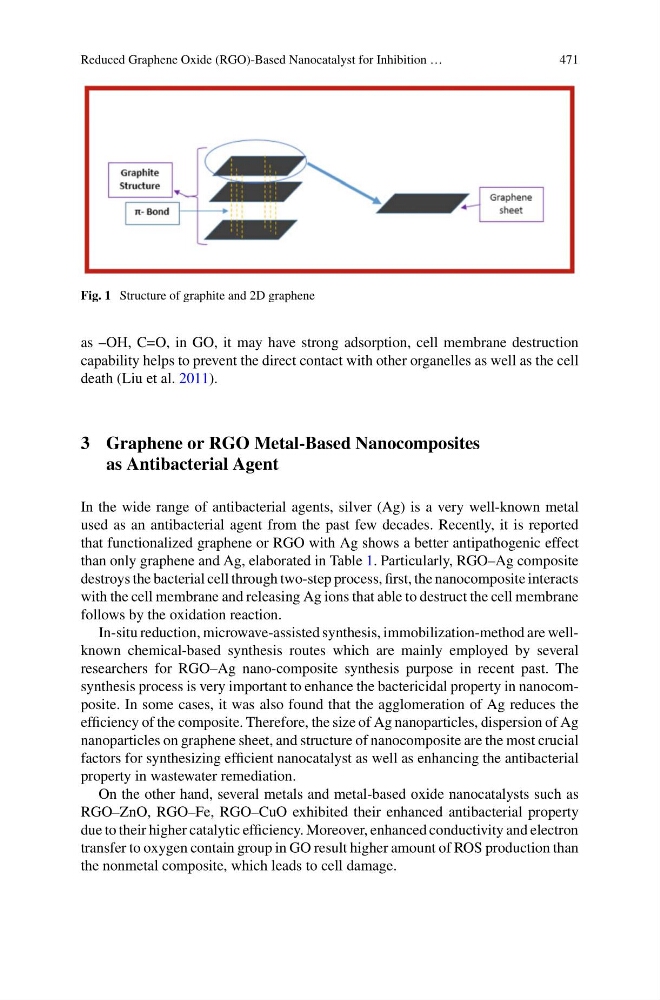
Fig. 1 Structure of graphite and 2D graphene
as –OH, C=O, in GO, it may have strong adsorption, cell membrane destruction
capability helps to prevent the direct contact with other organelles as well as the cell
death (Liu et al. 2011).
3 Graphene or RGO Metal-Based Nanocomposites
as Antibacterial Agent
In the wide range of antibacterial agents, silver (Ag) is a very well-known metal
used as an antibacterial agent from the past few decades. Recently, it is reported
that functionalized graphene or RGO with Ag shows a better antipathogenic effect
than only graphene and Ag, elaborated in Table 1. Particularly, RGO–Ag composite
destroys the bacterial cell through two-step process, first, the nanocomposite interacts
with the cell membrane and releasing Ag ions that able to destruct the cell membrane
follows by the oxidation reaction.
In-situ reduction, microwave-assisted synthesis, immobilization-method are wellknown chemical-based synthesis routes which are mainly employed by several
researchers for RGO–Ag nano-composite synthesis purpose in recent past. The
synthesis process is very important to enhance the bactericidal property in nanocomposite. In some cases, it was also found that the agglomeration of Ag reduces the
efficiency of the composite. Therefore, the size of Ag nanoparticles, dispersion of Ag
nanoparticles on graphene sheet, and structure of nanocomposite are the most crucial
factors for synthesizing efficient nanocatalyst as well as enhancing the antibacterial
property in wastewater remediation.
On the other hand, several metals and metal-based oxide nanocatalysts such as
RGO–ZnO, RGO–Fe, RGO–CuO exhibited their enhanced antibacterial property
due to their higher catalytic efficiency. Moreover, enhanced conductivity and electron
transfer to oxygen contain group in GO result higher amount of ROS production than
the nonmetal composite, which leads to cell damage.
471
Fig. 1 Structure of graphite and 2D graphene
as –OH, C=O, in GO, it may have strong adsorption, cell membrane destruction
capability helps to prevent the direct contact with other organelles as well as the cell
death (Liu et al. 2011).
3 Graphene or RGO Metal-Based Nanocomposites
as Antibacterial Agent
In the wide range of antibacterial agents, silver (Ag) is a very well-known metal
used as an antibacterial agent from the past few decades. Recently, it is reported
that functionalized graphene or RGO with Ag shows a better antipathogenic effect
than only graphene and Ag, elaborated in Table 1. Particularly, RGO–Ag composite
destroys the bacterial cell through two-step process, first, the nanocomposite interacts
with the cell membrane and releasing Ag ions that able to destruct the cell membrane
follows by the oxidation reaction.
In-situ reduction, microwave-assisted synthesis, immobilization-method are wellknown chemical-based synthesis routes which are mainly employed by several
researchers for RGO–Ag nano-composite synthesis purpose in recent past. The
synthesis process is very important to enhance the bactericidal property in nanocomposite. In some cases, it was also found that the agglomeration of Ag reduces the
efficiency of the composite. Therefore, the size of Ag nanoparticles, dispersion of Ag
nanoparticles on graphene sheet, and structure of nanocomposite are the most crucial
factors for synthesizing efficient nanocatalyst as well as enhancing the antibacterial
property in wastewater remediation.
On the other hand, several metals and metal-based oxide nanocatalysts such as
RGO–ZnO, RGO–Fe, RGO–CuO exhibited their enhanced antibacterial property
due to their higher catalytic efficiency. Moreover, enhanced conductivity and electron
transfer to oxygen contain group in GO result higher amount of ROS production than
the nonmetal composite, which leads to cell damage.