

442
N. Paul
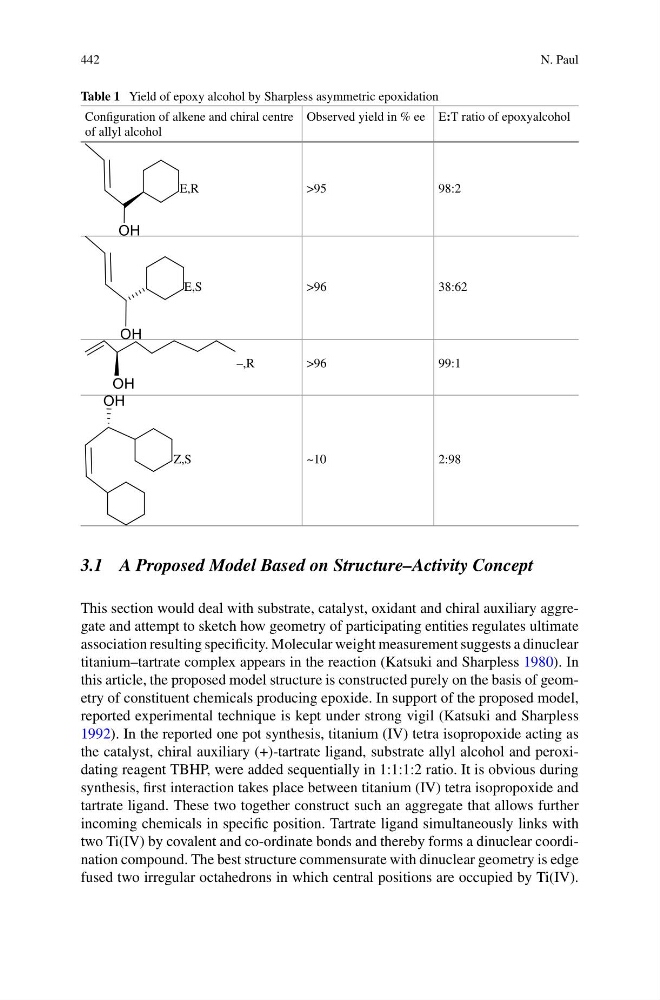
Table 1 Yield of epoxy alcohol by Sharpless asymmetric epoxidation
Configuration of alkene and chiral centre
of allyl alcohol
Observed yield in % ee E:T ratio of epoxyalcohol
E,R
>95
98:2
E,S
>96
38:62
–,R
>96
99:1
Z,S
~10
2:98
3.1 A Proposed Model Based on Structure–Activity Concept
This section would deal with substrate, catalyst, oxidant and chiral auxiliary aggregate and attempt to sketch how geometry of participating entities regulates ultimate
association resulting specificity. Molecular weight measurement suggests a dinuclear
titanium–tartrate complex appears in the reaction (Katsuki and Sharpless 1980). In
this article, the proposed model structure is constructed purely on the basis of geometry of constituent chemicals producing epoxide. In support of the proposed model,
reported experimental technique is kept under strong vigil (Katsuki and Sharpless
1992). In the reported one pot synthesis, titanium (IV) tetra isopropoxide acting as
the catalyst, chiral auxiliary (+)-tartrate ligand, substrate allyl alcohol and peroxidating reagent TBHP, were added sequentially in 1:1:1:2 ratio. It is obvious during
synthesis, first interaction takes place between titanium (IV) tetra isopropoxide and
tartrate ligand. These two together construct such an aggregate that allows further
incoming chemicals in specific position. Tartrate ligand simultaneously links with
two Ti(IV) by covalent and co-ordinate bonds and thereby forms a dinuclear coordination compound. The best structure commensurate with dinuclear geometry is edge
fused two irregular octahedrons in which central positions are occupied by Ti(IV).
N. Paul
Table 1 Yield of epoxy alcohol by Sharpless asymmetric epoxidation
Configuration of alkene and chiral centre
of allyl alcohol
Observed yield in % ee E:T ratio of epoxyalcohol
E,R
>95
98:2
E,S
>96
38:62
–,R
>96
99:1
Z,S
~10
2:98
3.1 A Proposed Model Based on Structure–Activity Concept
This section would deal with substrate, catalyst, oxidant and chiral auxiliary aggregate and attempt to sketch how geometry of participating entities regulates ultimate
association resulting specificity. Molecular weight measurement suggests a dinuclear
titanium–tartrate complex appears in the reaction (Katsuki and Sharpless 1980). In
this article, the proposed model structure is constructed purely on the basis of geometry of constituent chemicals producing epoxide. In support of the proposed model,
reported experimental technique is kept under strong vigil (Katsuki and Sharpless
1992). In the reported one pot synthesis, titanium (IV) tetra isopropoxide acting as
the catalyst, chiral auxiliary (+)-tartrate ligand, substrate allyl alcohol and peroxidating reagent TBHP, were added sequentially in 1:1:1:2 ratio. It is obvious during
synthesis, first interaction takes place between titanium (IV) tetra isopropoxide and
tartrate ligand. These two together construct such an aggregate that allows further
incoming chemicals in specific position. Tartrate ligand simultaneously links with
two Ti(IV) by covalent and co-ordinate bonds and thereby forms a dinuclear coordination compound. The best structure commensurate with dinuclear geometry is edge
fused two irregular octahedrons in which central positions are occupied by Ti(IV).