

408
B. Bej et al.
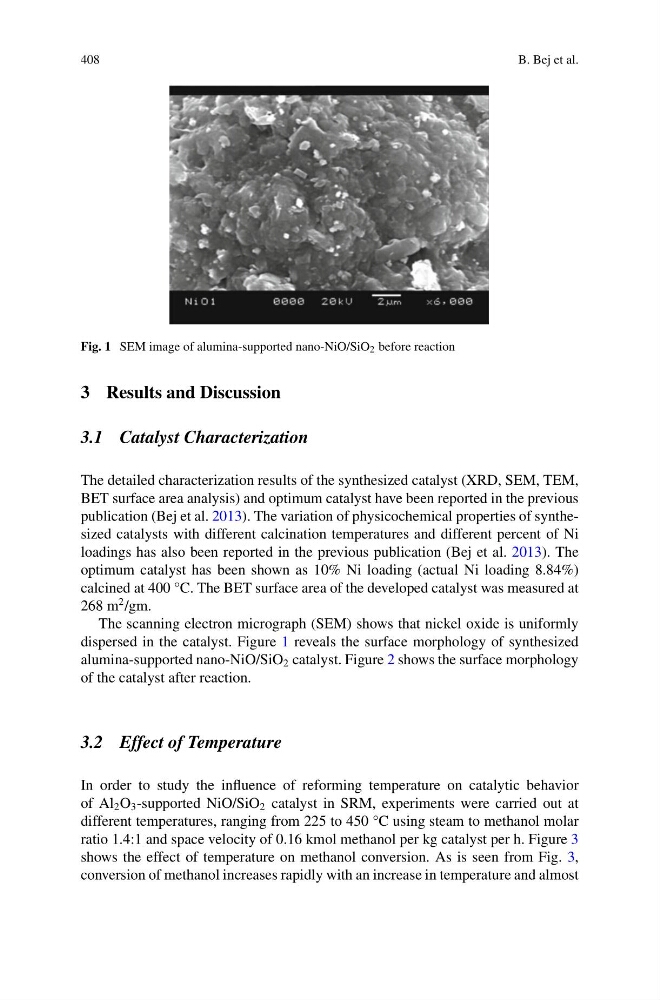
Fig. 1 SEM image of alumina-supported nano-NiO/SiO 2 before reaction
3 Results and Discussion
3.1 Catalyst Characterization
The detailed characterization results of the synthesized catalyst (XRD, SEM, TEM,
BET surface area analysis) and optimum catalyst have been reported in the previous
publication (Bej et al. 2013). The variation of physicochemical properties of synthesized catalysts with different calcination temperatures and different percent of Ni
loadings has also been reported in the previous publication (Bej et al. 2013). The
optimum catalyst has been shown as 10% Ni loading (actual Ni loading 8.84%)
calcined at 400 °C. The BET surface area of the developed catalyst was measured at
268 m
2 /gm.
The scanning electron micrograph (SEM) shows that nickel oxide is uniformly
dispersed in the catalyst. Figure 1 reveals the surface morphology of synthesized
alumina-supported nano-NiO/SiO 2 catalyst. Figure 2 shows the surface morphology
of the catalyst after reaction.
3.2 Effect of Temperature
In order to study the influence of reforming temperature on catalytic behavior
of Al 2 O 3 -supported NiO/SiO 2 catalyst in SRM, experiments were carried out at
different temperatures, ranging from 225 to 450 °C using steam to methanol molar
ratio 1.4:1 and space velocity of 0.16 kmol methanol per kg catalyst per h. Figure 3
shows the effect of temperature on methanol conversion. As is seen from Fig. 3,
conversion of methanol increases rapidly with an increase in temperature and almost
B. Bej et al.
Fig. 1 SEM image of alumina-supported nano-NiO/SiO 2 before reaction
3 Results and Discussion
3.1 Catalyst Characterization
The detailed characterization results of the synthesized catalyst (XRD, SEM, TEM,
BET surface area analysis) and optimum catalyst have been reported in the previous
publication (Bej et al. 2013). The variation of physicochemical properties of synthesized catalysts with different calcination temperatures and different percent of Ni
loadings has also been reported in the previous publication (Bej et al. 2013). The
optimum catalyst has been shown as 10% Ni loading (actual Ni loading 8.84%)
calcined at 400 °C. The BET surface area of the developed catalyst was measured at
268 m
2 /gm.
The scanning electron micrograph (SEM) shows that nickel oxide is uniformly
dispersed in the catalyst. Figure 1 reveals the surface morphology of synthesized
alumina-supported nano-NiO/SiO 2 catalyst. Figure 2 shows the surface morphology
of the catalyst after reaction.
3.2 Effect of Temperature
In order to study the influence of reforming temperature on catalytic behavior
of Al 2 O 3 -supported NiO/SiO 2 catalyst in SRM, experiments were carried out at
different temperatures, ranging from 225 to 450 °C using steam to methanol molar
ratio 1.4:1 and space velocity of 0.16 kmol methanol per kg catalyst per h. Figure 3
shows the effect of temperature on methanol conversion. As is seen from Fig. 3,
conversion of methanol increases rapidly with an increase in temperature and almost