

366
S. H. Das et al.
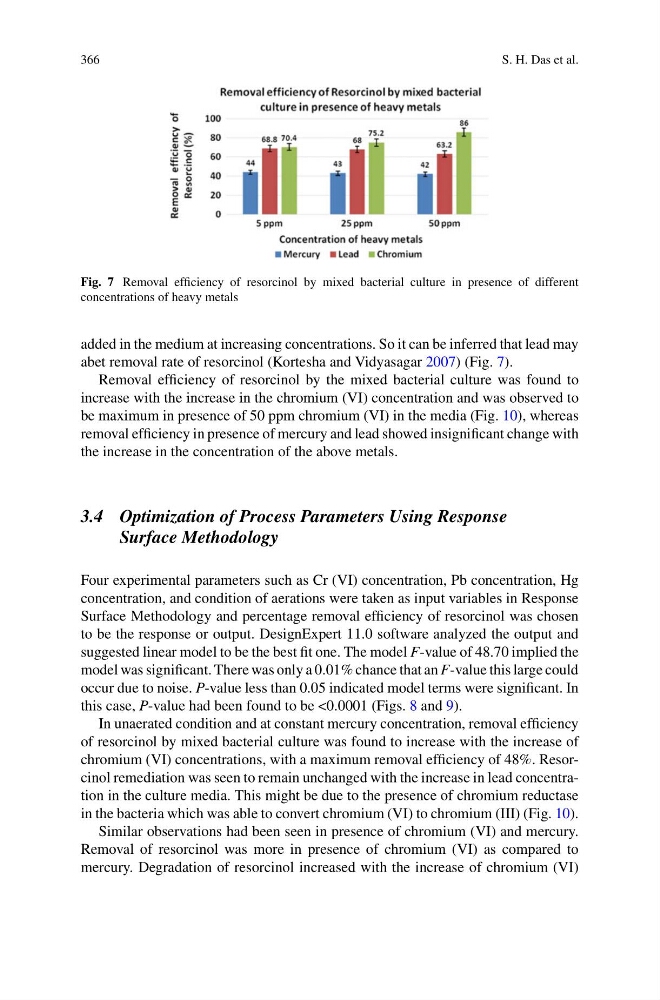
Fig. 7 Removal efficiency of resorcinol by mixed bacterial culture in presence of different
concentrations of heavy metals
added in the medium at increasing concentrations. So it can be inferred that lead may
abet removal rate of resorcinol (Kortesha and Vidyasagar 2007) (Fig. 7).
Removal efficiency of resorcinol by the mixed bacterial culture was found to
increase with the increase in the chromium (VI) concentration and was observed to
be maximum in presence of 50 ppm chromium (VI) in the media (Fig. 10), whereas
removal efficiency in presence of mercury and lead showed insignificant change with
the increase in the concentration of the above metals.
3.4 Optimization of Process Parameters Using Response
Surface Methodology
Four experimental parameters such as Cr (VI) concentration, Pb concentration, Hg
concentration, and condition of aerations were taken as input variables in Response
Surface Methodology and percentage removal efficiency of resorcinol was chosen
to be the response or output. DesignExpert 11.0 software analyzed the output and
suggested linear model to be the best fit one. The model F-value of 48.70 implied the
model was significant. There was only a 0.01% chance that an F-value this large could
occur due to noise. P-value less than 0.05 indicated model terms were significant. In
this case, P-value had been found to be <0.0001 (Figs. 8 and 9).
In unaerated condition and at constant mercury concentration, removal efficiency
of resorcinol by mixed bacterial culture was found to increase with the increase of
chromium (VI) concentrations, with a maximum removal efficiency of 48%. Resorcinol remediation was seen to remain unchanged with the increase in lead concentration in the culture media. This might be due to the presence of chromium reductase
in the bacteria which was able to convert chromium (VI) to chromium (III) (Fig. 10).
Similar observations had been seen in presence of chromium (VI) and mercury.
Removal of resorcinol was more in presence of chromium (VI) as compared to
mercury. Degradation of resorcinol increased with the increase of chromium (VI)
S. H. Das et al.
Fig. 7 Removal efficiency of resorcinol by mixed bacterial culture in presence of different
concentrations of heavy metals
added in the medium at increasing concentrations. So it can be inferred that lead may
abet removal rate of resorcinol (Kortesha and Vidyasagar 2007) (Fig. 7).
Removal efficiency of resorcinol by the mixed bacterial culture was found to
increase with the increase in the chromium (VI) concentration and was observed to
be maximum in presence of 50 ppm chromium (VI) in the media (Fig. 10), whereas
removal efficiency in presence of mercury and lead showed insignificant change with
the increase in the concentration of the above metals.
3.4 Optimization of Process Parameters Using Response
Surface Methodology
Four experimental parameters such as Cr (VI) concentration, Pb concentration, Hg
concentration, and condition of aerations were taken as input variables in Response
Surface Methodology and percentage removal efficiency of resorcinol was chosen
to be the response or output. DesignExpert 11.0 software analyzed the output and
suggested linear model to be the best fit one. The model F-value of 48.70 implied the
model was significant. There was only a 0.01% chance that an F-value this large could
occur due to noise. P-value less than 0.05 indicated model terms were significant. In
this case, P-value had been found to be <0.0001 (Figs. 8 and 9).
In unaerated condition and at constant mercury concentration, removal efficiency
of resorcinol by mixed bacterial culture was found to increase with the increase of
chromium (VI) concentrations, with a maximum removal efficiency of 48%. Resorcinol remediation was seen to remain unchanged with the increase in lead concentration in the culture media. This might be due to the presence of chromium reductase
in the bacteria which was able to convert chromium (VI) to chromium (III) (Fig. 10).
Similar observations had been seen in presence of chromium (VI) and mercury.
Removal of resorcinol was more in presence of chromium (VI) as compared to
mercury. Degradation of resorcinol increased with the increase of chromium (VI)