

Role of Metallothionein and Phytochelatin in Combating Abiotic …
357
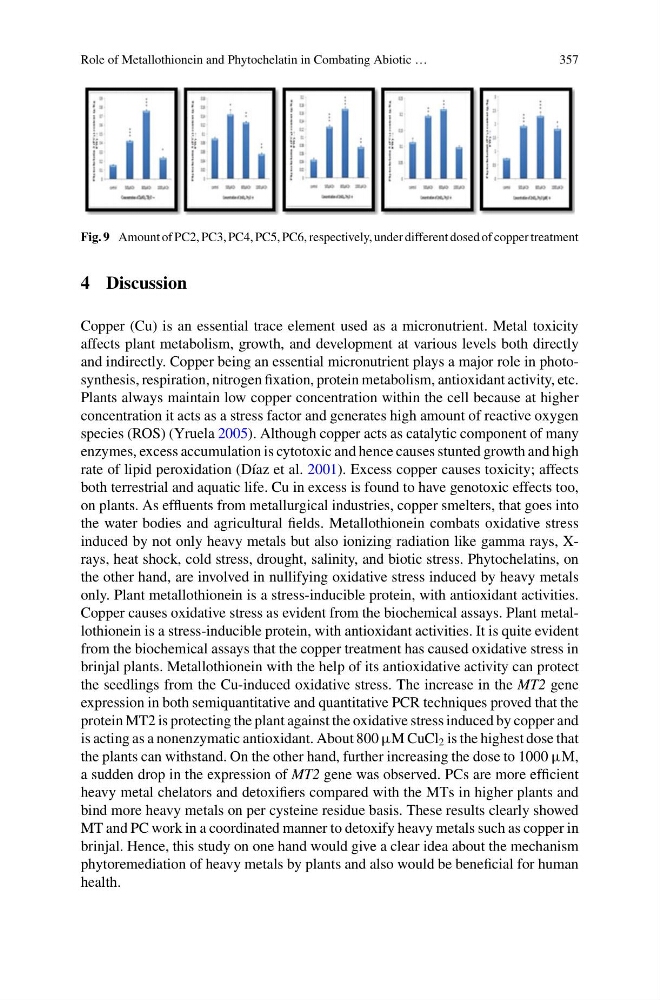
Fig. 9 Amount of PC2, PC3, PC4, PC5, PC6, respectively, under different dosed of copper treatment
4 Discussion
Copper (Cu) is an essential trace element used as a micronutrient. Metal toxicity
affects plant metabolism, growth, and development at various levels both directly
and indirectly. Copper being an essential micronutrient plays a major role in photosynthesis, respiration, nitrogen fixation, protein metabolism, antioxidant activity, etc.
Plants always maintain low copper concentration within the cell because at higher
concentration it acts as a stress factor and generates high amount of reactive oxygen
species (ROS) (Yruela 2005). Although copper acts as catalytic component of many
enzymes, excess accumulation is cytotoxic and hence causes stunted growth and high
rate of lipid peroxidation (Díaz et al. 2001). Excess copper causes toxicity; affects
both terrestrial and aquatic life. Cu in excess is found to have genotoxic effects too,
on plants. As effluents from metallurgical industries, copper smelters, that goes into
the water bodies and agricultural fields. Metallothionein combats oxidative stress
induced by not only heavy metals but also ionizing radiation like gamma rays, Xrays, heat shock, cold stress, drought, salinity, and biotic stress. Phytochelatins, on
the other hand, are involved in nullifying oxidative stress induced by heavy metals
only. Plant metallothionein is a stress-inducible protein, with antioxidant activities.
Copper causes oxidative stress as evident from the biochemical assays. Plant metallothionein is a stress-inducible protein, with antioxidant activities. It is quite evident
from the biochemical assays that the copper treatment has caused oxidative stress in
brinjal plants. Metallothionein with the help of its antioxidative activity can protect
the seedlings from the Cu-induced oxidative stress. The increase in the MT2 gene
expression in both semiquantitative and quantitative PCR techniques proved that the
protein MT2 is protecting the plant against the oxidative stress induced by copper and
is acting as a nonenzymatic antioxidant. About 800 μM CuCl 2 is the highest dose that
the plants can withstand. On the other hand, further increasing the dose to 1000 μM,
a sudden drop in the expression of MT2 gene was observed. PCs are more efficient
heavy metal chelators and detoxifiers compared with the MTs in higher plants and
bind more heavy metals on per cysteine residue basis. These results clearly showed
MT and PC work in a coordinated manner to detoxify heavy metals such as copper in
brinjal. Hence, this study on one hand would give a clear idea about the mechanism
phytoremediation of heavy metals by plants and also would be beneficial for human
health.
357
Fig. 9 Amount of PC2, PC3, PC4, PC5, PC6, respectively, under different dosed of copper treatment
4 Discussion
Copper (Cu) is an essential trace element used as a micronutrient. Metal toxicity
affects plant metabolism, growth, and development at various levels both directly
and indirectly. Copper being an essential micronutrient plays a major role in photosynthesis, respiration, nitrogen fixation, protein metabolism, antioxidant activity, etc.
Plants always maintain low copper concentration within the cell because at higher
concentration it acts as a stress factor and generates high amount of reactive oxygen
species (ROS) (Yruela 2005). Although copper acts as catalytic component of many
enzymes, excess accumulation is cytotoxic and hence causes stunted growth and high
rate of lipid peroxidation (Díaz et al. 2001). Excess copper causes toxicity; affects
both terrestrial and aquatic life. Cu in excess is found to have genotoxic effects too,
on plants. As effluents from metallurgical industries, copper smelters, that goes into
the water bodies and agricultural fields. Metallothionein combats oxidative stress
induced by not only heavy metals but also ionizing radiation like gamma rays, Xrays, heat shock, cold stress, drought, salinity, and biotic stress. Phytochelatins, on
the other hand, are involved in nullifying oxidative stress induced by heavy metals
only. Plant metallothionein is a stress-inducible protein, with antioxidant activities.
Copper causes oxidative stress as evident from the biochemical assays. Plant metallothionein is a stress-inducible protein, with antioxidant activities. It is quite evident
from the biochemical assays that the copper treatment has caused oxidative stress in
brinjal plants. Metallothionein with the help of its antioxidative activity can protect
the seedlings from the Cu-induced oxidative stress. The increase in the MT2 gene
expression in both semiquantitative and quantitative PCR techniques proved that the
protein MT2 is protecting the plant against the oxidative stress induced by copper and
is acting as a nonenzymatic antioxidant. About 800 μM CuCl 2 is the highest dose that
the plants can withstand. On the other hand, further increasing the dose to 1000 μM,
a sudden drop in the expression of MT2 gene was observed. PCs are more efficient
heavy metal chelators and detoxifiers compared with the MTs in higher plants and
bind more heavy metals on per cysteine residue basis. These results clearly showed
MT and PC work in a coordinated manner to detoxify heavy metals such as copper in
brinjal. Hence, this study on one hand would give a clear idea about the mechanism
phytoremediation of heavy metals by plants and also would be beneficial for human
health.