

254
P. Nag et al.
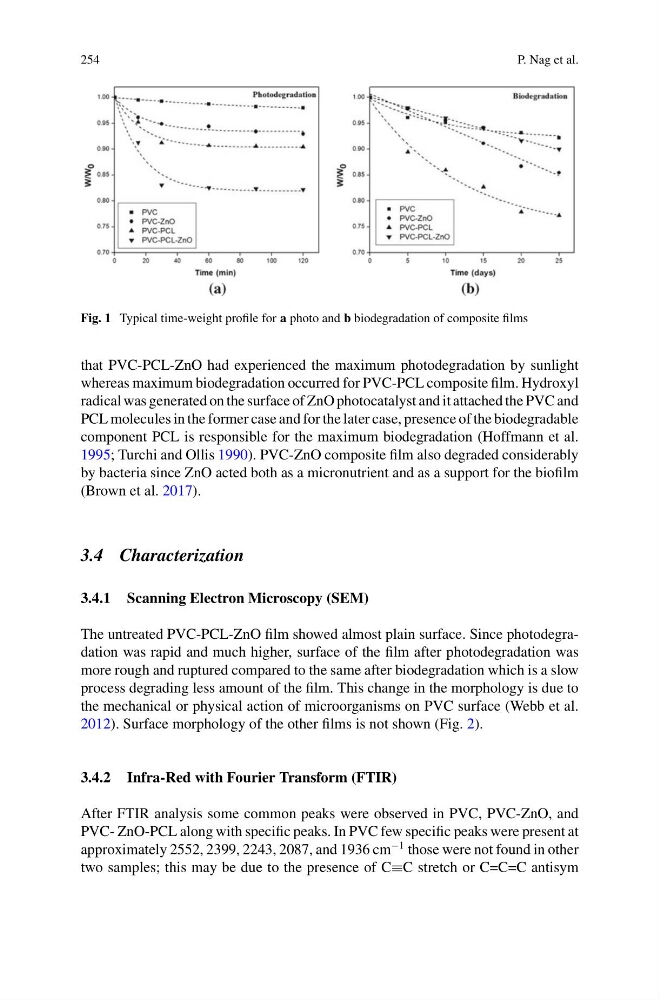
Fig. 1 Typical time-weight profile for a photo and b biodegradation of composite films
that PVC-PCL-ZnO had experienced the maximum photodegradation by sunlight
whereas maximum biodegradation occurred for PVC-PCL composite film. Hydroxyl
radical was generated on the surface of ZnO photocatalyst and it attached the PVC and
PCL molecules in the former case and for the later case, presence of the biodegradable
component PCL is responsible for the maximum biodegradation (Hoffmann et al.
1995; Turchi and Ollis 1990). PVC-ZnO composite film also degraded considerably
by bacteria since ZnO acted both as a micronutrient and as a support for the biofilm
(Brown et al. 2017).
3.4 Characterization
3.4.1 Scanning Electron Microscopy (SEM)
The untreated PVC-PCL-ZnO film showed almost plain surface. Since photodegradation was rapid and much higher, surface of the film after photodegradation was
more rough and ruptured compared to the same after biodegradation which is a slow
process degrading less amount of the film. This change in the morphology is due to
the mechanical or physical action of microorganisms on PVC surface (Webb et al.
2012). Surface morphology of the other films is not shown (Fig. 2).
3.4.2 Infra-Red with Fourier Transform (FTIR)
After FTIR analysis some common peaks were observed in PVC, PVC-ZnO, and
PVC- ZnO-PCL along with specific peaks. In PVC few specific peaks were present at
approximately 2552, 2399, 2243, 2087, and 1936 cm
−1 those were not found in other
two samples; this may be due to the presence of C≡C stretch or C=C=C antisym
P. Nag et al.
Fig. 1 Typical time-weight profile for a photo and b biodegradation of composite films
that PVC-PCL-ZnO had experienced the maximum photodegradation by sunlight
whereas maximum biodegradation occurred for PVC-PCL composite film. Hydroxyl
radical was generated on the surface of ZnO photocatalyst and it attached the PVC and
PCL molecules in the former case and for the later case, presence of the biodegradable
component PCL is responsible for the maximum biodegradation (Hoffmann et al.
1995; Turchi and Ollis 1990). PVC-ZnO composite film also degraded considerably
by bacteria since ZnO acted both as a micronutrient and as a support for the biofilm
(Brown et al. 2017).
3.4 Characterization
3.4.1 Scanning Electron Microscopy (SEM)
The untreated PVC-PCL-ZnO film showed almost plain surface. Since photodegradation was rapid and much higher, surface of the film after photodegradation was
more rough and ruptured compared to the same after biodegradation which is a slow
process degrading less amount of the film. This change in the morphology is due to
the mechanical or physical action of microorganisms on PVC surface (Webb et al.
2012). Surface morphology of the other films is not shown (Fig. 2).
3.4.2 Infra-Red with Fourier Transform (FTIR)
After FTIR analysis some common peaks were observed in PVC, PVC-ZnO, and
PVC- ZnO-PCL along with specific peaks. In PVC few specific peaks were present at
approximately 2552, 2399, 2243, 2087, and 1936 cm
−1 those were not found in other
two samples; this may be due to the presence of C≡C stretch or C=C=C antisym