

238
A. Das et al.
Table 3 Observation of biochemical tests
Biochemical tests
AsR1
AsR2
AsR3
AsR4
AsR(i)
AsR(ii)
AsR(iii)
Catalase test
+
+
+
+
+
+
+
Indole test
−
−
−
−
−
−
−
Methyl red test
+
+
+
−
+
+
+
VP test
−
−
−
−
−
−
−
Citrate test
−
−
−
−
+
+
−
Starch hydrolysis
−
−
+
+
−
+
+
TSI test
−
−
+
+
+
+
−
Table 4 Arsenic removal
potency of the selected
bacterial isolates and the
consortium prepared
Selected bacterial strains
Arsenic removal(%)
AsR1
77
AsR2
65
AsR3
82
AsR4
85
AsR(i)
78
AsR(ii)
92
AsR(iii)
89
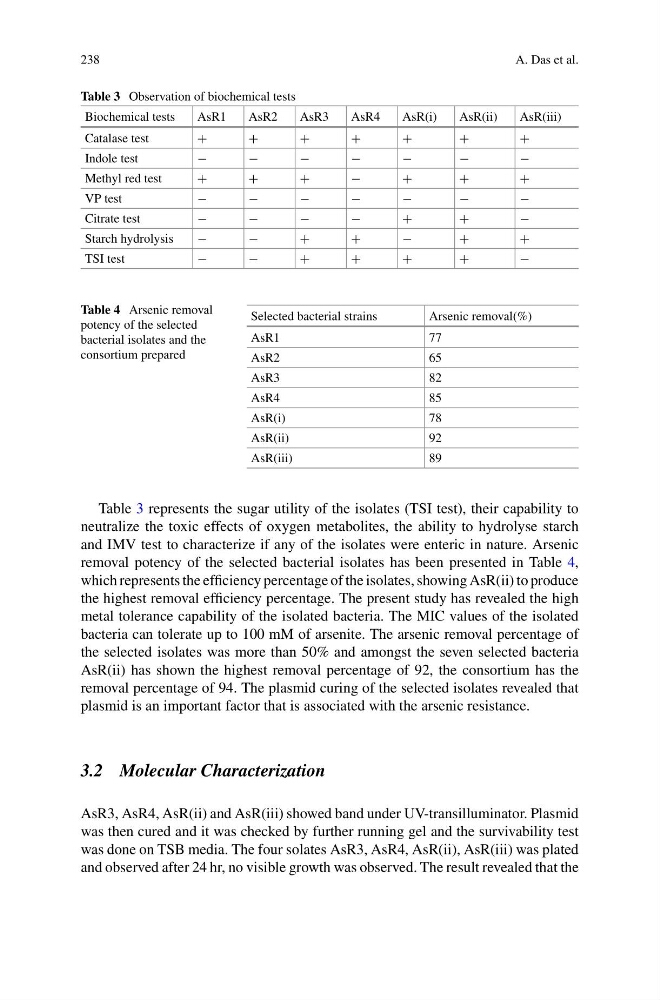
Table 3 represents the sugar utility of the isolates (TSI test), their capability to
neutralize the toxic effects of oxygen metabolites, the ability to hydrolyse starch
and IMV test to characterize if any of the isolates were enteric in nature. Arsenic
removal potency of the selected bacterial isolates has been presented in Table 4,
which represents the efficiency percentage of the isolates, showing AsR(ii) to produce
the highest removal efficiency percentage. The present study has revealed the high
metal tolerance capability of the isolated bacteria. The MIC values of the isolated
bacteria can tolerate up to 100 mM of arsenite. The arsenic removal percentage of
the selected isolates was more than 50% and amongst the seven selected bacteria
AsR(ii) has shown the highest removal percentage of 92, the consortium has the
removal percentage of 94. The plasmid curing of the selected isolates revealed that
plasmid is an important factor that is associated with the arsenic resistance.
3.2 Molecular Characterization
AsR3, AsR4, AsR(ii) and AsR(iii) showed band under UV-transilluminator. Plasmid
was then cured and it was checked by further running gel and the survivability test
was done on TSB media. The four solates AsR3, AsR4, AsR(ii), AsR(iii) was plated
and observed after 24 hr, no visible growth was observed. The result revealed that the
A. Das et al.
Table 3 Observation of biochemical tests
Biochemical tests
AsR1
AsR2
AsR3
AsR4
AsR(i)
AsR(ii)
AsR(iii)
Catalase test
+
+
+
+
+
+
+
Indole test
−
−
−
−
−
−
−
Methyl red test
+
+
+
−
+
+
+
VP test
−
−
−
−
−
−
−
Citrate test
−
−
−
−
+
+
−
Starch hydrolysis
−
−
+
+
−
+
+
TSI test
−
−
+
+
+
+
−
Table 4 Arsenic removal
potency of the selected
bacterial isolates and the
consortium prepared
Selected bacterial strains
Arsenic removal(%)
AsR1
77
AsR2
65
AsR3
82
AsR4
85
AsR(i)
78
AsR(ii)
92
AsR(iii)
89
Table 3 represents the sugar utility of the isolates (TSI test), their capability to
neutralize the toxic effects of oxygen metabolites, the ability to hydrolyse starch
and IMV test to characterize if any of the isolates were enteric in nature. Arsenic
removal potency of the selected bacterial isolates has been presented in Table 4,
which represents the efficiency percentage of the isolates, showing AsR(ii) to produce
the highest removal efficiency percentage. The present study has revealed the high
metal tolerance capability of the isolated bacteria. The MIC values of the isolated
bacteria can tolerate up to 100 mM of arsenite. The arsenic removal percentage of
the selected isolates was more than 50% and amongst the seven selected bacteria
AsR(ii) has shown the highest removal percentage of 92, the consortium has the
removal percentage of 94. The plasmid curing of the selected isolates revealed that
plasmid is an important factor that is associated with the arsenic resistance.
3.2 Molecular Characterization
AsR3, AsR4, AsR(ii) and AsR(iii) showed band under UV-transilluminator. Plasmid
was then cured and it was checked by further running gel and the survivability test
was done on TSB media. The four solates AsR3, AsR4, AsR(ii), AsR(iii) was plated
and observed after 24 hr, no visible growth was observed. The result revealed that the