

224
T. Polley and U. Ghosh
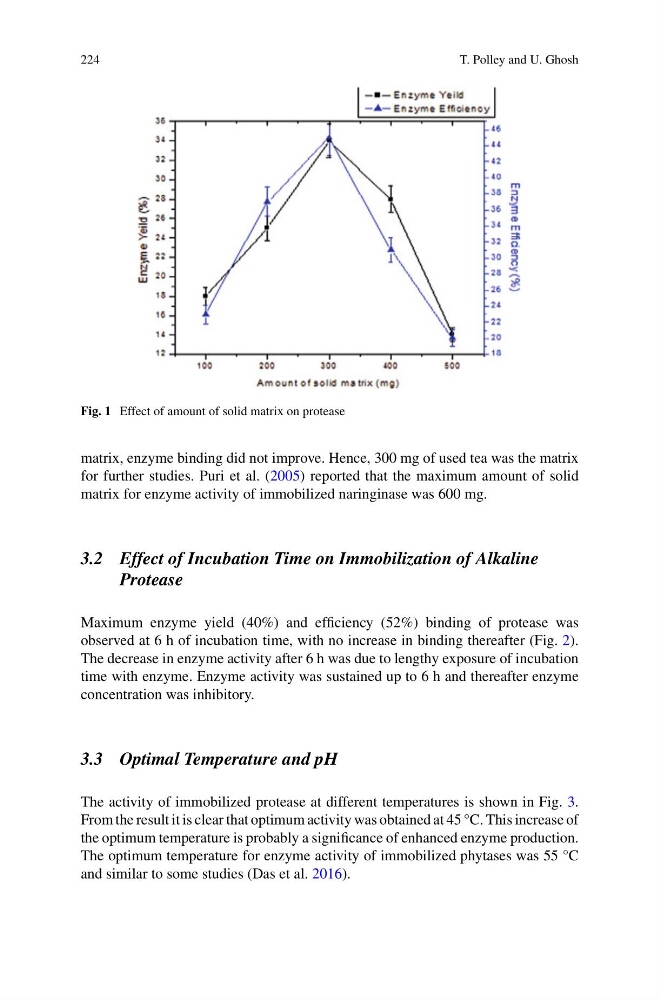
Fig. 1 Effect of amount of solid matrix on protease
matrix, enzyme binding did not improve. Hence, 300 mg of used tea was the matrix
for further studies. Puri et al. (2005) reported that the maximum amount of solid
matrix for enzyme activity of immobilized naringinase was 600 mg.
3.2 Effect of Incubation Time on Immobilization of Alkaline
Protease
Maximum enzyme yield (40%) and efficiency (52%) binding of protease was
observed at 6 h of incubation time, with no increase in binding thereafter (Fig. 2).
The decrease in enzyme activity after 6 h was due to lengthy exposure of incubation
time with enzyme. Enzyme activity was sustained up to 6 h and thereafter enzyme
concentration was inhibitory.
3.3 Optimal Temperature and pH
The activity of immobilized protease at different temperatures is shown in Fig. 3.
From the result it is clear that optimum activity was obtained at 45 °C. This increase of
the optimum temperature is probably a significance of enhanced enzyme production.
The optimum temperature for enzyme activity of immobilized phytases was 55 °C
and similar to some studies (Das et al. 2016).
T. Polley and U. Ghosh
Fig. 1 Effect of amount of solid matrix on protease
matrix, enzyme binding did not improve. Hence, 300 mg of used tea was the matrix
for further studies. Puri et al. (2005) reported that the maximum amount of solid
matrix for enzyme activity of immobilized naringinase was 600 mg.
3.2 Effect of Incubation Time on Immobilization of Alkaline
Protease
Maximum enzyme yield (40%) and efficiency (52%) binding of protease was
observed at 6 h of incubation time, with no increase in binding thereafter (Fig. 2).
The decrease in enzyme activity after 6 h was due to lengthy exposure of incubation
time with enzyme. Enzyme activity was sustained up to 6 h and thereafter enzyme
concentration was inhibitory.
3.3 Optimal Temperature and pH
The activity of immobilized protease at different temperatures is shown in Fig. 3.
From the result it is clear that optimum activity was obtained at 45 °C. This increase of
the optimum temperature is probably a significance of enhanced enzyme production.
The optimum temperature for enzyme activity of immobilized phytases was 55 °C
and similar to some studies (Das et al. 2016).