

196
R. Baishya and S. Banerjee
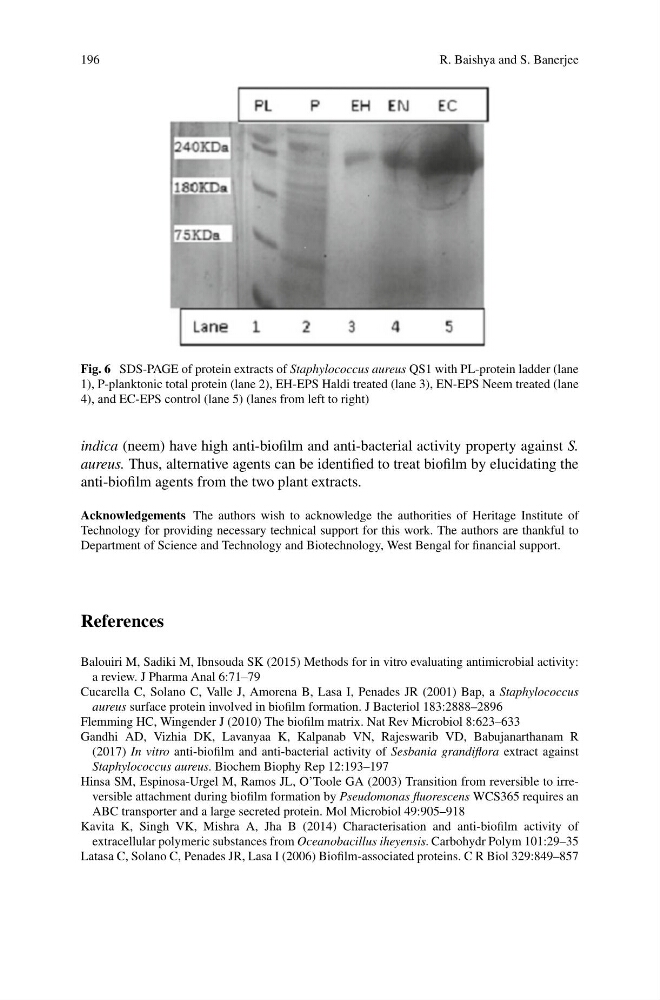
Fig. 6 SDS-PAGE of protein extracts of Staphylococcus aureus QS1 with PL-protein ladder (lane
1), P-planktonic total protein (lane 2), EH-EPS Haldi treated (lane 3), EN-EPS Neem treated (lane
4), and EC-EPS control (lane 5) (lanes from left to right)
indica (neem) have high anti-biofilm and anti-bacterial activity property against S.
aureus. Thus, alternative agents can be identified to treat biofilm by elucidating the
anti-biofilm agents from the two plant extracts.
Acknowledgements The authors wish to acknowledge the authorities of Heritage Institute of
Technology for providing necessary technical support for this work. The authors are thankful to
Department of Science and Technology and Biotechnology, West Bengal for financial support.
References
Balouiri M, Sadiki M, Ibnsouda SK (2015) Methods for in vitro evaluating antimicrobial activity:
a review. J Pharma Anal 6:71–79
Cucarella C, Solano C, Valle J, Amorena B, Lasa I, Penades JR (2001) Bap, a Staphylococcus
aureus surface protein involved in biofilm formation. J Bacteriol 183:2888–2896
Flemming HC, Wingender J (2010) The biofilm matrix. Nat Rev Microbiol 8:623–633
Gandhi AD, Vizhia DK, Lavanyaa K, Kalpanab VN, Rajeswarib VD, Babujanarthanam R
(2017) In vitro anti-biofilm and anti-bacterial activity of Sesbania grandiflora extract against
Staphylococcus aureus. Biochem Biophy Rep 12:193–197
Hinsa SM, Espinosa-Urgel M, Ramos JL, O’Toole GA (2003) Transition from reversible to irreversible attachment during biofilm formation by Pseudomonas fluorescens WCS365 requires an
ABC transporter and a large secreted protein. Mol Microbiol 49:905–918
Kavita K, Singh VK, Mishra A, Jha B (2014) Characterisation and anti-biofilm activity of
extracellular polymeric substances from Oceanobacillus iheyensis. Carbohydr Polym 101:29–35
Latasa C, Solano C, Penades JR, Lasa I (2006) Biofilm-associated proteins. C R Biol 329:849–857
R. Baishya and S. Banerjee
Fig. 6 SDS-PAGE of protein extracts of Staphylococcus aureus QS1 with PL-protein ladder (lane
1), P-planktonic total protein (lane 2), EH-EPS Haldi treated (lane 3), EN-EPS Neem treated (lane
4), and EC-EPS control (lane 5) (lanes from left to right)
indica (neem) have high anti-biofilm and anti-bacterial activity property against S.
aureus. Thus, alternative agents can be identified to treat biofilm by elucidating the
anti-biofilm agents from the two plant extracts.
Acknowledgements The authors wish to acknowledge the authorities of Heritage Institute of
Technology for providing necessary technical support for this work. The authors are thankful to
Department of Science and Technology and Biotechnology, West Bengal for financial support.
References
Balouiri M, Sadiki M, Ibnsouda SK (2015) Methods for in vitro evaluating antimicrobial activity:
a review. J Pharma Anal 6:71–79
Cucarella C, Solano C, Valle J, Amorena B, Lasa I, Penades JR (2001) Bap, a Staphylococcus
aureus surface protein involved in biofilm formation. J Bacteriol 183:2888–2896
Flemming HC, Wingender J (2010) The biofilm matrix. Nat Rev Microbiol 8:623–633
Gandhi AD, Vizhia DK, Lavanyaa K, Kalpanab VN, Rajeswarib VD, Babujanarthanam R
(2017) In vitro anti-biofilm and anti-bacterial activity of Sesbania grandiflora extract against
Staphylococcus aureus. Biochem Biophy Rep 12:193–197
Hinsa SM, Espinosa-Urgel M, Ramos JL, O’Toole GA (2003) Transition from reversible to irreversible attachment during biofilm formation by Pseudomonas fluorescens WCS365 requires an
ABC transporter and a large secreted protein. Mol Microbiol 49:905–918
Kavita K, Singh VK, Mishra A, Jha B (2014) Characterisation and anti-biofilm activity of
extracellular polymeric substances from Oceanobacillus iheyensis. Carbohydr Polym 101:29–35
Latasa C, Solano C, Penades JR, Lasa I (2006) Biofilm-associated proteins. C R Biol 329:849–857