

54
J. Karloopia et al.
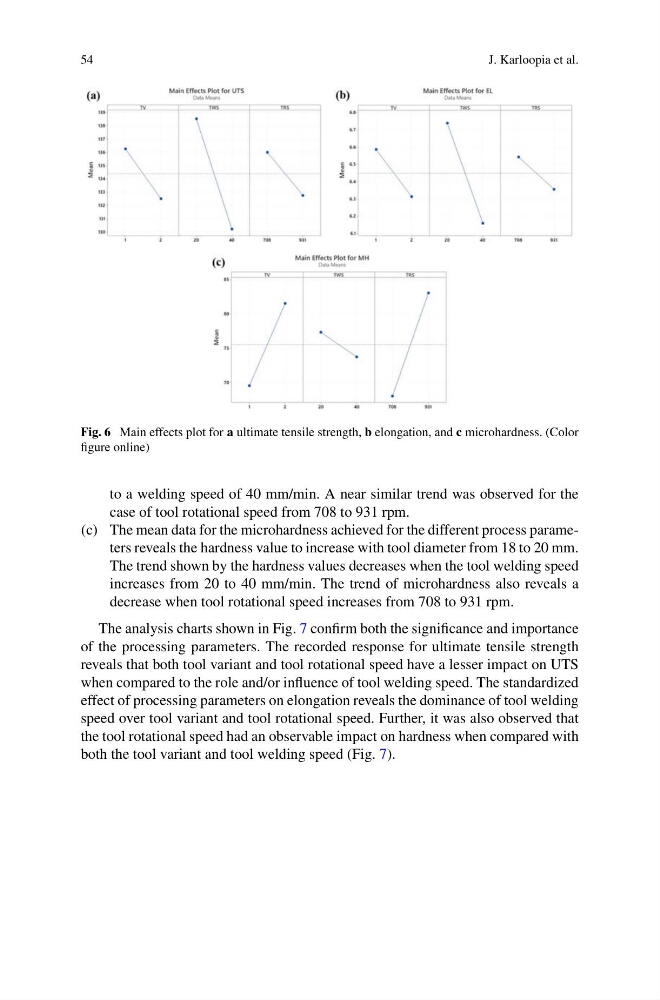
Fig. 6 Main effects plot for a ultimate tensile strength, b elongation, and c microhardness. (Color
figure online)
to a welding speed of 40 mm/min. A near similar trend was observed for the
case of tool rotational speed from 708 to 931 rpm.
(c) The mean data for the microhardness achieved for the different process parameters reveals the hardness value to increase with tool diameter from 18 to 20 mm.
The trend shown by the hardness values decreases when the tool welding speed
increases from 20 to 40 mm/min. The trend of microhardness also reveals a
decrease when tool rotational speed increases from 708 to 931 rpm.
The analysis charts shown in Fig. 7 confirm both the significance and importance
of the processing parameters. The recorded response for ultimate tensile strength
reveals that both tool variant and tool rotational speed have a lesser impact on UTS
when compared to the role and/or influence of tool welding speed. The standardized
effect of processing parameters on elongation reveals the dominance of tool welding
speed over tool variant and tool rotational speed. Further, it was also observed that
the tool rotational speed had an observable impact on hardness when compared with
both the tool variant and tool welding speed (Fig. 7).
J. Karloopia et al.
Fig. 6 Main effects plot for a ultimate tensile strength, b elongation, and c microhardness. (Color
figure online)
to a welding speed of 40 mm/min. A near similar trend was observed for the
case of tool rotational speed from 708 to 931 rpm.
(c) The mean data for the microhardness achieved for the different process parameters reveals the hardness value to increase with tool diameter from 18 to 20 mm.
The trend shown by the hardness values decreases when the tool welding speed
increases from 20 to 40 mm/min. The trend of microhardness also reveals a
decrease when tool rotational speed increases from 708 to 931 rpm.
The analysis charts shown in Fig. 7 confirm both the significance and importance
of the processing parameters. The recorded response for ultimate tensile strength
reveals that both tool variant and tool rotational speed have a lesser impact on UTS
when compared to the role and/or influence of tool welding speed. The standardized
effect of processing parameters on elongation reveals the dominance of tool welding
speed over tool variant and tool rotational speed. Further, it was also observed that
the tool rotational speed had an observable impact on hardness when compared with
both the tool variant and tool welding speed (Fig. 7).