

Iron Oxide–Gold Composite Nanoparticles and Nano-Gap Junctions …
261
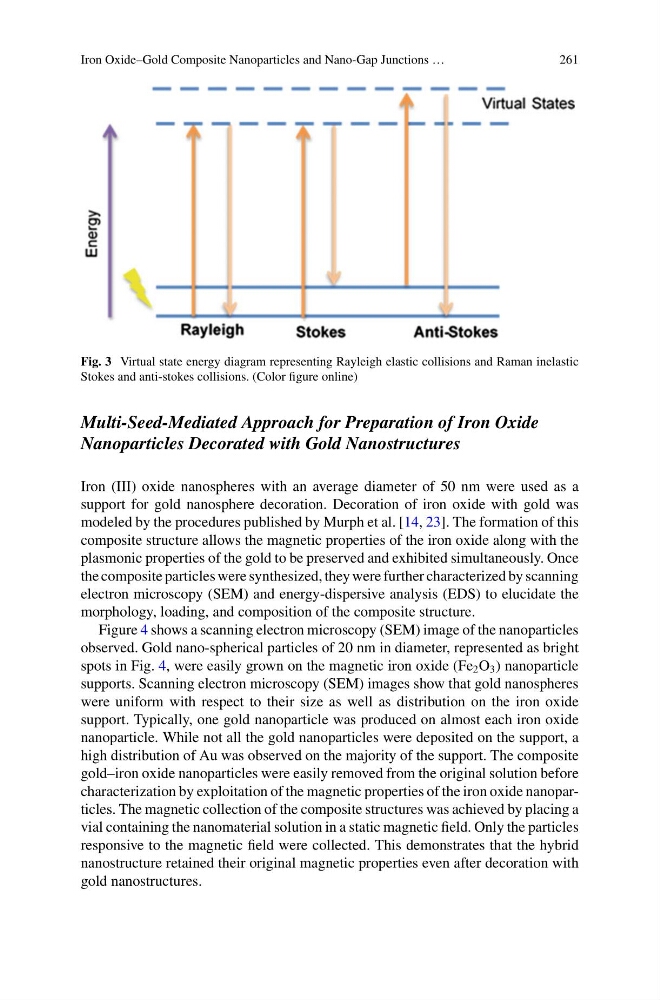
Fig. 3 Virtual state energy diagram representing Rayleigh elastic collisions and Raman inelastic
Stokes and anti-stokes collisions. (Color figure online)
Multi-Seed-Mediated Approach for Preparation of Iron Oxide
Nanoparticles Decorated with Gold Nanostructures
Iron (III) oxide nanospheres with an average diameter of 50 nm were used as a
support for gold nanosphere decoration. Decoration of iron oxide with gold was
modeled by the procedures published by Murph et al. [14, 23]. The formation of this
composite structure allows the magnetic properties of the iron oxide along with the
plasmonic properties of the gold to be preserved and exhibited simultaneously. Once
the composite particles were synthesized, they were further characterized by scanning
electron microscopy (SEM) and energy-dispersive analysis (EDS) to elucidate the
morphology, loading, and composition of the composite structure.
Figure 4 shows a scanning electron microscopy (SEM) image of the nanoparticles
observed. Gold nano-spherical particles of 20 nm in diameter, represented as bright
spots in Fig. 4, were easily grown on the magnetic iron oxide (Fe 2 O 3 ) nanoparticle
supports. Scanning electron microscopy (SEM) images show that gold nanospheres
were uniform with respect to their size as well as distribution on the iron oxide
support. Typically, one gold nanoparticle was produced on almost each iron oxide
nanoparticle. While not all the gold nanoparticles were deposited on the support, a
high distribution of Au was observed on the majority of the support. The composite
gold–iron oxide nanoparticles were easily removed from the original solution before
characterization by exploitation of the magnetic properties of the iron oxide nanoparticles. The magnetic collection of the composite structures was achieved by placing a
vial containing the nanomaterial solution in a static magnetic field. Only the particles
responsive to the magnetic field were collected. This demonstrates that the hybrid
nanostructure retained their original magnetic properties even after decoration with
gold nanostructures.
261
Fig. 3 Virtual state energy diagram representing Rayleigh elastic collisions and Raman inelastic
Stokes and anti-stokes collisions. (Color figure online)
Multi-Seed-Mediated Approach for Preparation of Iron Oxide
Nanoparticles Decorated with Gold Nanostructures
Iron (III) oxide nanospheres with an average diameter of 50 nm were used as a
support for gold nanosphere decoration. Decoration of iron oxide with gold was
modeled by the procedures published by Murph et al. [14, 23]. The formation of this
composite structure allows the magnetic properties of the iron oxide along with the
plasmonic properties of the gold to be preserved and exhibited simultaneously. Once
the composite particles were synthesized, they were further characterized by scanning
electron microscopy (SEM) and energy-dispersive analysis (EDS) to elucidate the
morphology, loading, and composition of the composite structure.
Figure 4 shows a scanning electron microscopy (SEM) image of the nanoparticles
observed. Gold nano-spherical particles of 20 nm in diameter, represented as bright
spots in Fig. 4, were easily grown on the magnetic iron oxide (Fe 2 O 3 ) nanoparticle
supports. Scanning electron microscopy (SEM) images show that gold nanospheres
were uniform with respect to their size as well as distribution on the iron oxide
support. Typically, one gold nanoparticle was produced on almost each iron oxide
nanoparticle. While not all the gold nanoparticles were deposited on the support, a
high distribution of Au was observed on the majority of the support. The composite
gold–iron oxide nanoparticles were easily removed from the original solution before
characterization by exploitation of the magnetic properties of the iron oxide nanoparticles. The magnetic collection of the composite structures was achieved by placing a
vial containing the nanomaterial solution in a static magnetic field. Only the particles
responsive to the magnetic field were collected. This demonstrates that the hybrid
nanostructure retained their original magnetic properties even after decoration with
gold nanostructures.